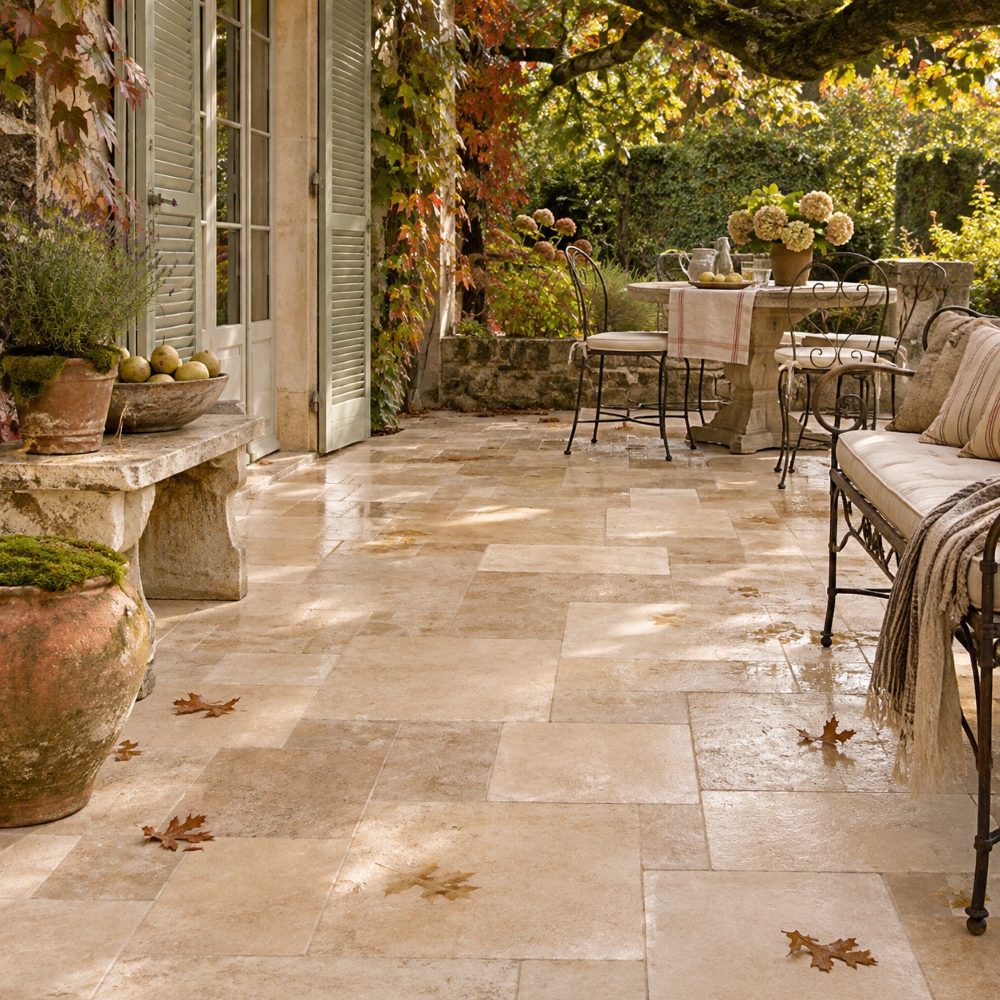
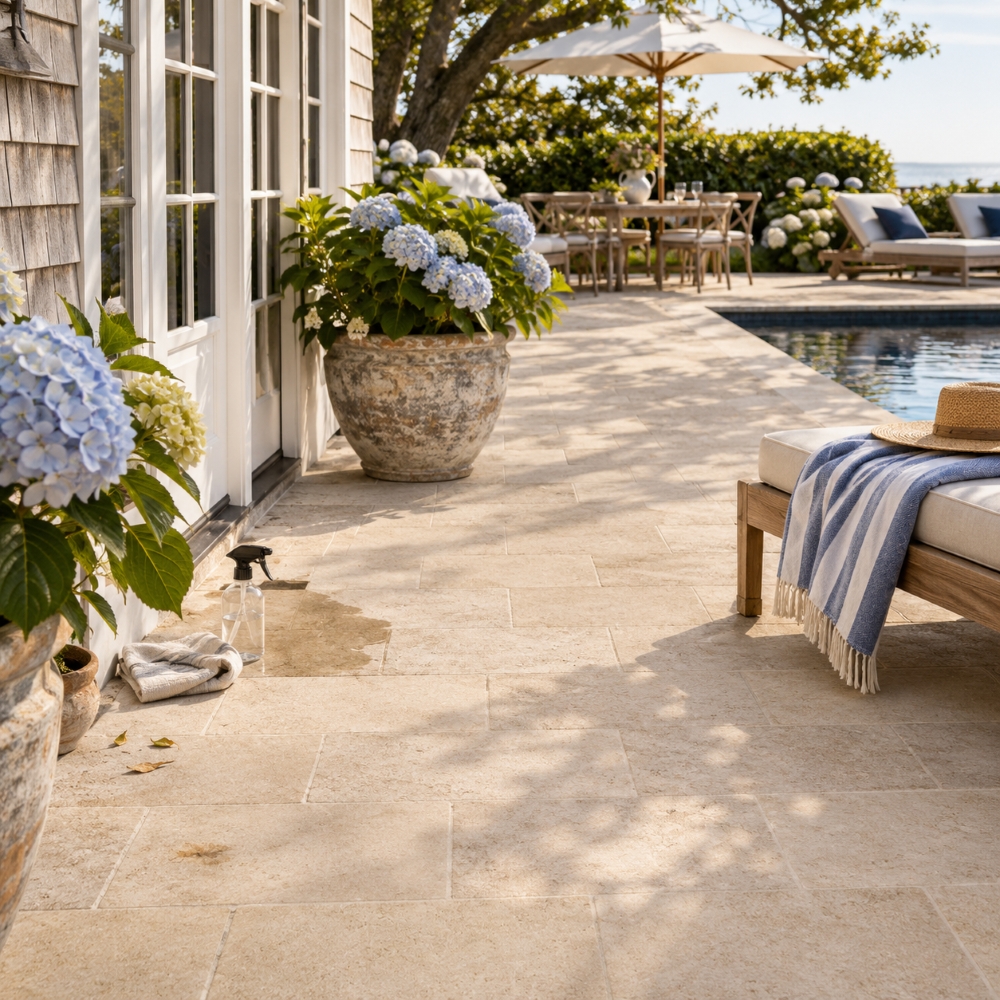
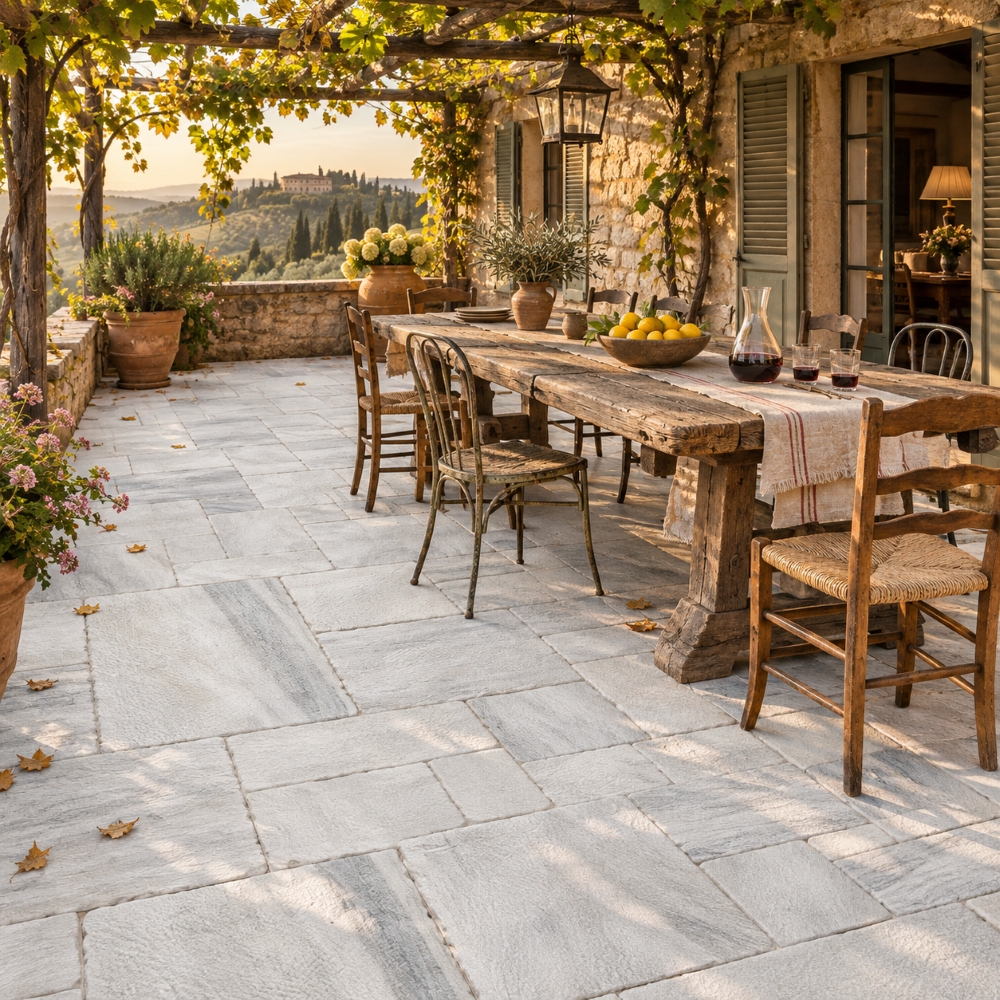
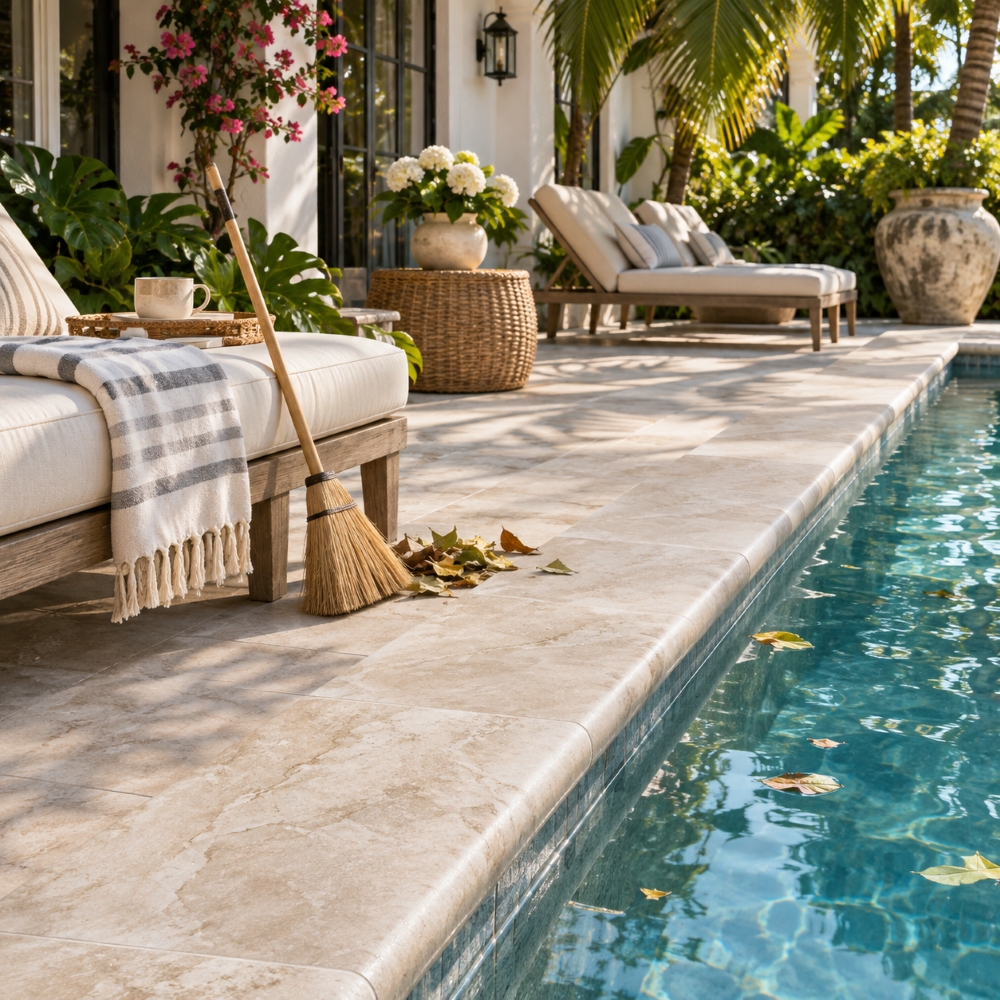
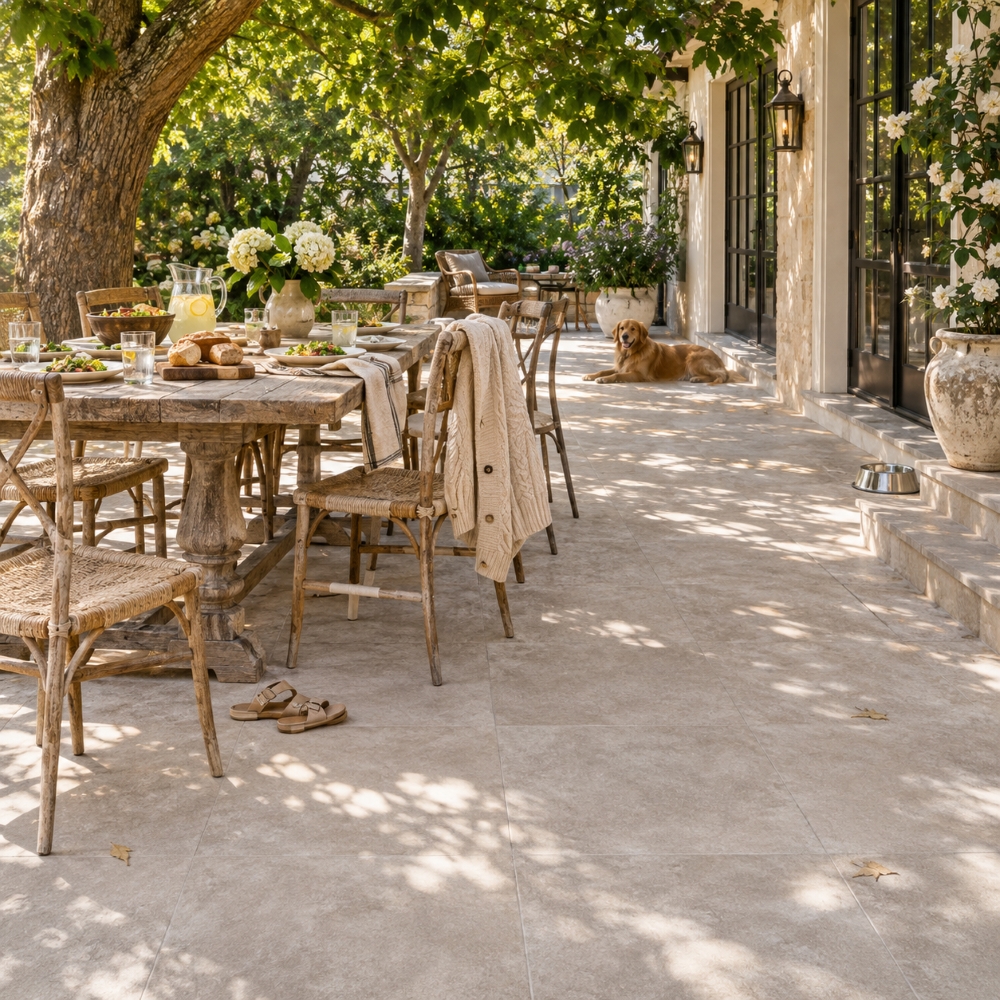
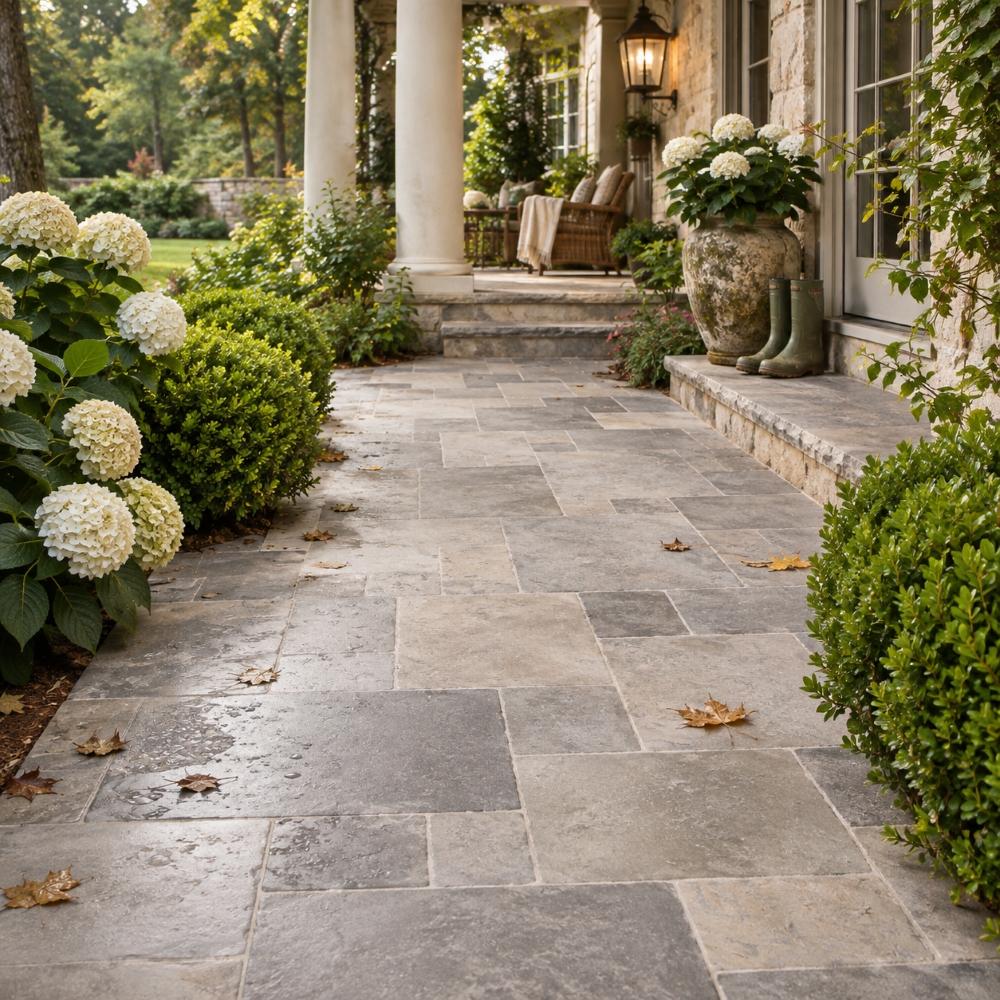
Leaf stains on stone pavers tend to appear overnight: one damp evening under an oak, and a travertine terrace wakes up covered in brown silhouettes.
I have spent more than 30 years selecting, specifying and caring for natural stone, and this question returns every season. These marks are rarely permanent, and how you clean them matters far more than how hard you scrub.
How to Remove Leaf Stains From Stone Pavers Safely
Why Do Leaves Stain Pavers?
Oak and maple leaves are rich in tannins, the same water soluble compounds that color a cup of tea. Dry leaves rarely stain; rain draws the pigment out and carries it into the surface.
Travertine tile and limestone tile formed over millions of years, and their fine pores are part of what makes them so warm and tactile underfoot. Those same pores can hold a little pigment for a while.
Leaf Stain, Mildew or Efflorescence? Identify It First
Clients often assume every mark on a patio is dirt, but in reality each stain asks for a different response. Tannin stains are brown or faintly pink, often in the outline of a leaf.
Do Leaf Stains Go Away on Their Own?
Often, yes. The Natural Stone Institute notes that outdoors, once the source is removed, sun and rain will generally bleach organic stains out.
Under a dense canopy or through a dry season, the mark simply lingers longer. When a stain is fresh, patience and a broom are a perfectly professional first step.
How to Remove Leaf Stains From Stone Pavers
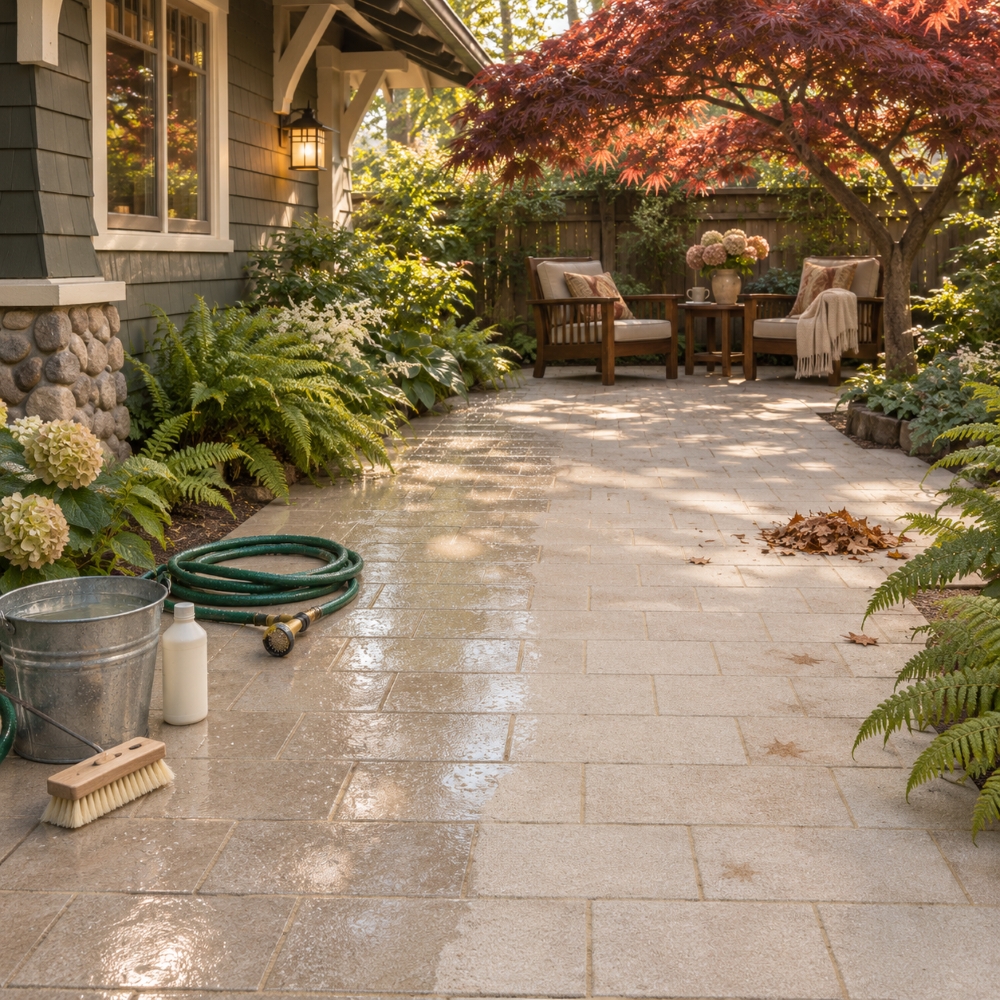
Start gently. Clear the debris, rinse, then scrub with a soft brush and a pH-neutral cleaner made for natural stone, working in the cool of the day and rinsing well.
With pavers set on sand joints, use a garden hose rather than a pressure washer, which can open the joints and roughen softer stone. Most light tannin stains lift at this stage.
How to Get Leaf Stains Off Travertine and Limestone
For a stubborn mark, an oxygen based cleaner or hydrogen peroxide, given time to work and then rinsed away, can often achieve what scrubbing cannot.
Test it on a hidden corner first. The most common mistake we see is an ivory travertine deck treated as if it were concrete. These are calcareous stones, and patience protects the honed or tumbled face you chose them for.
Can You Use Vinegar or Bleach on Travertine Pavers?
Leave the vinegar in the kitchen. Many leaf stain tips online were written for concrete, and acids can dull or etch marble tile, limestone and travertine, leaving a mark far harder to correct than the leaf ever was.
Bleach is a blunt tool too: it is meant for algae and moss, should always be diluted, and must never be mixed with ammonia.
Acorns, Berries, Sap and Flowers: Stains Beyond Leaves
Acorns carry concentrated tannins, berries leave purple marks, and sap is sticky rather than pigmented, so it needs softening before it lifts.
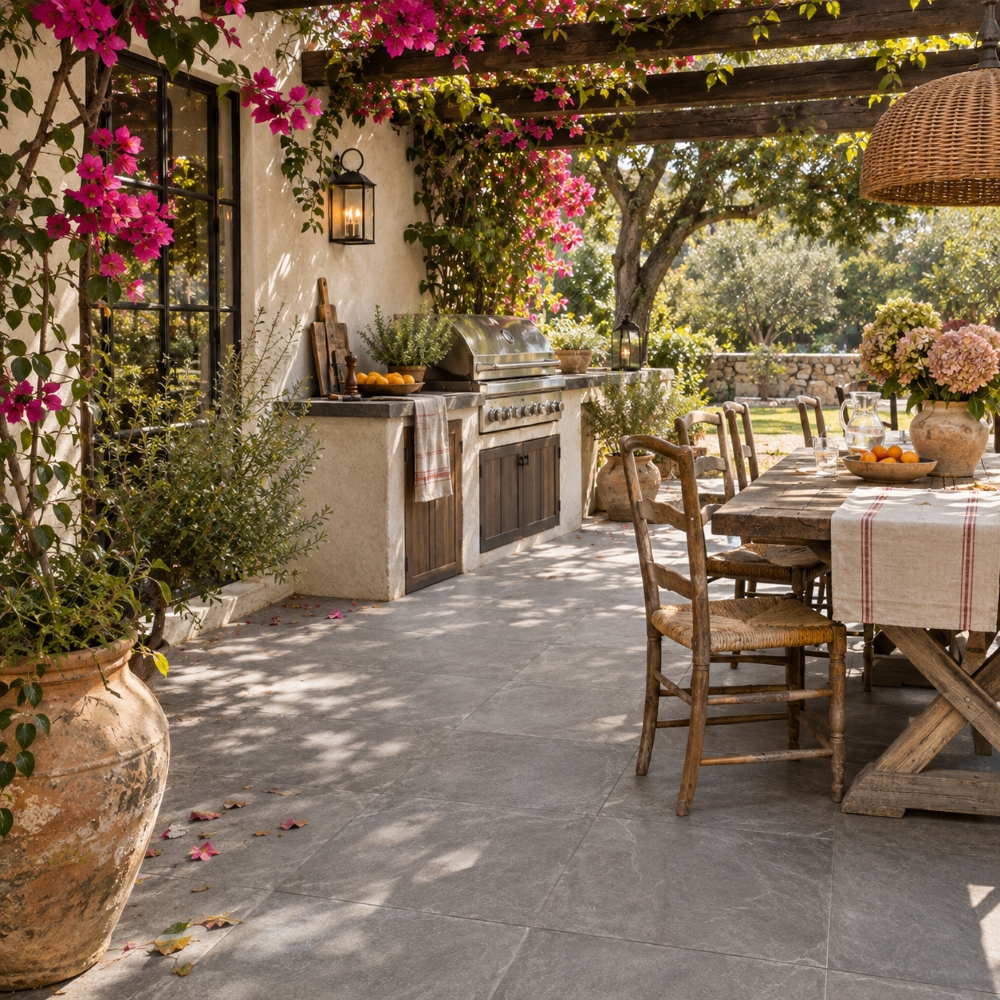
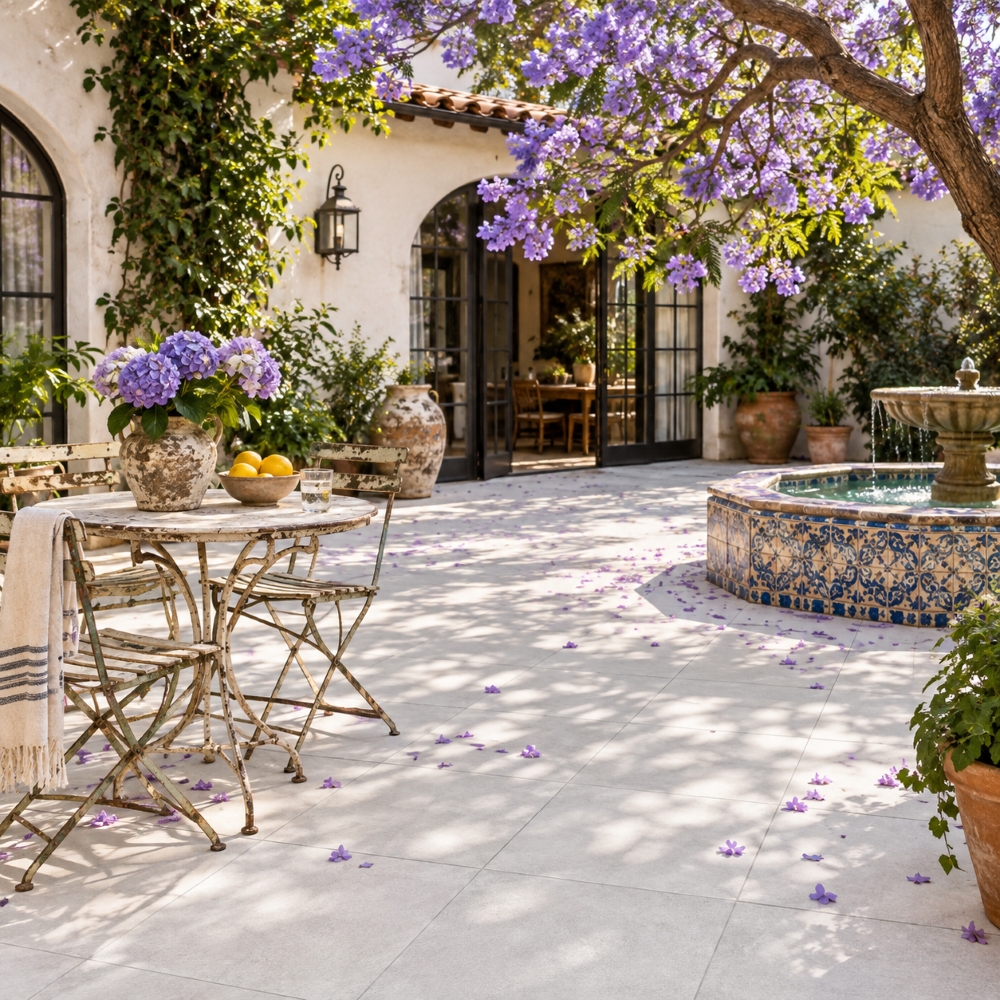
Fallen jacaranda blossoms are a familiar spring nuisance in Southern California, and in South Florida black olive trees are known for rust colored staining beneath their canopy. Each source is organic, so the same gentle sequence applies.
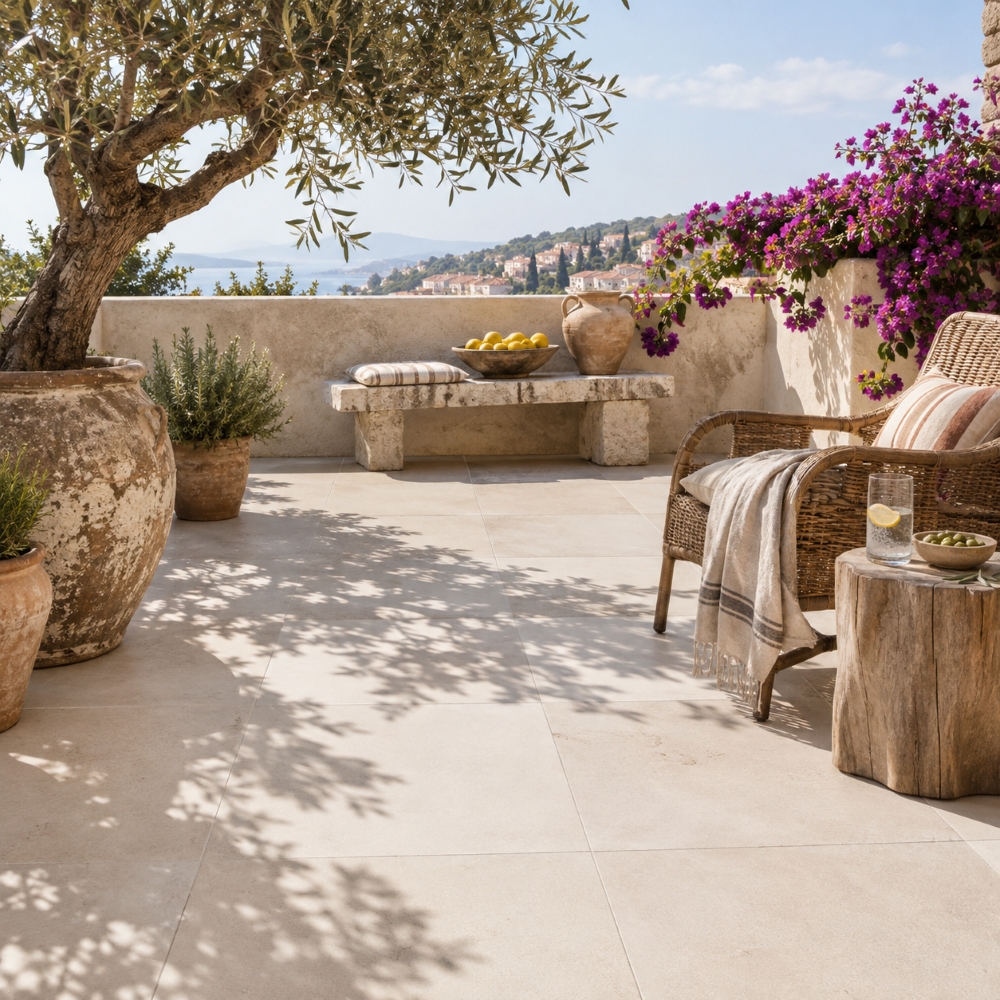
Most suppliers lead with the palest stone because it photographs beautifully. We ask clients to leave samples under their own trees for a few weeks, because that is the only honest test.
Choose Stone That Grows More Beautiful With Time
Natural stone carries millions of years in every piece, and a few autumns of leaves will not take that soul away. Cared for with patience, it develops a patina no manufactured surface can imitate.