Best Pool Deck Pavers for Hot Climates: Handling Sun, Heat, and Bare Feet
You know the feeling. You step onto the pool deck and rush to the water on your toes. I have spent many years choosing stone for pools, and one lesson stands out: the best pool deck pavers for hot climates are never picked by name alone. Color, finish and sun decide how your pool deck pavers feel at noon.
Best pool deck pavers for hot climates: 15 tips on color, finish and stone choice.
Best Pool Deck Ideas With Pavers That Stay Cooler
01
of 15
Do Pavers Get Hot in the Sun? Why Some Pool Decks Burn Bare Feet
Yes, every paver warms up in direct sun. The U.S. EPA says standard paving can reach 120 to 150°F (48 to 67°C) on summer afternoons.
It also says the biggest factor is how much sunlight a surface reflects. Dark stone soaks up heat. Light, matte stone sends more of it back.
02
of 15
Best Pool Deck Pavers for Hot Climates, Compared
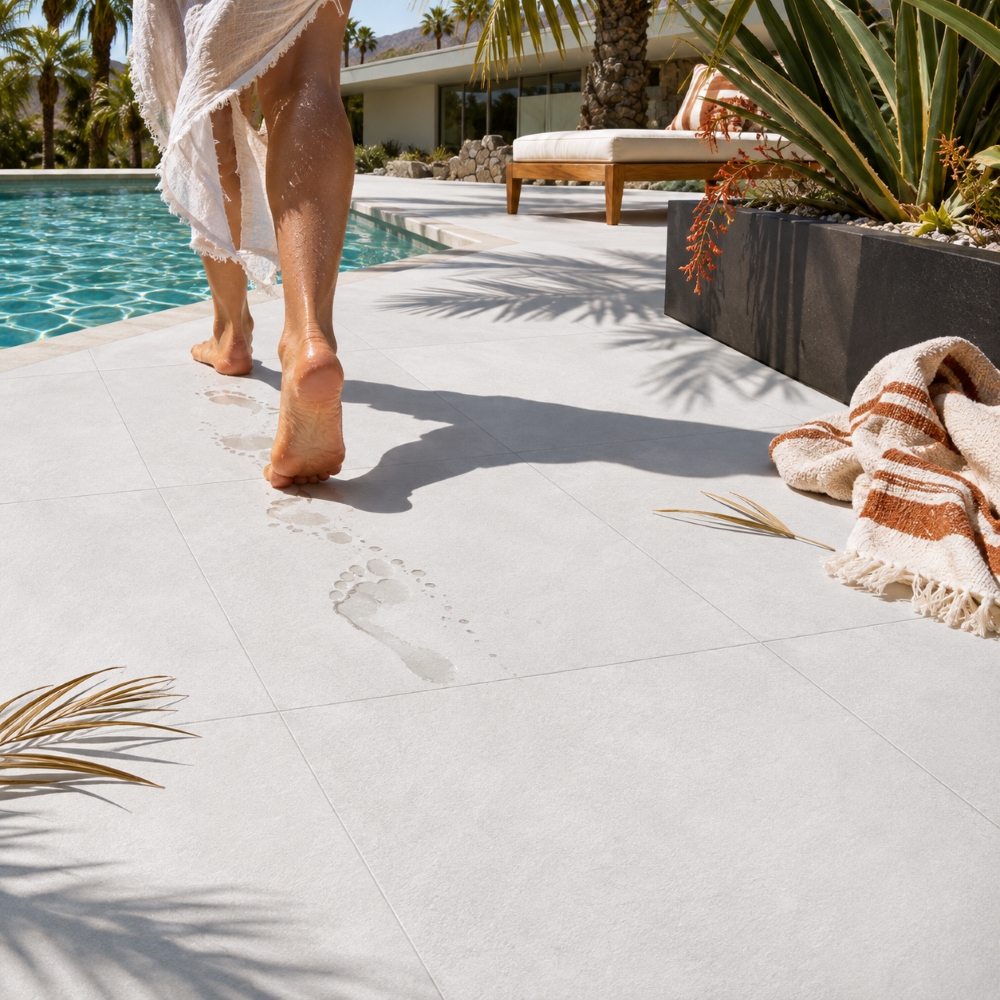
Many clients think the type of stone decides how hot it gets. Usually, it doesn’t. A light porcelain paver and a light travertine can feel almost the same in the afternoon sun. A dark paver of almost any kind will burn.
03
of 15
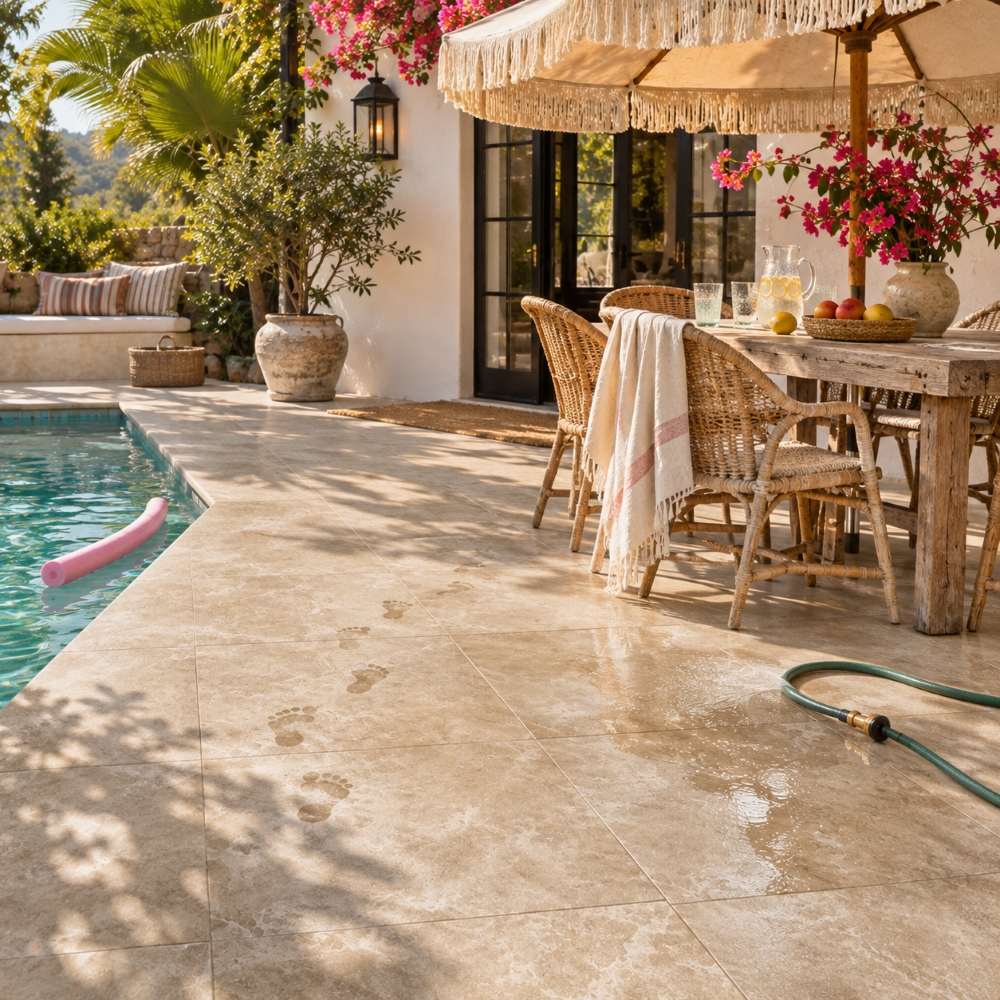
Travertine Pool Deck: Does Travertine Get Hot?
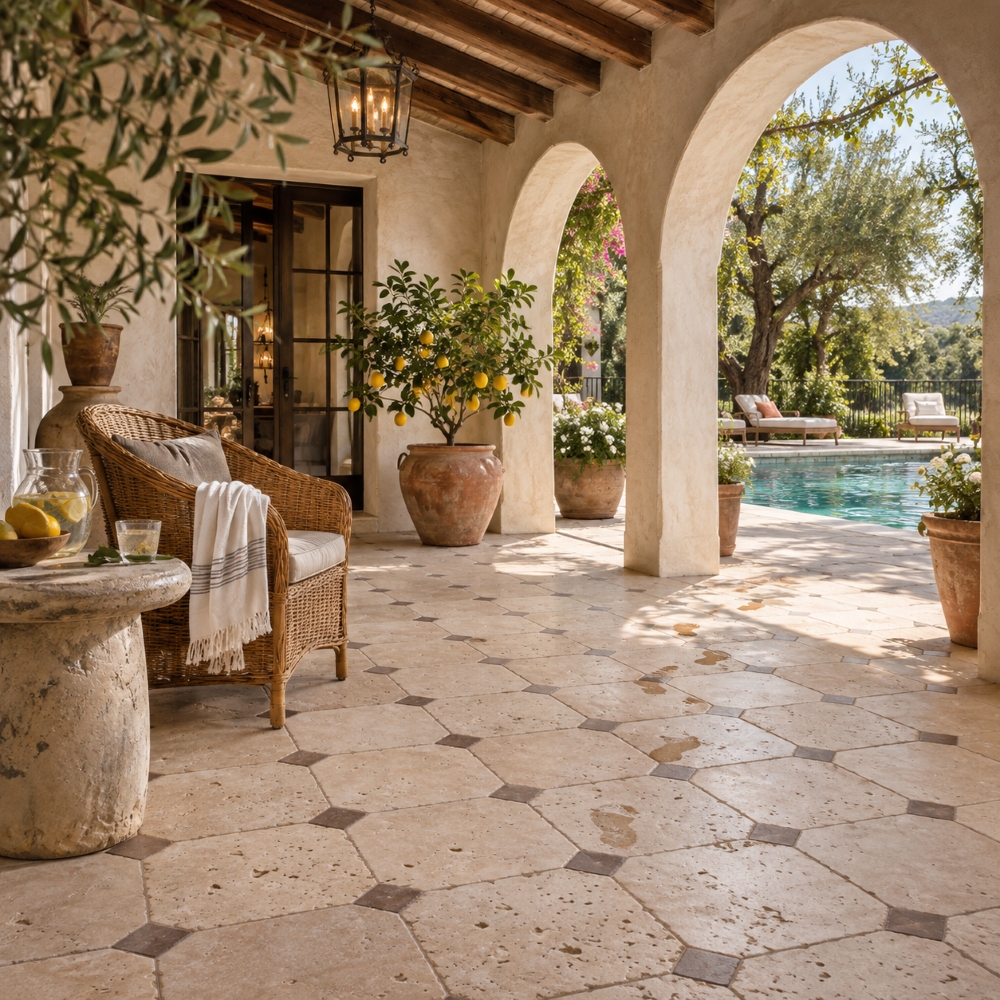
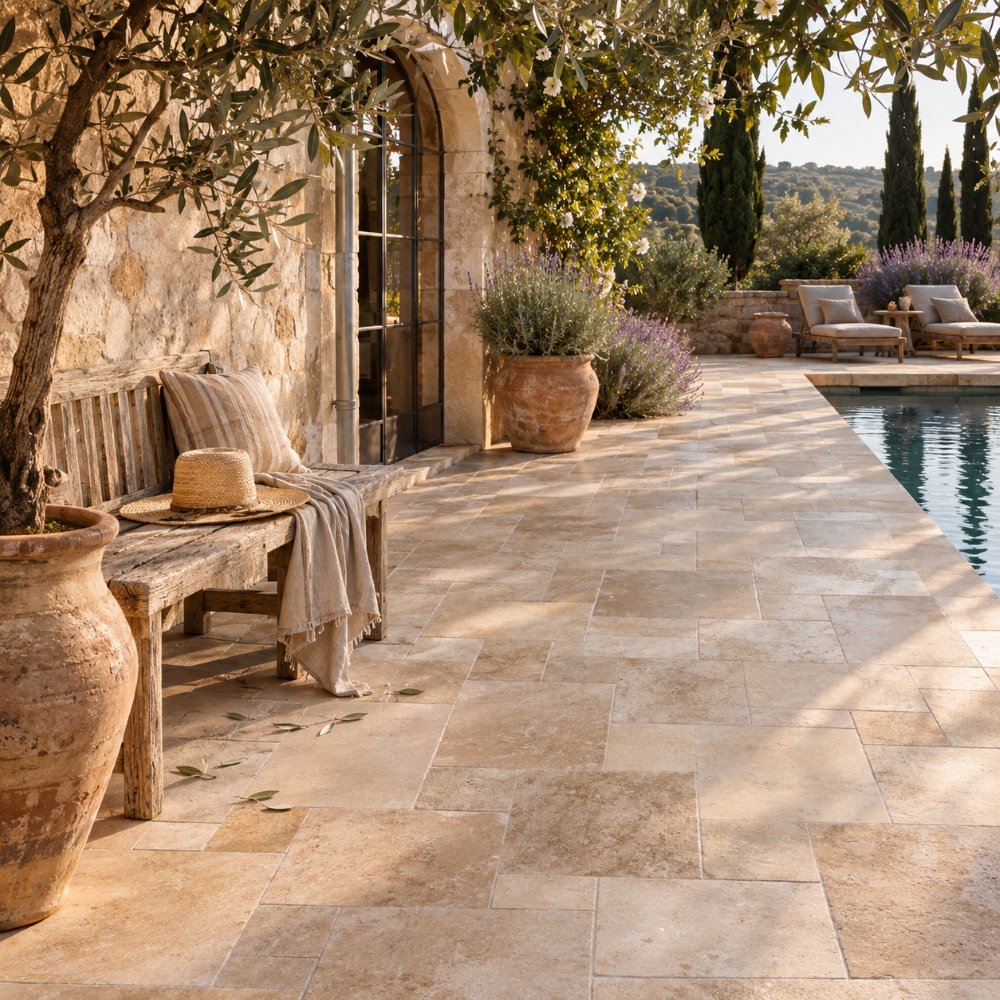
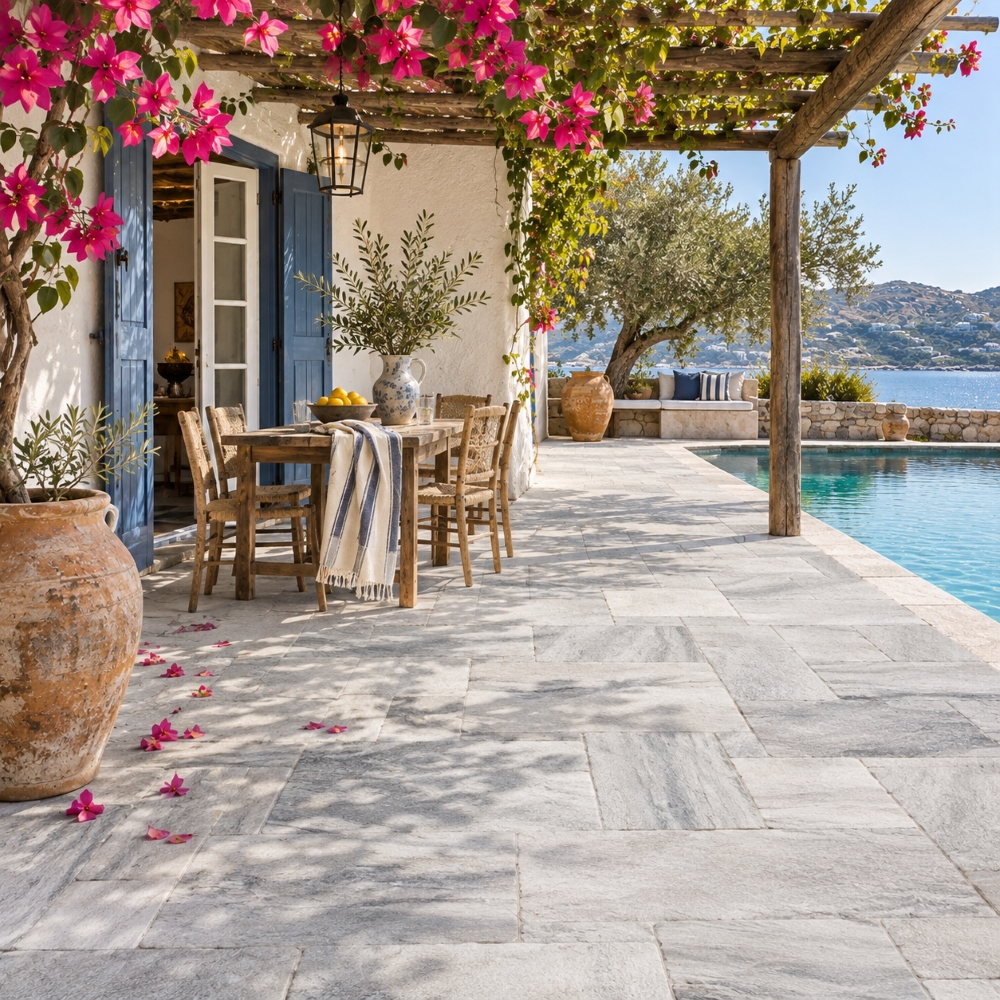
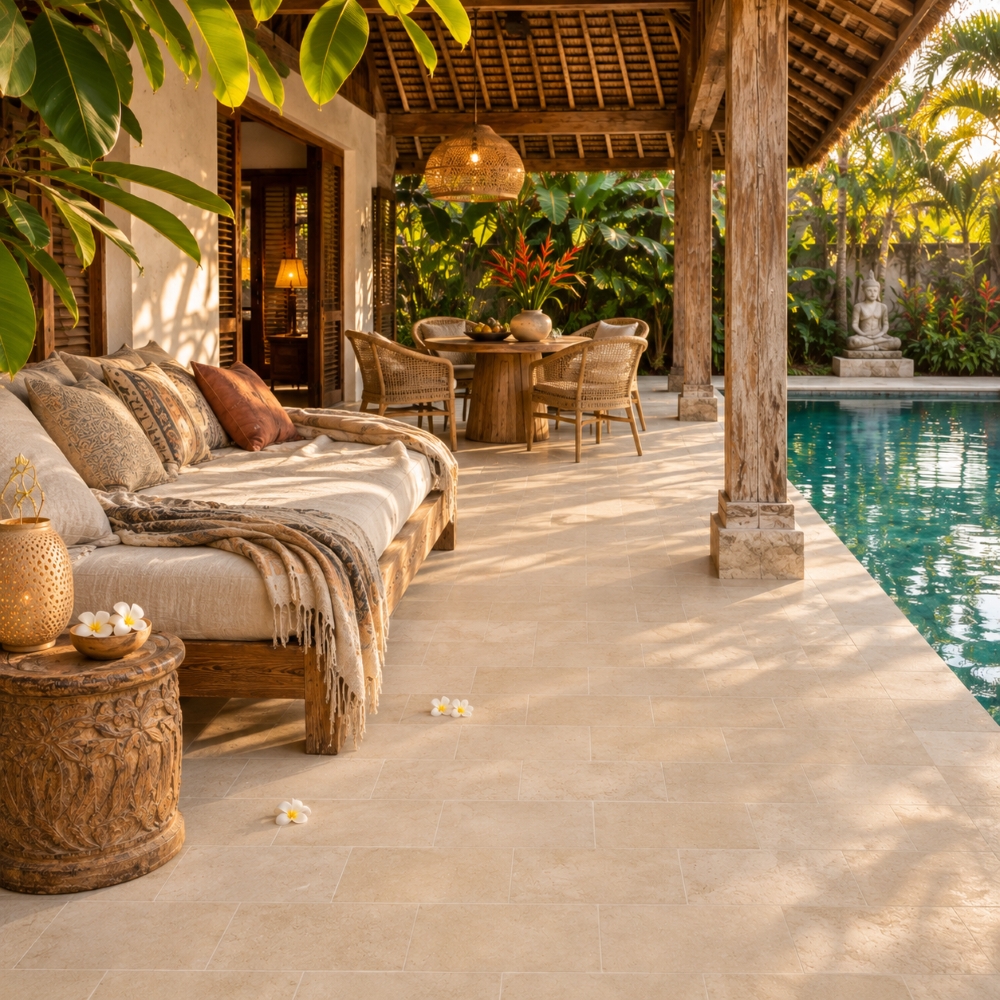
Travertine warms up like any stone. Still, ivory and beige pieces with a tumbled or honed finish are among the easiest on bare feet.
Light, creamy limestone tile reflects sunlight well. Darker, denser types hold heat longer, often into the evening. A brushed finish adds grip without shine, and its soft, quiet look feels right next to water.
05
of 15
Marble Pool Deck Pavers: Finish and Color Matter
Polished marble tile looks stunning in an entryway. By the pool, it turns slippery and creates glare. Choose a textured or tumbled finish instead, and pick soft white tile veining over dark tones.
06
of 15
Porcelain Pavers for Pool Decks: Do They Get Hot in the Sun?
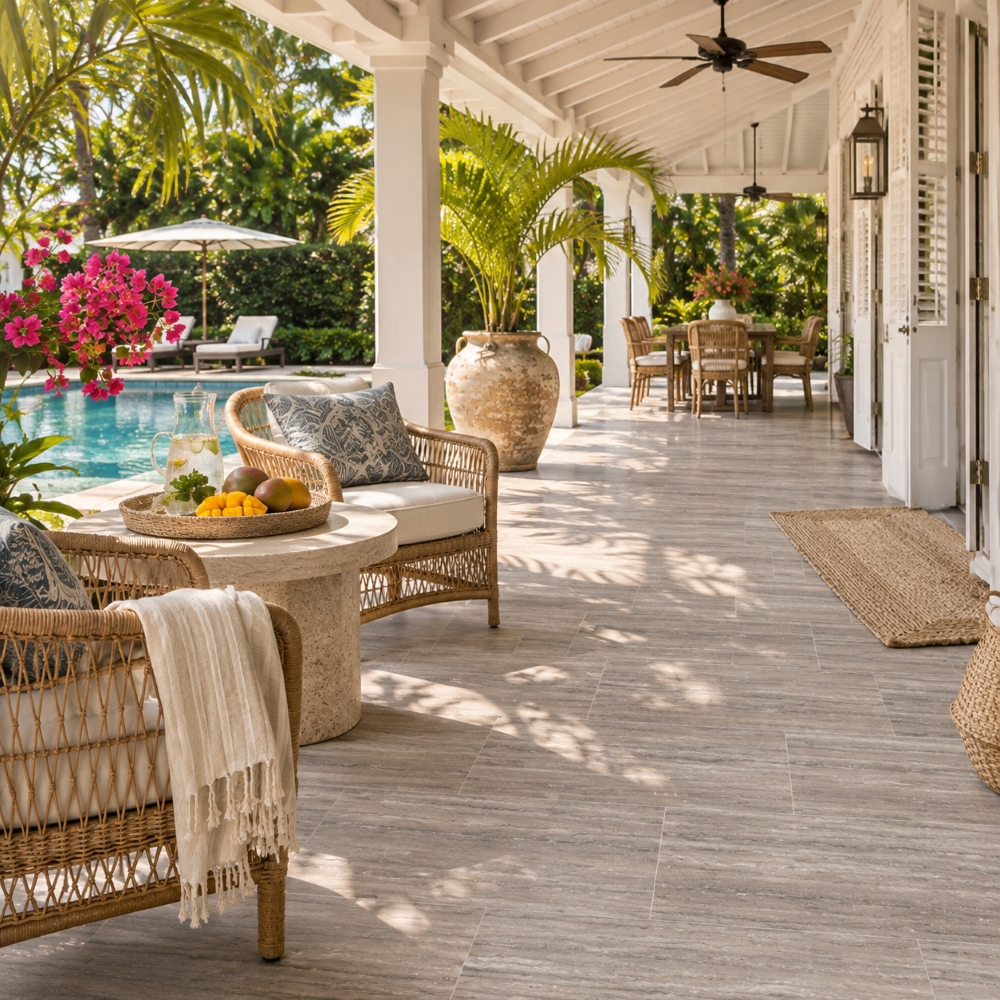
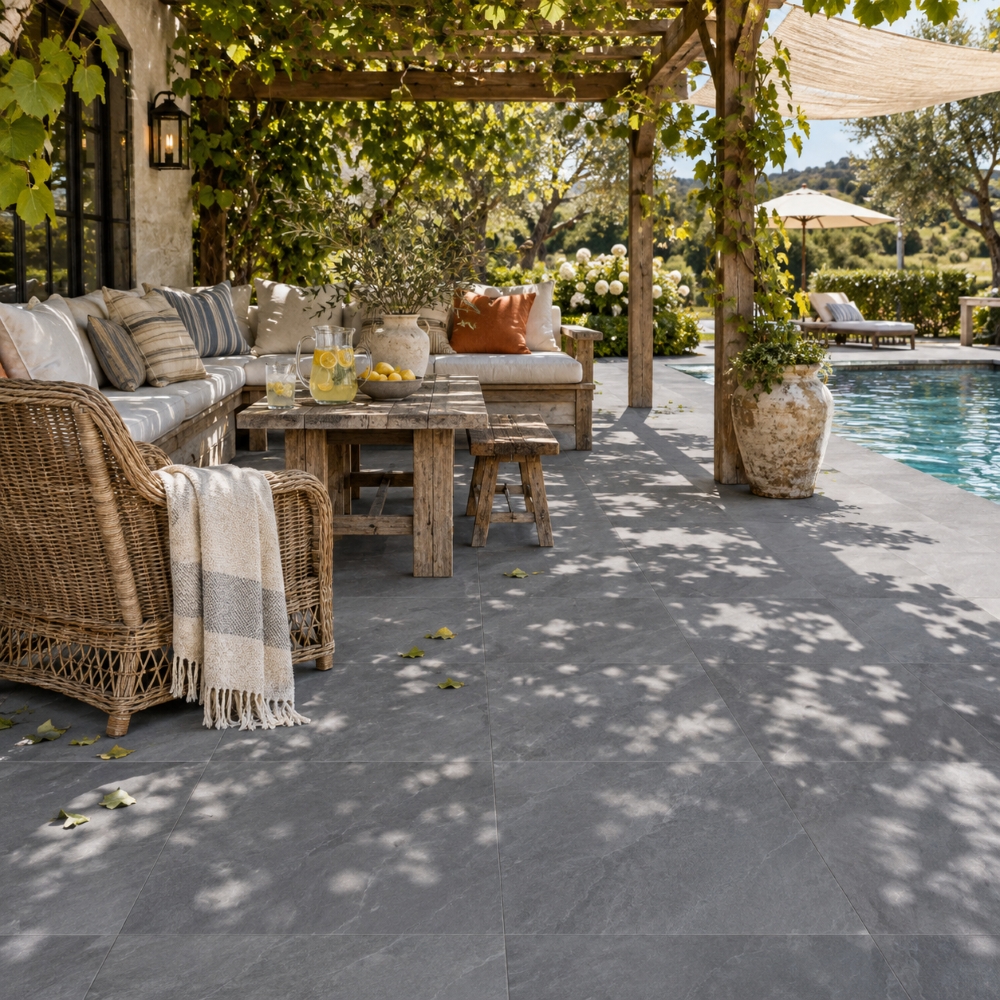
Yes. Dark gray porcelain tile heats up fast. Light, textured porcelain stays more comfortable, and it needs very little care because it absorbs very little water.
07
of 15
Dark Stone Around the Pool: Where It Still Works
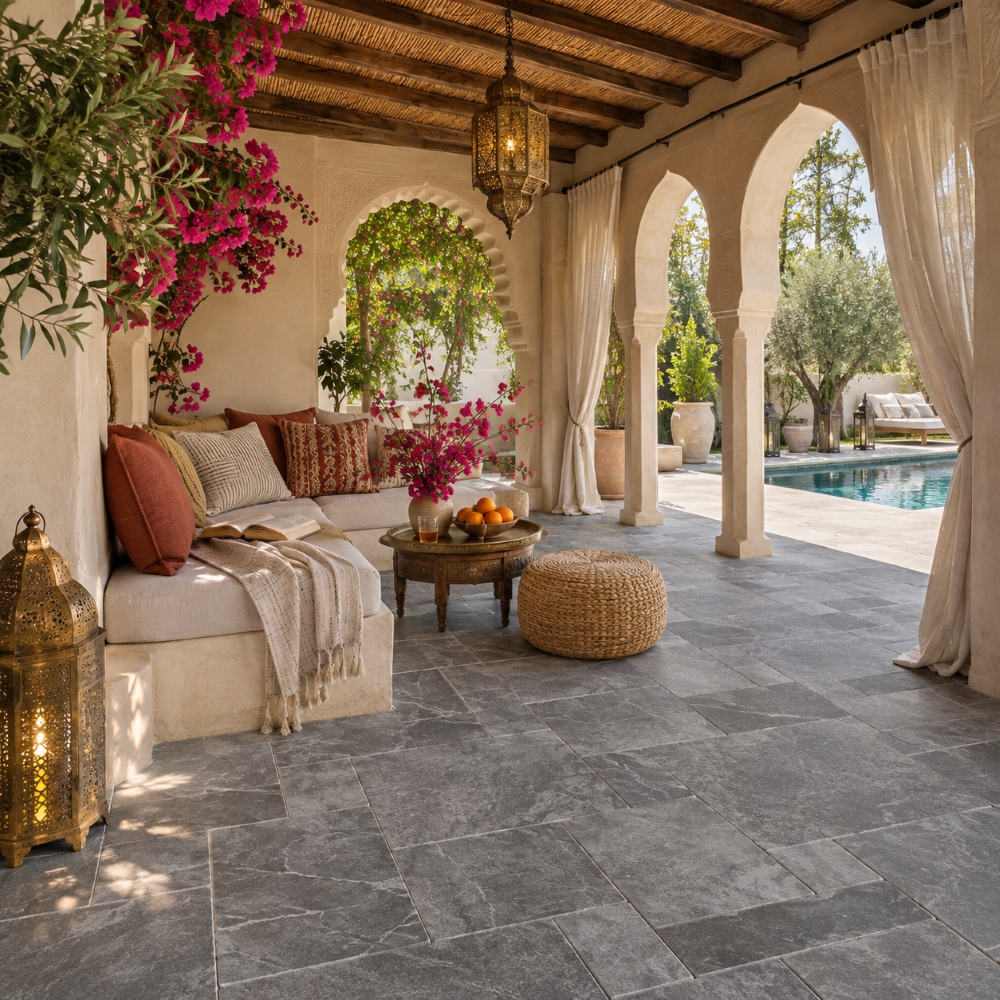
Volcanic basalt tile and black tile marble can still work. They just need the right spot: a shaded lounge, a covered cabana or a thin border around a lighter deck.
Use them as accents, not as the main surface in full sun. Under a roof, you can go warmer too. Mediterranean style terracotta tile gives a pool house floor the sunny charm of an old Italian villa.
08
of 15
Travertine vs. Porcelain vs. Limestone: Which Pool Deck Feels More Comfortable?
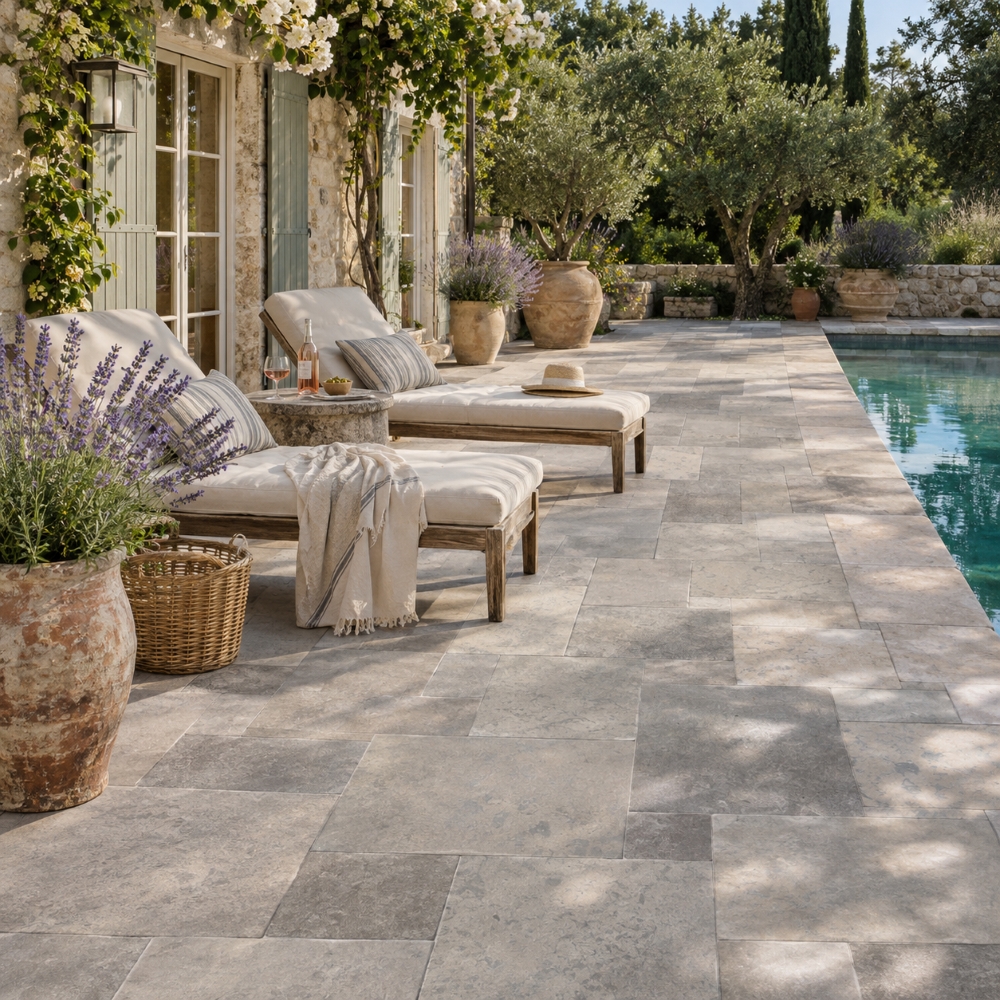
In light colors, all three work well. Travertine and limestone give you the feel and soul of real stone, shaped by nature long before us. Porcelain gives you a uniform look and easy care.
The most common mistake we see? Picking a stone from a dry sample indoors, then feeling it at noon for the first time.
09
of 15
Are There Pool Deck Pavers That Don’t Get Hot?
No. Anyone who promises that is selling, not advising. But you can choose a deck that stays comfortable longer. Pick a light color and a matte finish, add shade over busy paths, and rinse the deck before the kids run out.
10
of 15
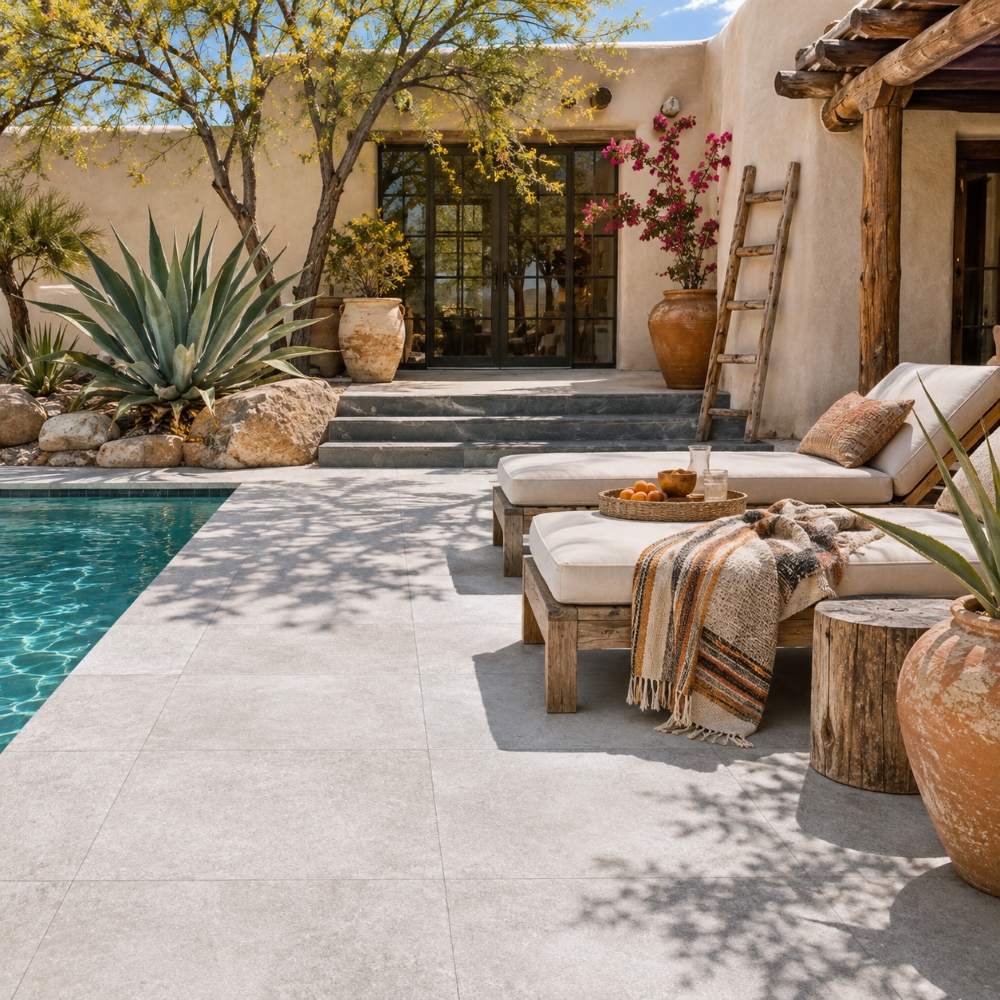
Light Colored Pool Pavers: Why Color Matters More Than Material
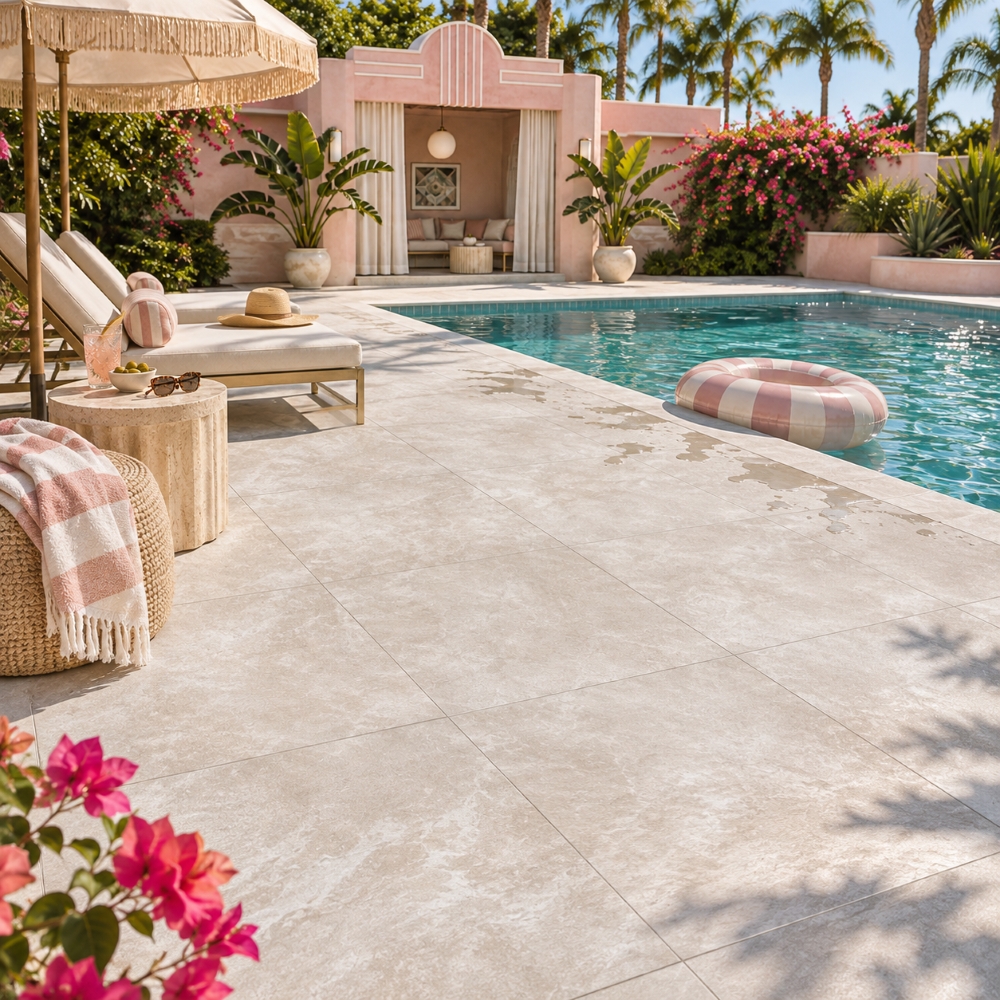
My one rule for clients is simple: choose the color first, then the stone. Soft beige tile, cream and light gray tile reflect much more sunlight than charcoal or dark brown. Save darker shades for steps and shaded edges.
11
of 15
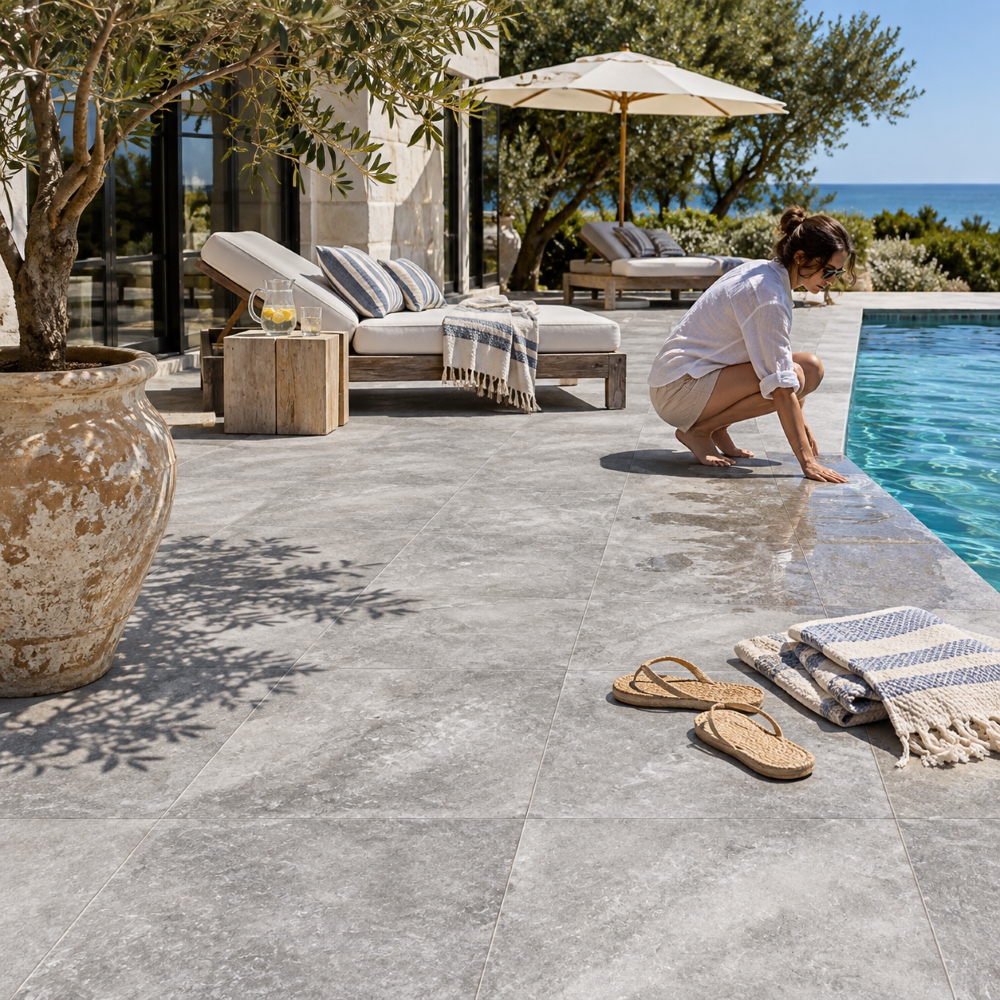
Test Before You Buy: A Simple Sun Test for Paver Samples
Most suppliers hand you a sample and leave it there. We wet our samples and take them outside with clients, because stone looks and feels different in daylight.
You can do the same at home. Set a few samples side by side in full sun. In the early afternoon, check them dry and wet, using your hand before your feet.
12
of 15
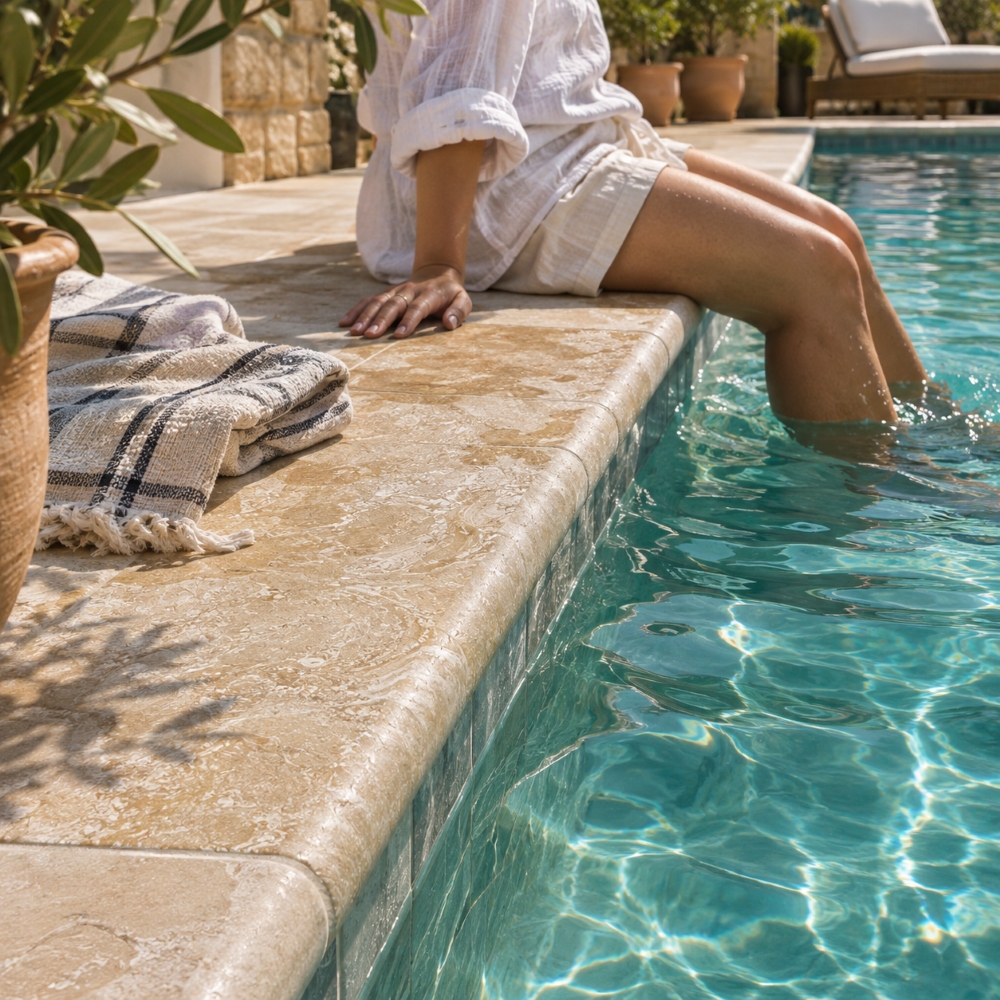
Pool Pavers and Coping: Choosing the Edge Everyone Sits On
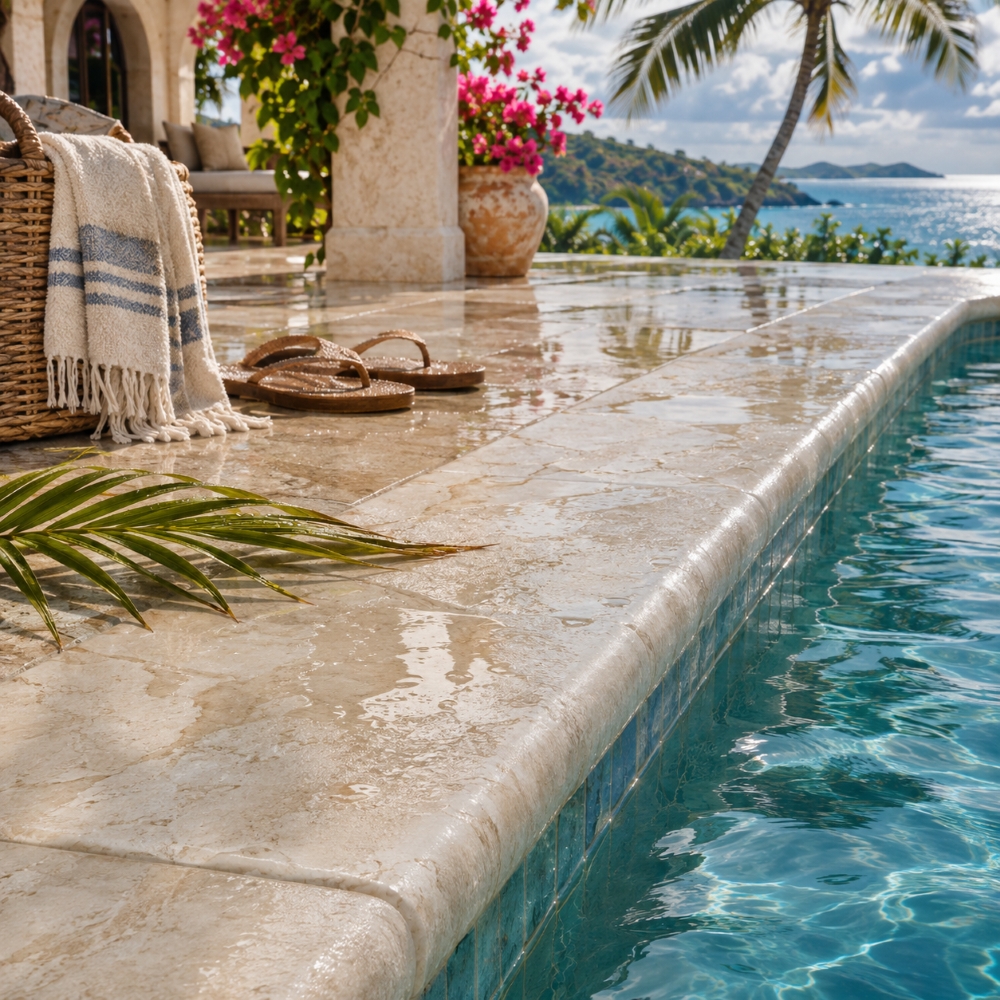
The coping is the edge of the pool. People sit on it and climb out over it, so it matters as much as the deck.
A rounded edge feels softer on skin. Our pool copings in tumbled travertine and brushed limestone are made for this spot.
13
of 15
How to Keep a Pool Deck Cool When It’s Already Built
Shade helps the most. Try umbrellas, shade sails, a pergola or trees that will grow a wide canopy. When it is time to redo the deck, choose pavers by color and texture, not by catalog photos.
14
of 15
Beyond Heat: Grip, Upkeep and Salt Water Pools
Heat is not the only thing to think about. Choose textured finishes for wet feet, and ask how each stone handles chlorine or salt.
Stone that absorbs less water matters most when you compare the best pavers for saltwater pools. If a white, powdery film shows up after a few rainy weeks, it is usually salt coming up from below, the same reason behindpavers turning white.
15
of 15
Compare Pool Deck Pavers Side by Side
Stone is something you need to touch to truly know. Bring a photo of your pool to our showroom, and we will set samples side by side in daylight.
No paver stays cool in full sun, but light, matte pool deck pavers like ivory travertine, cream limestone and light porcelain are usually the most comfortable in hot weather.
Do Porcelain Pavers Get Hotter Than Natural Stone?
Not always, because color and finish matter more than material, so a light porcelain paver can feel like a light travertine while dark versions of both get hot fast.
Do Light Colored Pool Pavers Show More Dirt?
Pure white pavers show leaves and stains more, so many homeowners choose beige or cream pool deck pavers that stay comfortable and hide everyday marks better.