

15 Countertop Regrets to Avoid: Stains, Chips and Seams

Black-Polished-Marble-Slab

Every slab in our yard was shaped by millions of years of heat and pressure, long before anyone imagined a kitchen around it. That history gives natural stone its soul, and it is why most countertop regrets have little to do with the stone itself.

I have spent 30 years helping homeowners, designers, architects and contractors choose slabs, and the regrets I hear almost always come from how a stone was chosen, finished or planned.

Countertop Regrets When Choosing the Stone

01

of 15

Choosing From a Small Sample, Not the Full Slab
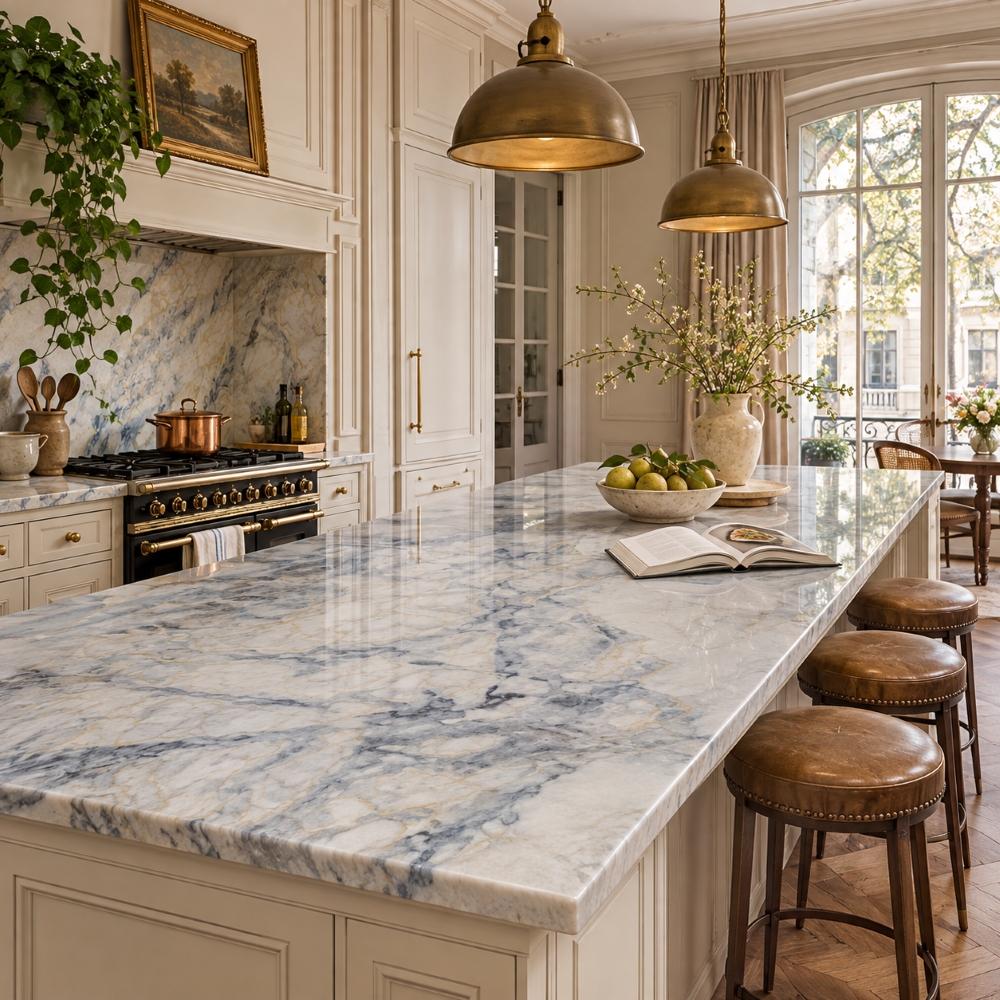
Clients often think the sample is the countertop, but in reality it is one sentence from a long story. A small square cannot show how veining travels across ten feet, so walk the full slab before committing to any of our natural stone slabs.

02

of 15

Not Checking the Stone in Your Kitchen Light

Showroom light flatters everything. Warm LEDs can turn cool white marble creamy, and north light can make beige tile read gray. Judge the slab against photos of the light your kitchen actually has.

03

of 15

A Countertop That Clashes With Cabinets and Floors

The most common mistake I see is choosing the stone last. Bring a cabinet door, a floor sample and the kitchen backsplash tile you love to the slab yard. White tile and gray tile stones forgive a great deal; strongly veined pieces need quieter company.

04

of 15

A Stone Pattern Too Busy for the Room

A dramatic slab in a compact kitchen can feel loud rather than luxurious. Expressive stones such as onyx slab shine on an island or powder room vanity, where the pattern has room to breathe.

05

of 15

Buying “Quartzite” That Etches Like Marble

Some stones sold as quartzite slab behave like marble. Genuine quartzite scratches glass and resists etching from lemon or vinegar, per Natural Stone Institute guidance, so test an offcut first. It is the same reason so many clients ask whether Taj Mahal is granite or quartzite before they commit.

Stone Countertop Problems You Live With Every Day

These regrets appear once the stone is home, and most come down to matching stone and finish to how a household really lives.

06

of 15

Underestimating Natural Stone Countertop Maintenance

Clients often assume natural stone means constant work, but in reality care depends on the stone. Granite slab and quartzite slabask for little, while marble tile and limestone tile reward an attentive owner with a patina that deepens over time. If minimal care matters most, compare porcelain slabs and sintered stone.

07

of 15

Dull Spots on Marble: Etching vs. Staining

Dull spots on marble are etching, a reaction between acid and calcite, and sealing does not prevent them. A honed finish makes etching far less noticeable, and most light marks can be softened once you know how to remove dull spots and stains from marble countertops.

08

of 15

Oil and Wine Stains on Stone Countertops

Stains form when liquid soaks into stone. Many suppliers hand over a bottle of sealer and move on; we explain which stones truly need it, because the Natural Stone Institute notes that many granites do not.

For marble and limestone, picking the best sealer for stone countertops and applying it properly keeps oil and wine at the surface longer.

09

of 15

A Finish That Shows Every Fingerprint and Water Spot

A polished black countertop records every handprint. Honed and leathered surfaces scatter light, which is why I often steer busy families toward the best countertop finish to hide fingerprints rather than the shiniest one.

10

of 15

Using the Wrong Cleaner on Stone Countertops

Vinegar, citrus sprays and abrasive powders can etch marble, limestone tile and travertine tile within minutes. A pH neutral stone cleaner and a soft cloth are all most surfaces need.

11

of 15

Putting Hot Pans Directly on Granite or Quartzite

Granite and quartzite handle heat well, yet a sudden temperature change can still stress stone and mark a sealer. Soapstone slab copes well beside a range, but a trivet remains the wisest habit.

Countertop Mistakes to Avoid in Layout and Installation

The last regrets live in the details between slab and cabinet, where supplier, fabricator and homeowner must speak the same language.

12

of 15

Chipped Countertop Edges

Sharp square edges chip most often beside dishwashers and prep zones. A softly eased profile protects the stone where people lean and bump, and knowing how to choose a countertop edge profile before templating spares you a visible repair.

13

of 15

Cracks Near the Sink or Overhang

Cracks around a sink cutout or long overhang usually point to support, not stone quality. Ask how each span will be supported and check how thick a countertop slab should be for your layout, especially on a bathroom tile vanity with an undermount sink.

14

of 15

Visible Countertop Seams in the Wrong Place

Most kitchens need at least one seam because every slab has limits. People regret a seam where the eye lands first, so check real batch dimensions and ask for a written seam layout.

15

of 15

Slabs That Don’t Match

Two slabs with the same name can come from different blocks. Most suppliers sell by name; we show you the batch, because consecutive pieces are what make bookmatched slab design ideas work on an island or wall. A coordinating mosaic tile backsplash can soften subtle shifts.

See the Actual Slab Before You Decide

Natural stone rewards those who meet it in person. Visit a Marble Systems slab showroom with your cabinet door, floor sample, layout and fabricator, and choose the exact slab with us. The stone has waited millions of years; an afternoon of looking closely is time well spent.

Countertop Regrets FAQ

Does sealing marble prevent etching?

No, sealing helps marble countertops resist stains, but it cannot stop etching, because etching is a chemical reaction between acids and the calcite in the stone.

Genuine quartzite usually resists etching and scratches better than marble, but some stones sold as quartzite behave like marble, so test an offcut before you buy.

Countertop seams cannot be made invisible, but slabs from the same batch and a seam layout planned before cutting make them far less noticeable.