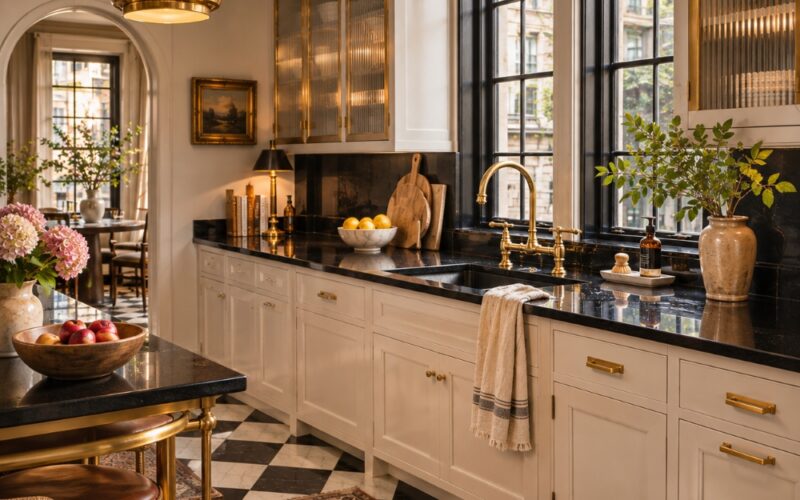
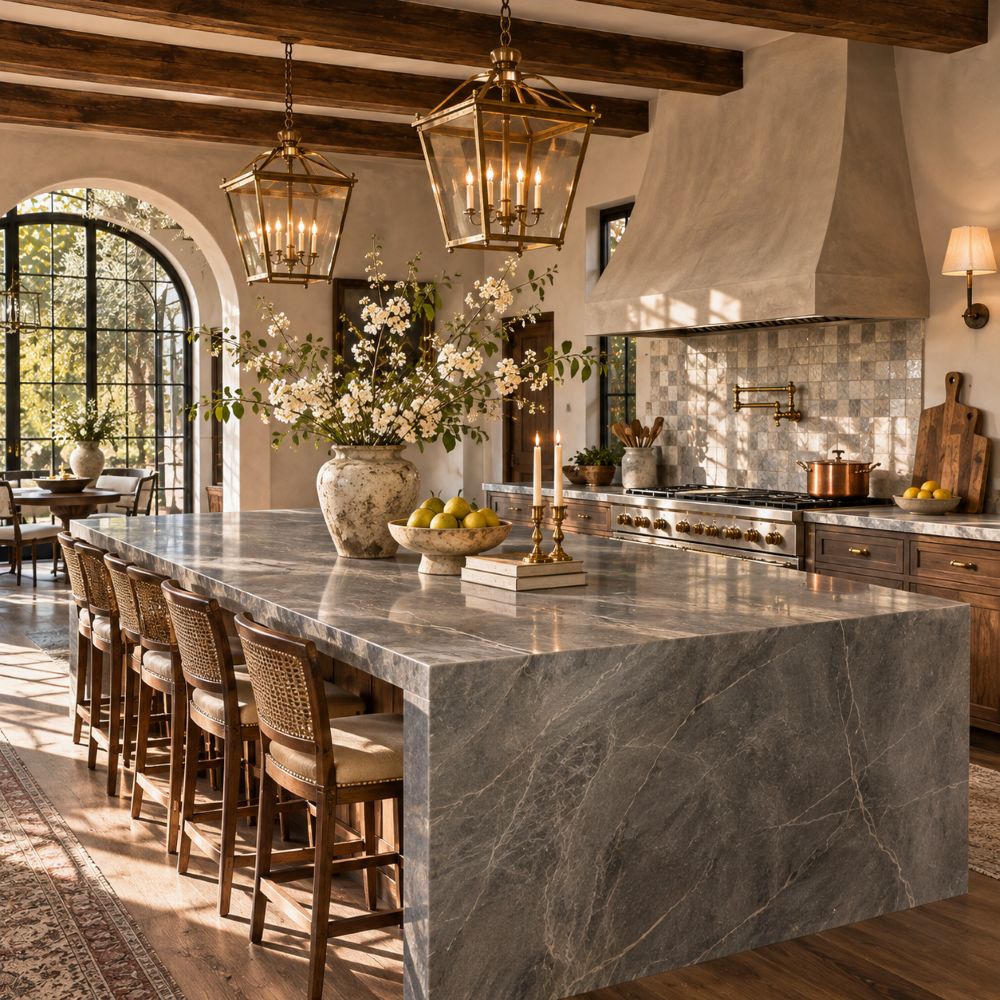
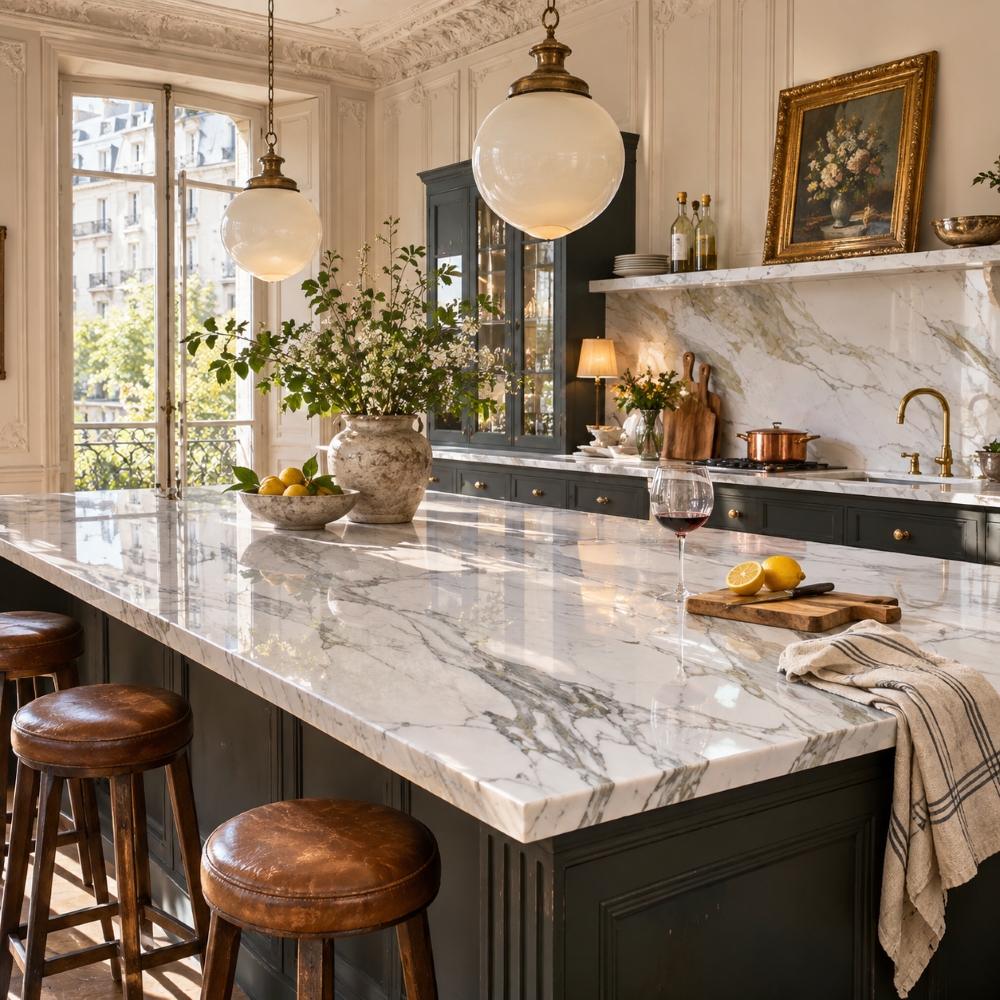
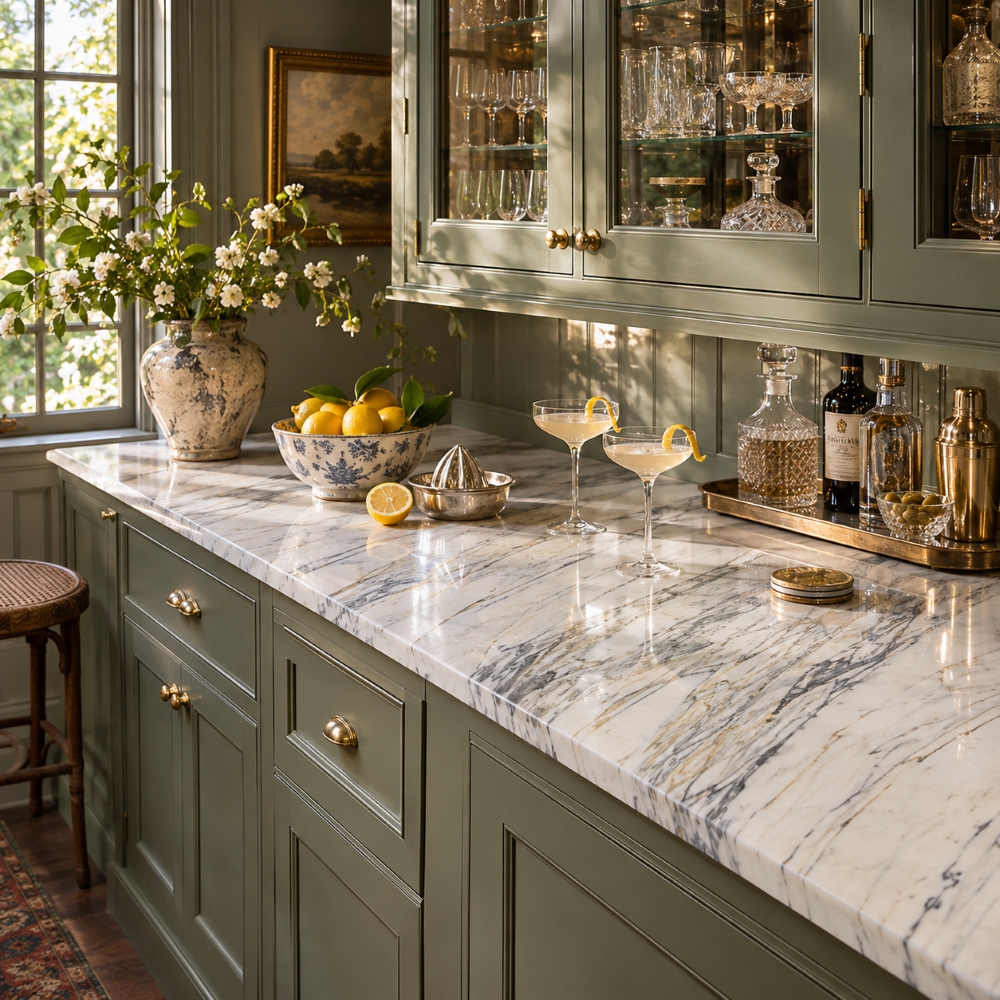
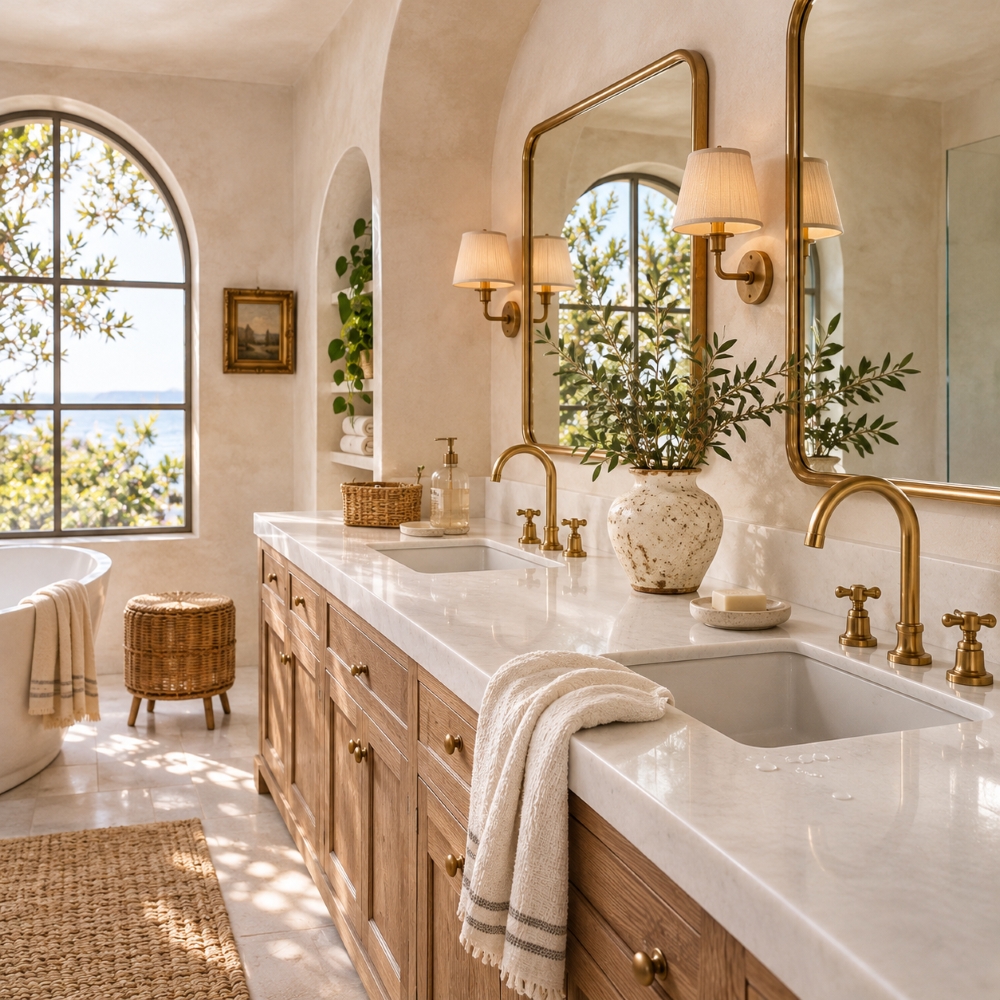
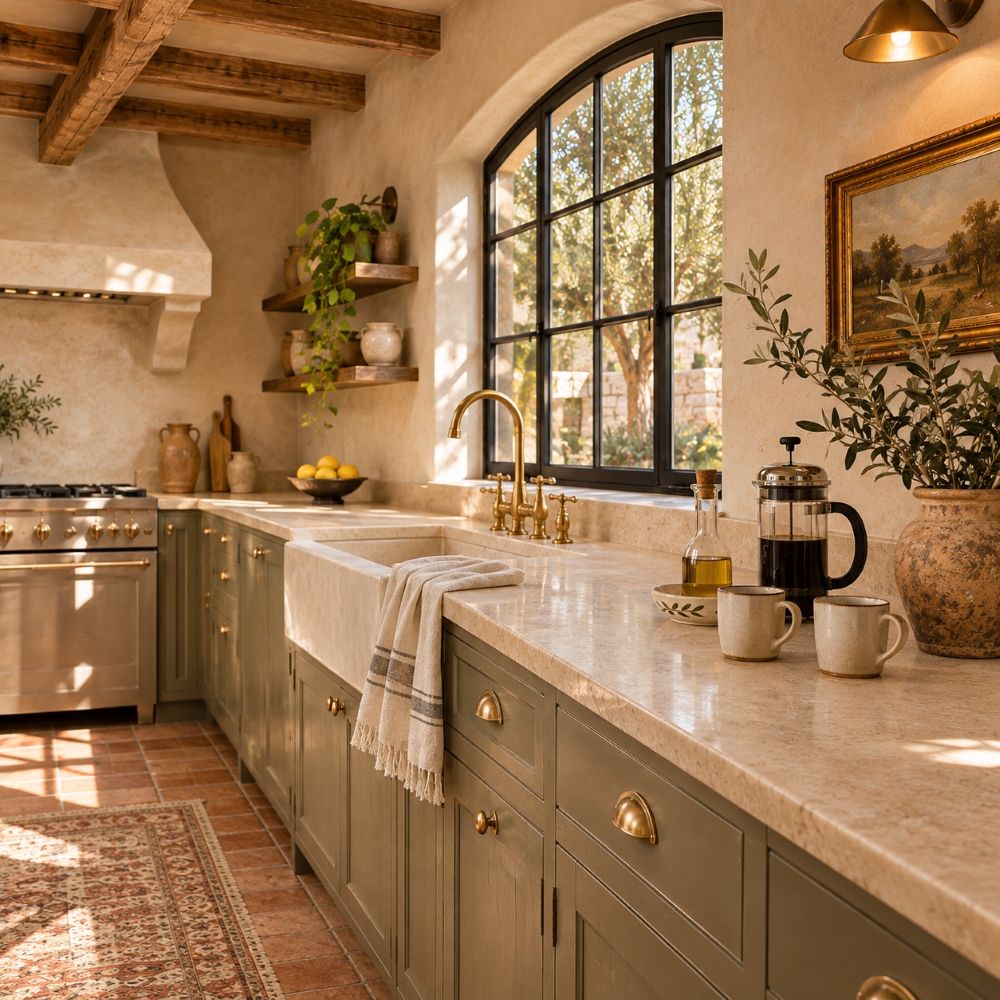
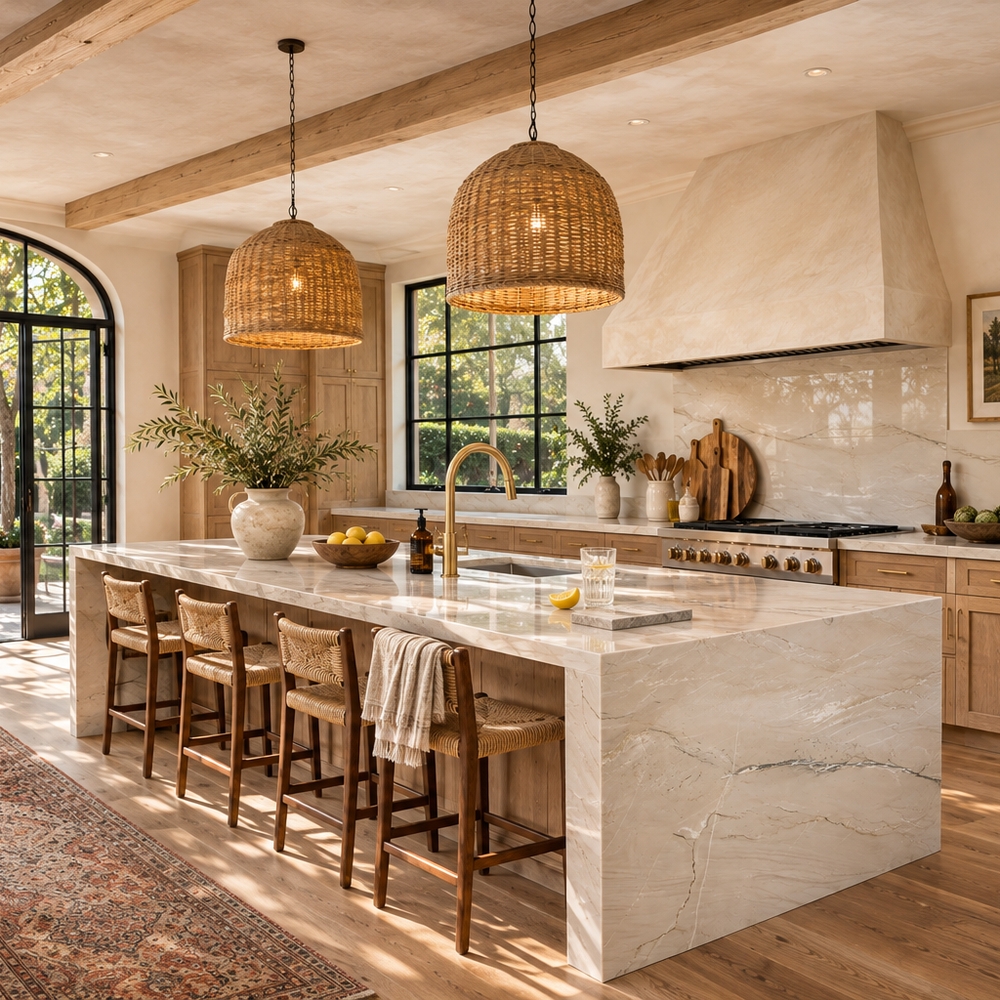
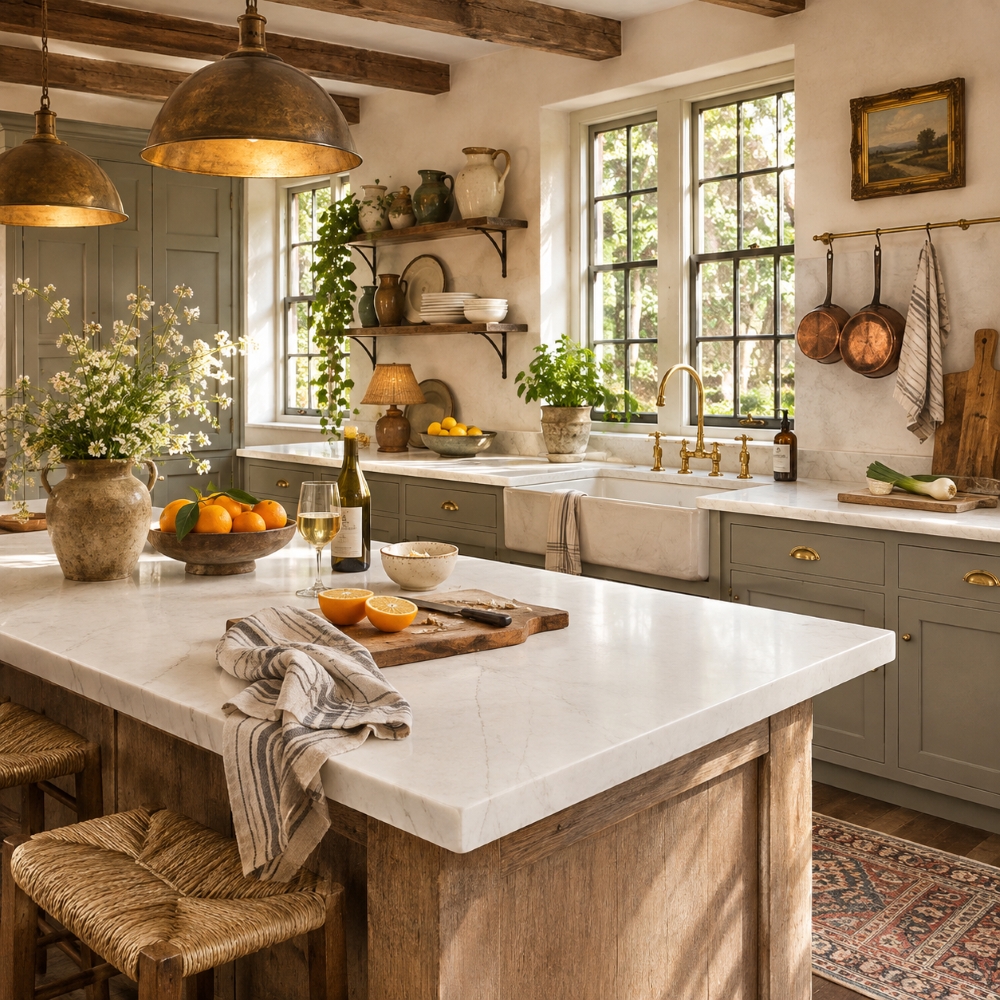
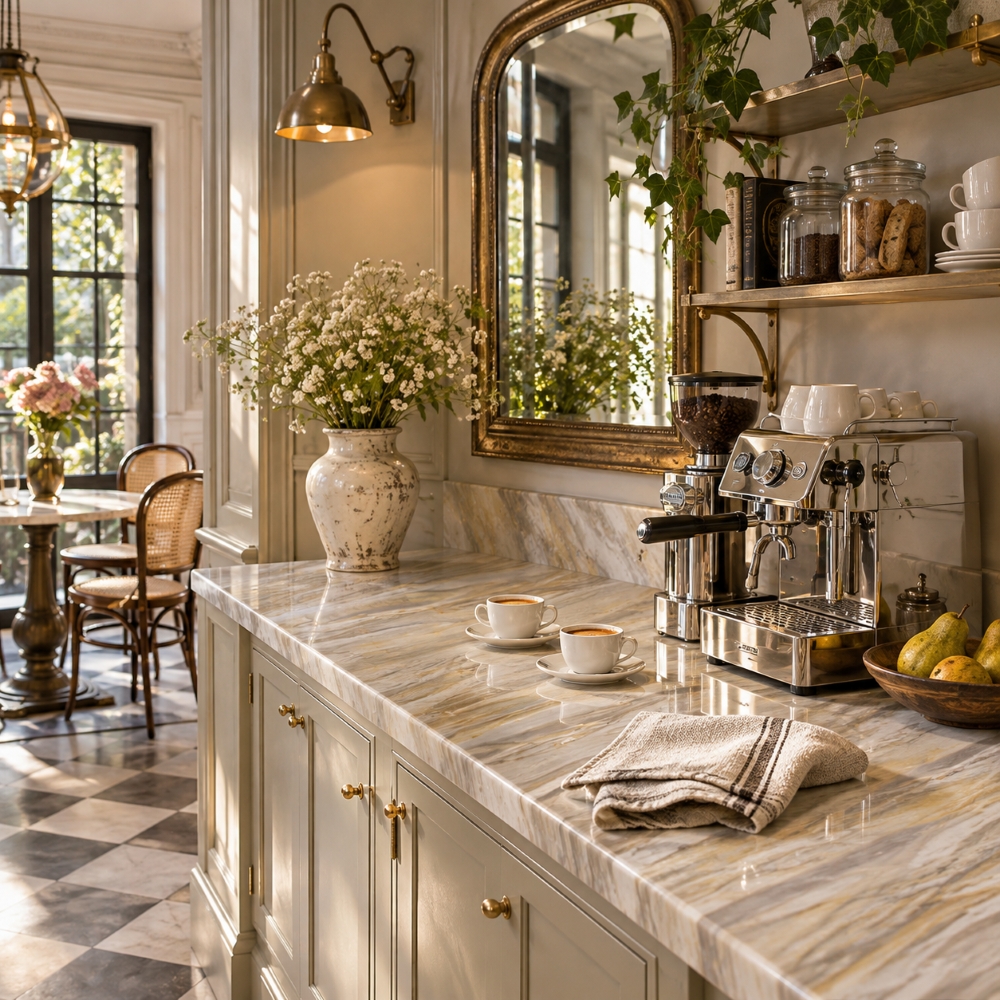
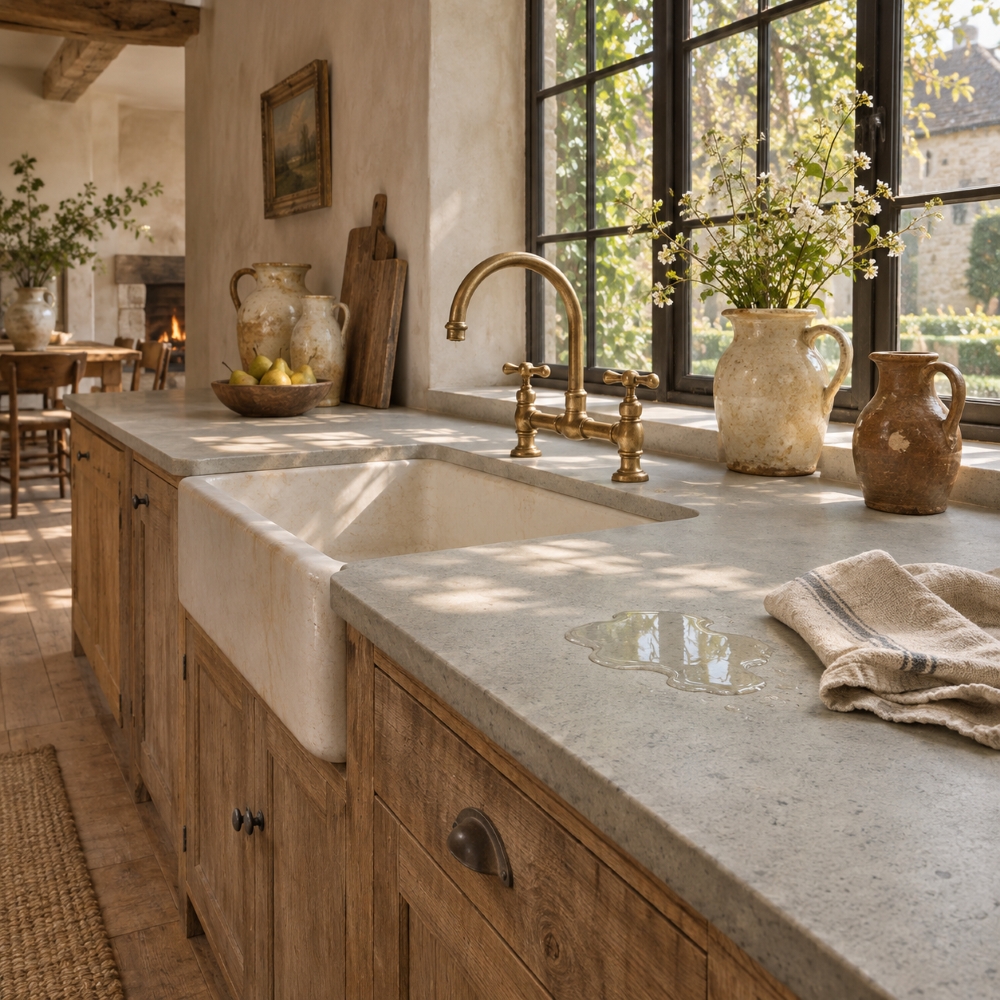
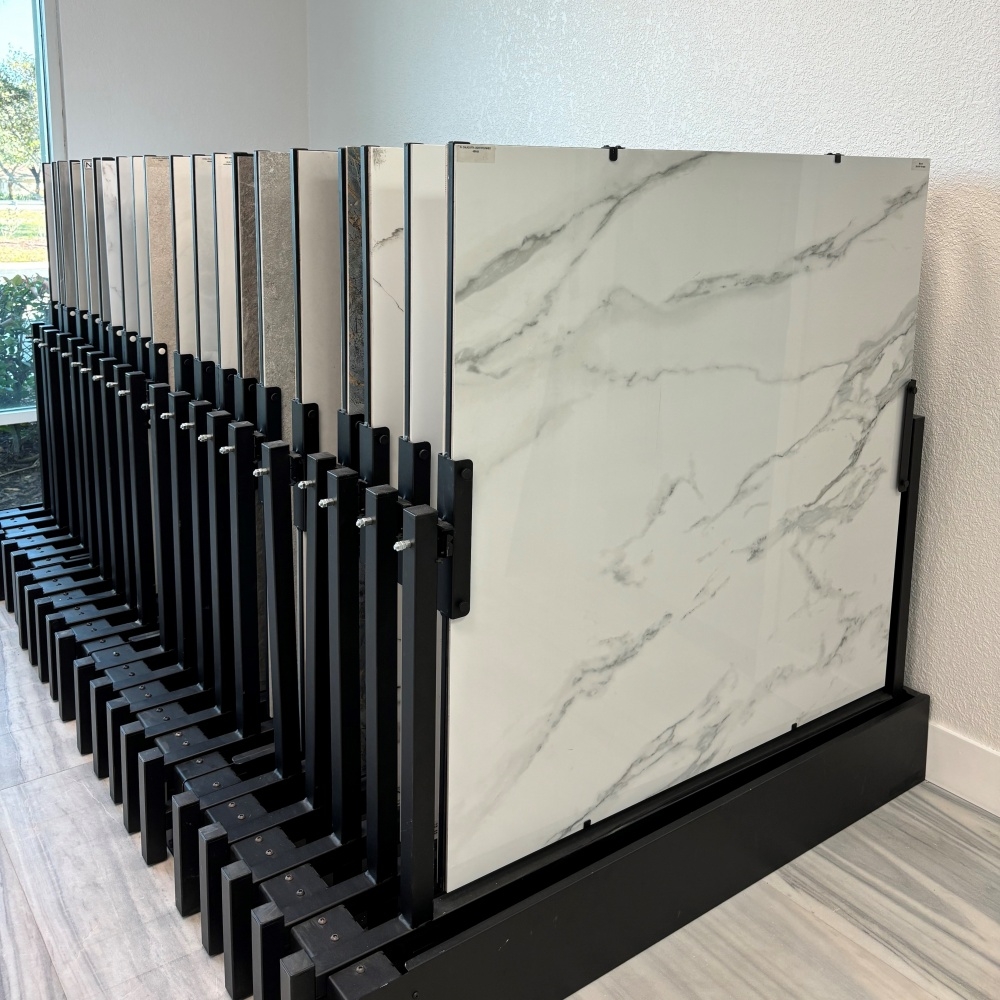
Run your hand across a marble countertop and you feel what no factory surface can copy: a mineral structure shaped over millions of years, still reacting to the life around it.
Before you try to remove stains from stone countertops, know that most marks fall into three families, etching, hard water and true stains, and each needs a different hand. After thirty years with marble, limestone and granite, the most common mistake we see is treating all three the same way.
Best Ideas for Removing Stains From Stone Counters
Etching vs. Staining: How to Identify the Mark on Your Stone Countertop
Start with color. A true stain sits inside the stone and reads darker, while a mark that looks lighter, cloudy or faintly rough is surface damage.
Clients often assume every ring on white marble tile is a water stain, but in reality most are etch marks left by lemon, wine or a vinegar based spray.
Dull Spots on a Marble Countertop? It’s Usually Etching
Marble floor tile, limestone tile, travertine tile and onyx are calcium based, and acid reacts with that calcite within moments. Nothing has soaked in; a whisper of the polish has been worn away, which is why no cleaner will lift it.
White Rings Around the Faucet: Hard Water Stains
A chalky white crust is mineral left behind as tap water evaporates. It sits on the stone rather than in it, and in the kitchen tile and on bathroom vanities alike it returns wherever water is left to dry.
Dark Marks: Oil, Coffee, Wine and Rust Stains
Oil and cosmetics darken stone, coffee and wine leave warm organic stains, and rust shows up orange brown, often tracing the can that caused it.
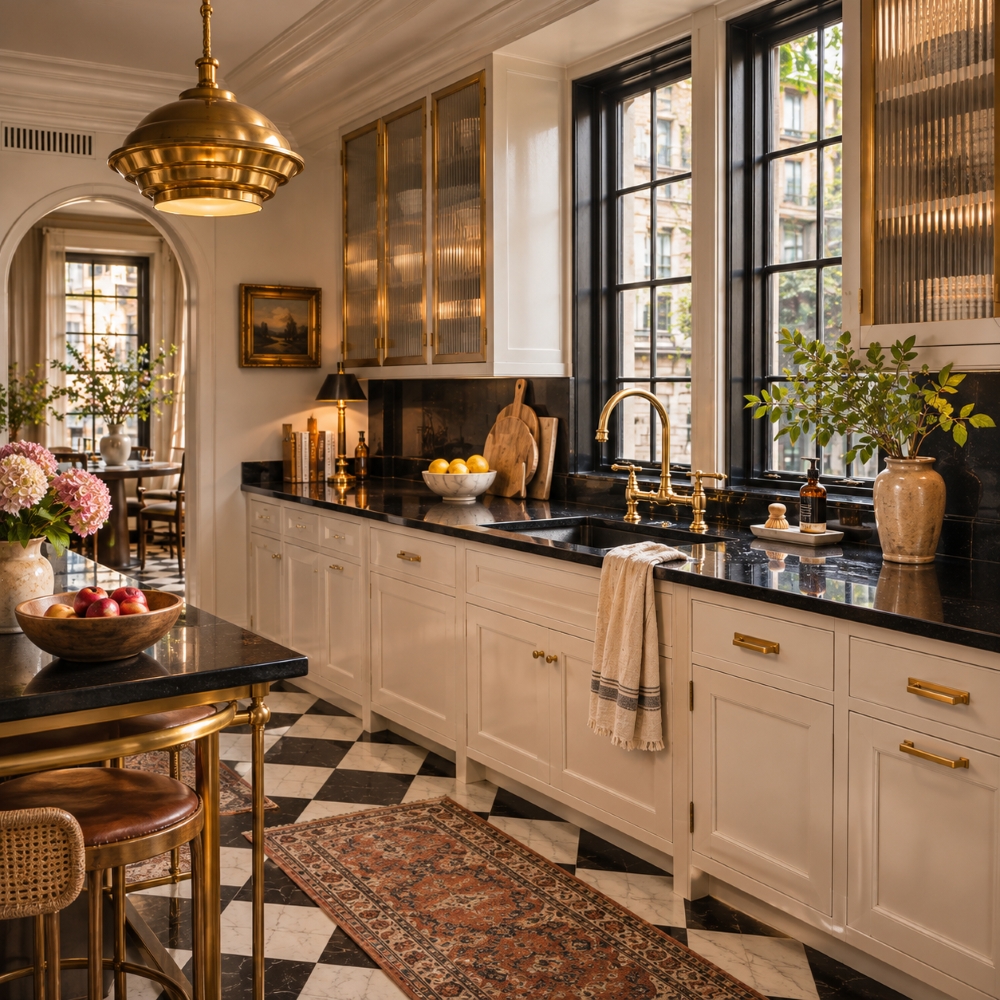
These marks announce themselves on soft beige tile limestone, while on black tile granite they hide until light rakes across the surface. A slab that slowly turns yellow all over is a separate problem, and removing yellow stains on white marble starts with finding the cause.
Which Stone Countertops Etch? Marble, Limestone, Granite and Quartzite
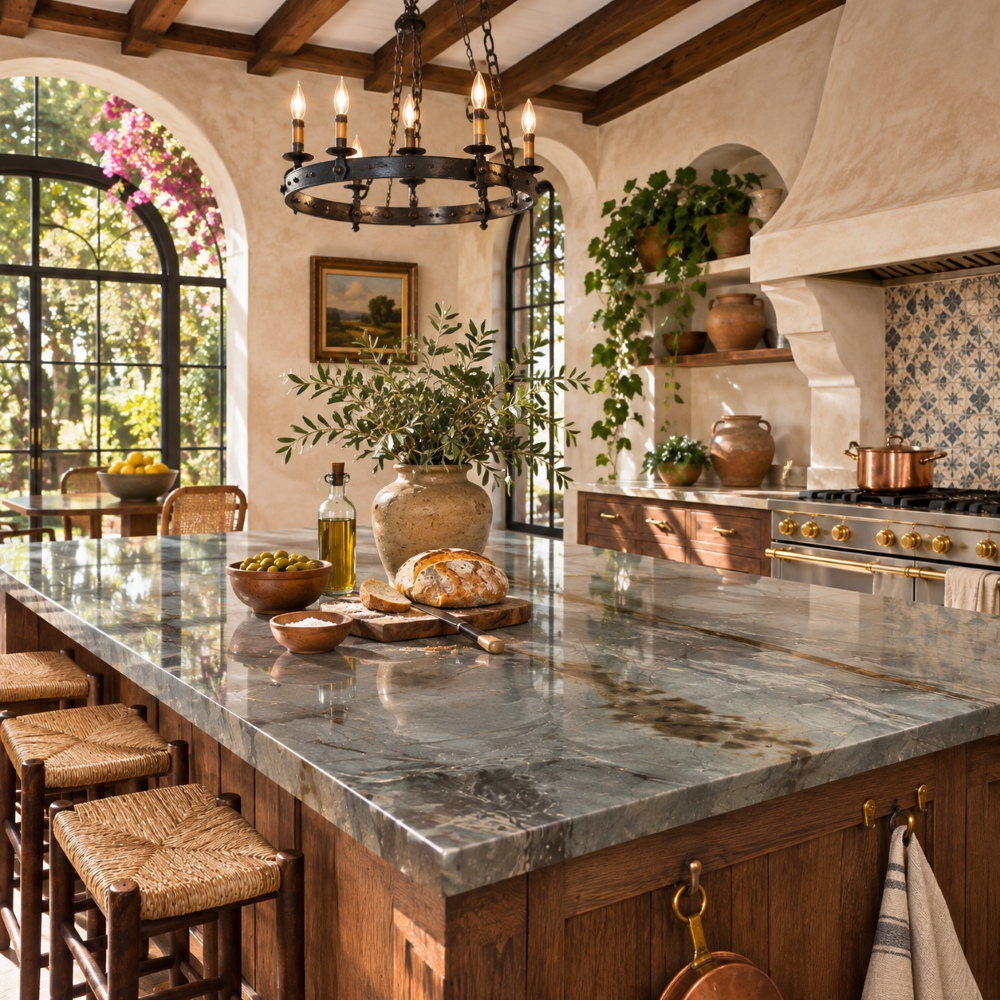
Most granite resists acid, although calcite bearing stones can still react. Quartzite is where many buyers get caught: if you are asking does quartzite etch, the answer depends on whether the slab is true quartzite or a softer, calcium rich stone sold under the same name.
Most suppliers hand over a slab with a care sheet. We ask clients to test a sample with lemon, oil and water at home first, because ten minutes on their own counter says more than any label.
How to Remove Dull Spots and Etching From Marble Countertops
Light etching on a polished surface can sometimes be softened with a stone polishing powder; deeper marks call for a professional to rehone and repolish.
Customers often believe fresh sealer will erase them, but in reality sealer guards against stains, not acid.
Which Stone Countertops Hide Stains and Dull Spots Best?
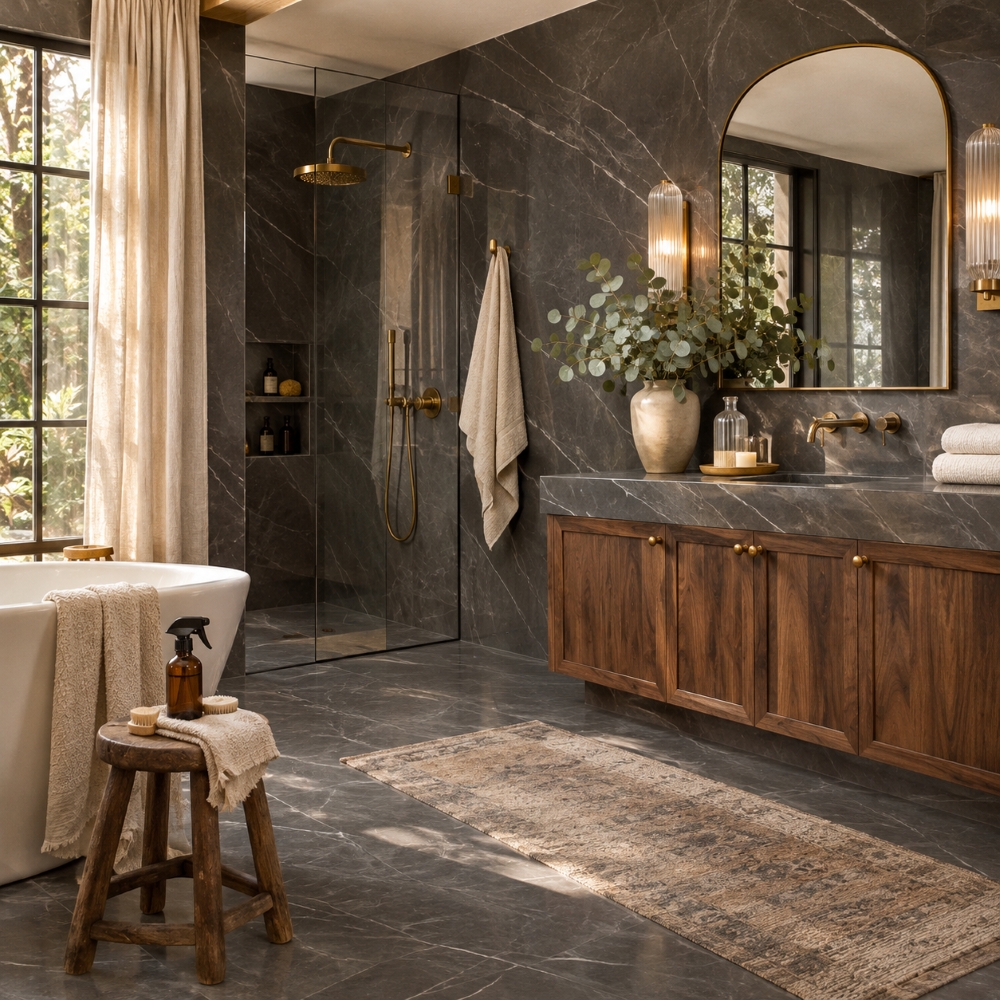
Honed and leathered finishes forgive daily life, and veined stones in gray tile or green tile hide water spots that pure white would show.
Many designers also pair a marble counter with glazed backsplash tiles for kitchens and bathrooms, so the wall behind the faucet, which takes the most splashes, stays easy to wipe.