

Table of Contents
If you’ve ever taken part in a residential kitchen reno, decided to choose a Taj Mahal slab and asked yourself, is Taj Mahal granite or quartzite, or maybe even marble, don’t worry, you’re not alone. We hear this question almost every day, from homeowners, contractors, and designers who’ve been specifying natural stone for years. The confusion is real, and it has a very specific explanation. After sixty years of sourcing natural stone, we’ll give you the clearest answer we know. And don’t worry, again, you won’t be confused again.
The Name Comes From India, the Stone Comes From Brazil
Shah Jahan built the Taj Mahal in Agra in the 17th century using a luminous white stone that seemed to glow differently depending on the light. The quartzite that carries its name today earns that reference honestly: the same warm, creamy white, the same neutrality. But, here is the fun fact: the stone is not related to India geographically. Taj Mahal quartzite comes from Brazil, quarried from regions that produce some of the most sought after natural stone in the world!
This geographic surprise is also part of why the stone gets misclassified so often. It arrives in the U.S. market through different distributors, sometimes labeled as Taj Mahal granite, sometimes as marble, sometimes simply as a white exotic countertop. None of those labels are accurate.
Taj Mahal is Clearly Quartzite. Why Is It Important?
OK, the short answer: Taj Mahal natural stone is quartzite. It is not a granite slab nor marble; it’s totally quartzite. But why is it so important that we know the right classification?
Quartzite begins as sandstone. Over millions of years, heat and pressure fuse those quartz grains into an extraordinarily dense, crystalline rock. That process is what gives the Taj Mahal its hardness; significantly harder than marble slabs, comparable to and in some cases exceeding granite.

Marble, by contrast, starts as limestone and retains calcite in its final form, which is exactly what makes it vulnerable to acids. Etching from lemon juice, wine, or vinegar on a marble countertop is a calcite reaction. Taj Mahal doesn’t have that problem.
And granite is a totally different story; it’s an igneous rock, formed when magma cools beneath the Earth’s surface, which gives it a speckled, granular appearance that looks nothing like what is taj mahal quartzite’s flowing, veined surface.
Here’s a quick comparison that makes the differences crystal clear:
| Taj Mahal Quartzite | Granite | Marble | |
|---|---|---|---|
| Stone Type | Metamorphic | Igneous | Metamorphic |
| Origin | Brazil | Various | Various |
| Hardness (Mohs) | 7+ | 6-7 | 3-4 |
| Acid Resistance | High | High | Low |
| Etching Risk | Very Low | None | High |
| Appearance | Marble-like veining | Speckled, granular | Veined |
| Sealing | Annual | Occasional | Regular + careful use |
The reason so many slab yards still sell it as Taj Mahal granite is mostly because of a commercial habit: granite is a word homeowners trust and choose every time. Granite slabs are known for their durability and low maintenance features. But calling Taj Mahal granite undersells what the stone actually is, and more importantly, it misrepresents how to care for it.
What Sixty Years of Sourcing Taught Us About This Stone?
Taj Mahal quartzite or marble is a comparison we’ve been navigating with clients for decades. The visual similarity to marble is real; we can’t deny that. That warm white field, the amber and gray veining, the sensation of translucency that makes the stone seem lit from within. These are qualities that attract people to marble in the first place, and Taj Mahal can provide all of them at once.
On the other hand, there are some things that marble can’t do like Taj Mahal. Clients who come to us wanting the look of a white quartzite countertop but worrying about maintenance in their commercial tile projects almost always leave with Taj Mahal. It scratches way less than marble. It doesn’t etch like other natural stone slabs.
One thing we do tell clients before every renovation project: slab variation in Taj Mahal is real, and you can’t escape it. The warm tones can change from almost ivory to a deeper cream, and the veining density varies considerably from block to block. Let us share a designer trick for you: For a Taj Mahal quartzite waterfall island or any bookmatched slab application, we always recommend selecting the actual slabs in person rather than approving from a sample.
Where Did We Use Taj Mahal Quartzite in Projects?
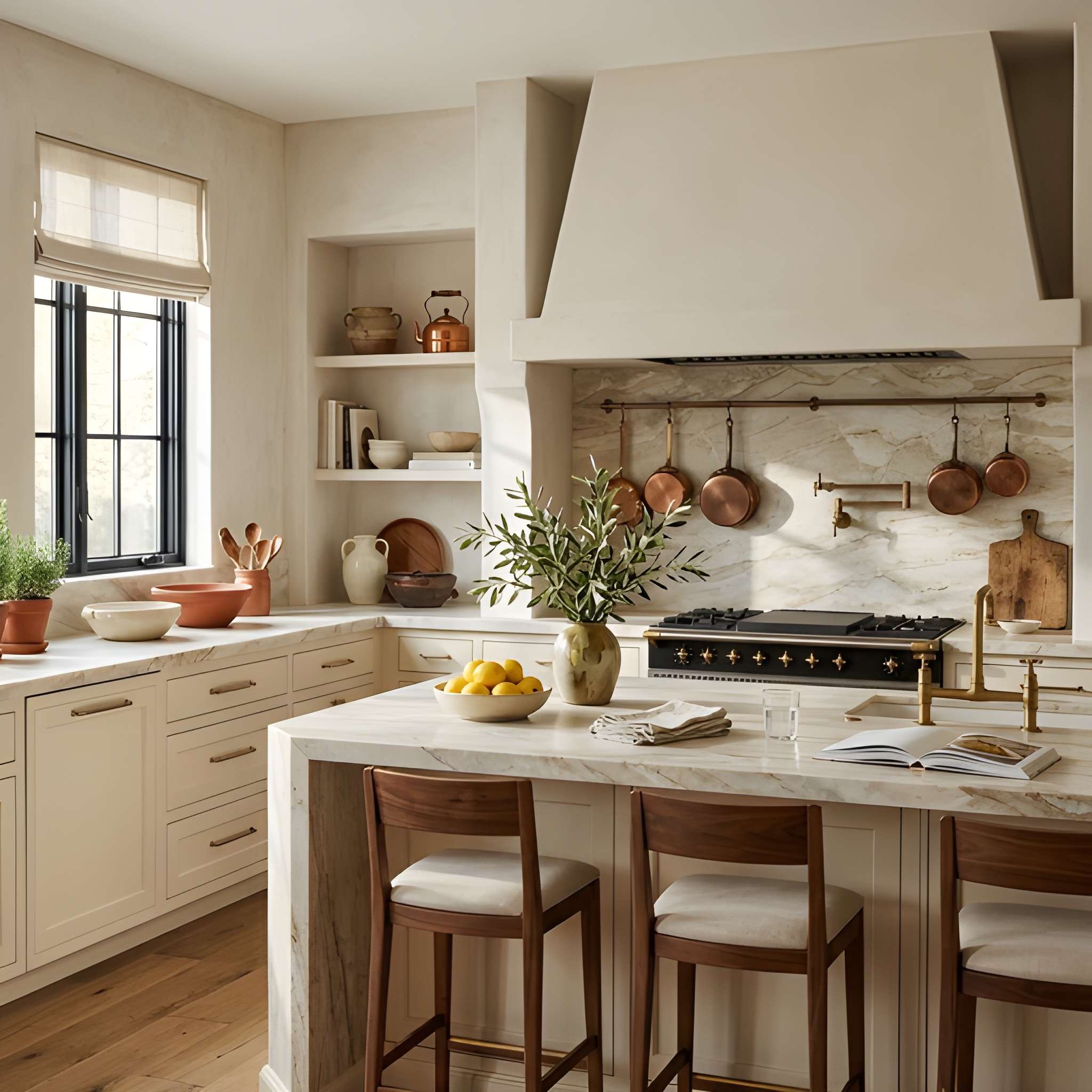
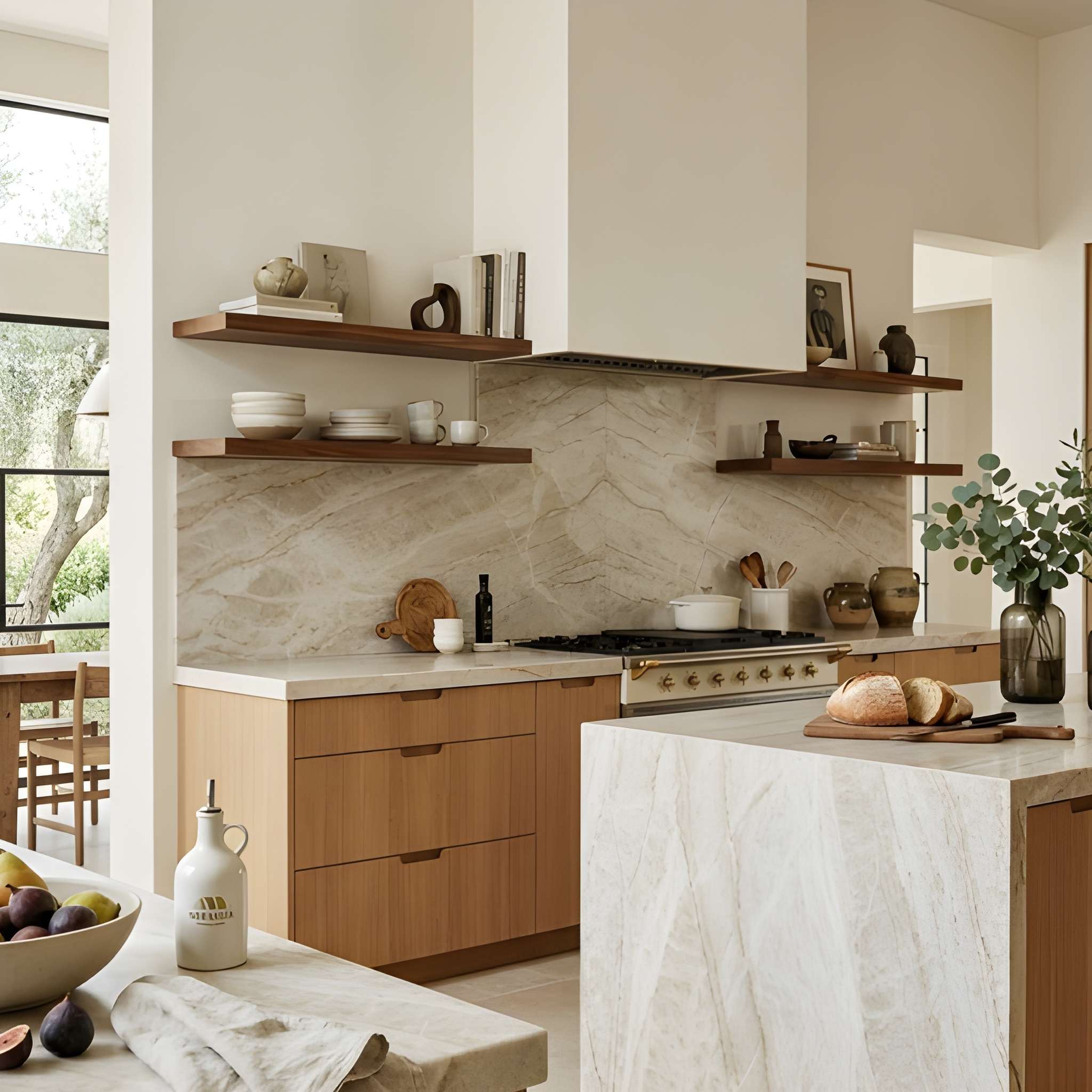
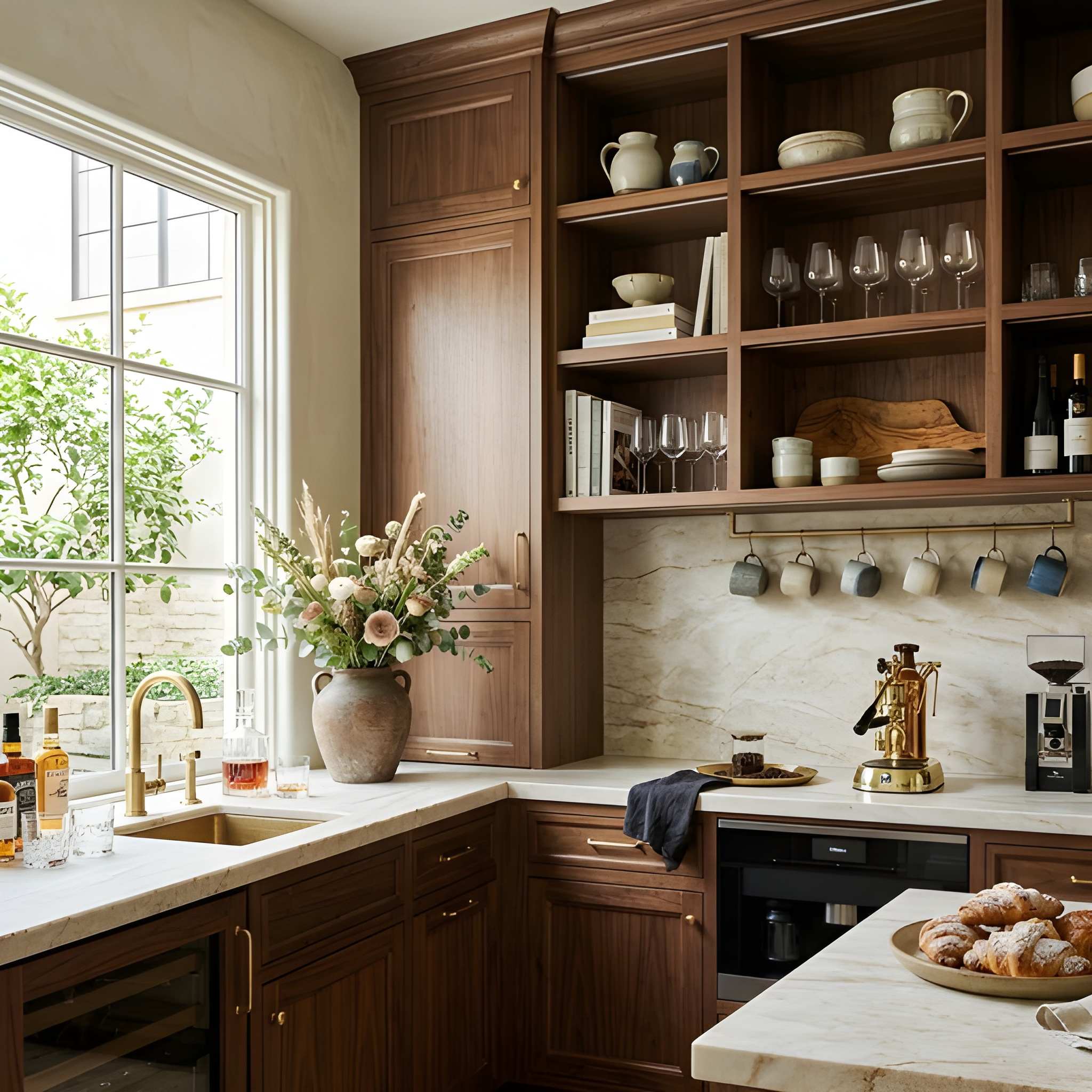
Taj Mahal quartzite countertop applications are where we see it most: stone kitchen islands, perimeter runs, bathroom vanity tops. In kitchen projects, the question of what color cabinets go with Taj Mahal quartzite comes up every time. White shaker cabinets give it a clean, almost Scandinavian quality. Warm oak or walnut brings out the amber in the veining and creates something much more warm neutral aesthetics, just like this year’s trends.
For Taj Mahal quartzite bathroom applications, full slab shower walls, vanity tops, wet room floors, it works exceptionally well compared to the other materials. The acid resistance that protects it in a kitchen does the same in a bathroom.

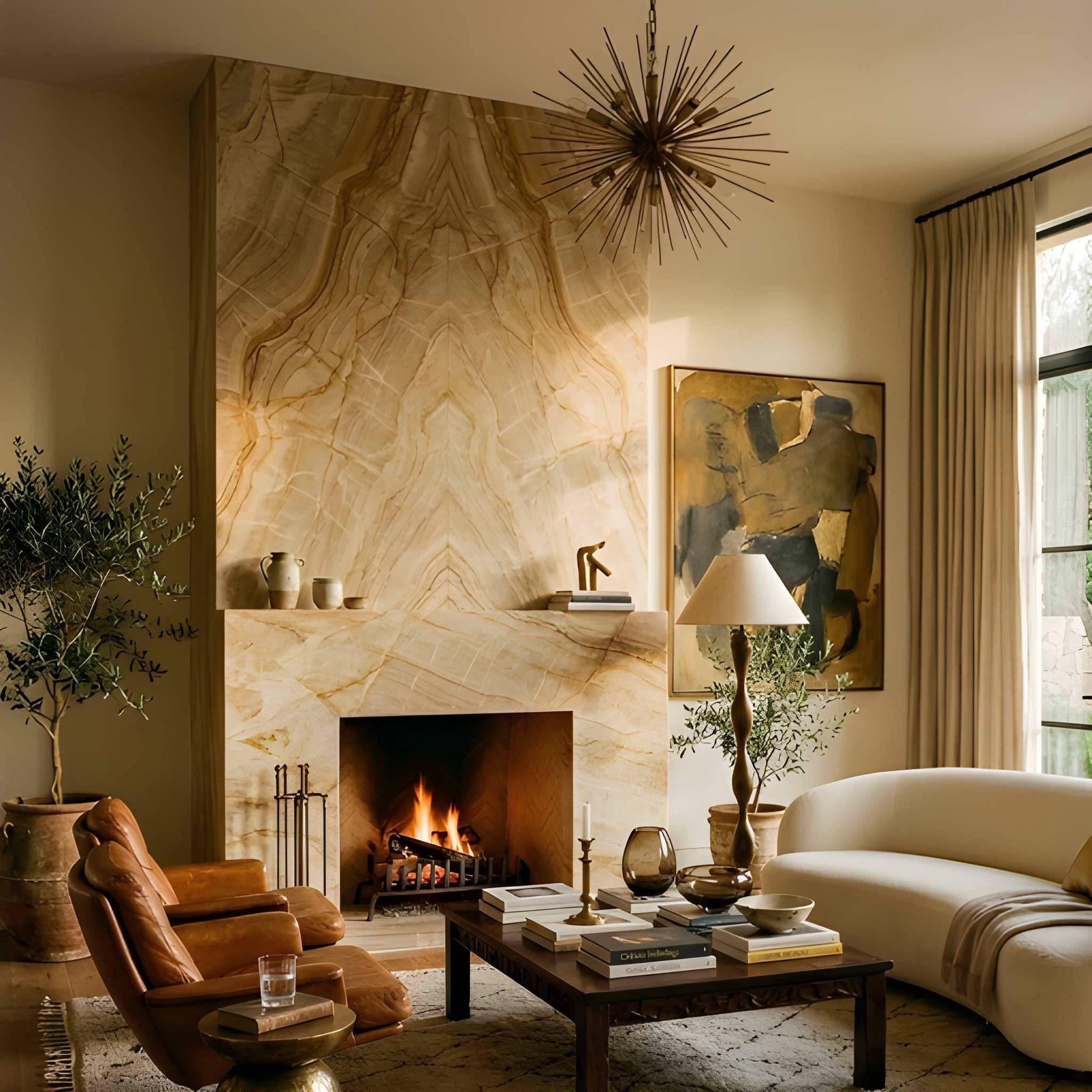
Taj Mahal quartzite fireplace surrounds are one of our favorite specifications for this stone. No acid exposure, no heavy traffic: just the full visual impact of the quartzite slab, often in a leathered finish that adds texture and depth. In living room projects where the fireplace wall is the interior design hook we try to achieve, Taj Mahal is the absolute winner every time.
For Taj Mahal quartzite backsplash applications, particularly in kitchens where the countertop is a different material, it works beautifully as a full slab backsplash. No grout lines, continuous movement; the whole wall becomes one surface. Also, an aesthetic one.
Purchase Your Taj Mahal Quartzite From Marble Systems
Since you’ve learned what a Taj Mahal stone actually is, it’s time to see it in person and decide which finish is better for you! Visit one of our slab showrooms to see current Taj Mahal quartzite slabs that are in stock. Bring your project details; let’s decide the best.