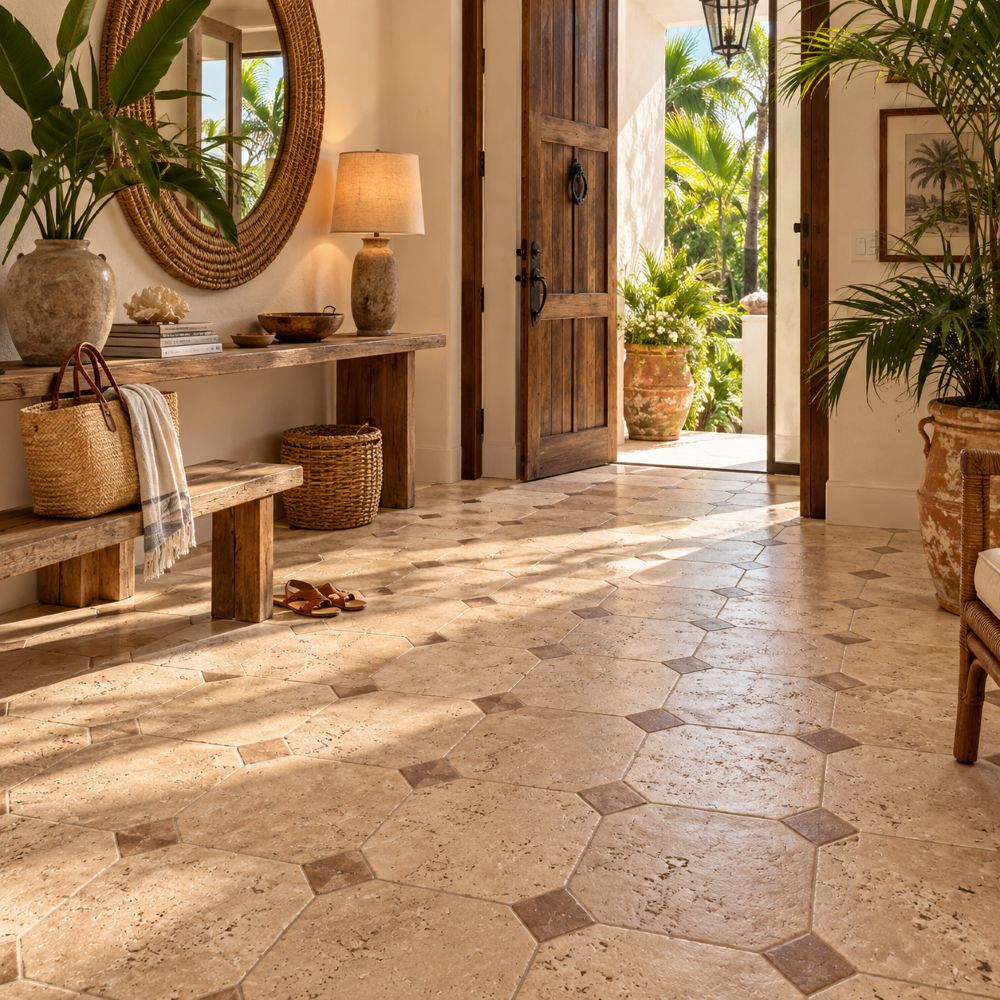
Every stone that reaches a San Juan home has already lived millions of years before it meets your floor, and in this climate it keeps living. Sooner or later you will see black specks, a green film or a white dust appear on it.
Knowing how to clean mildew from natural stone without harming its surface is part of owning a material that breathes. I have spent 30 years working with stone in humid climates, and almost everything you will see here is surface deep and fixable.
How to Clean Mildew From Natural Stone
Black Spots, Green Film or White Powder? Identify What’s on Your Stone
Black or gray specks in grout lines and shower corners are mildew. A slick green film on shaded pavers is algae. A dry white dust along the joints is efflorescence, mineral salts pushed up by moisture from below.
Clients usually assume all three are stains inside the stone, but in reality none of them lives there, and each asks for a different fix. Look at the spot in daylight before you reach for any bottle.
Why Natural Stone Gets Moldy in San Juan’s Humid Climate
San Juan’s monthly average humidity runs from about 74% in March to 81% in late fall, with roughly 60 inches of rain a year that peaks in November. Stone here simply stays damp longer.
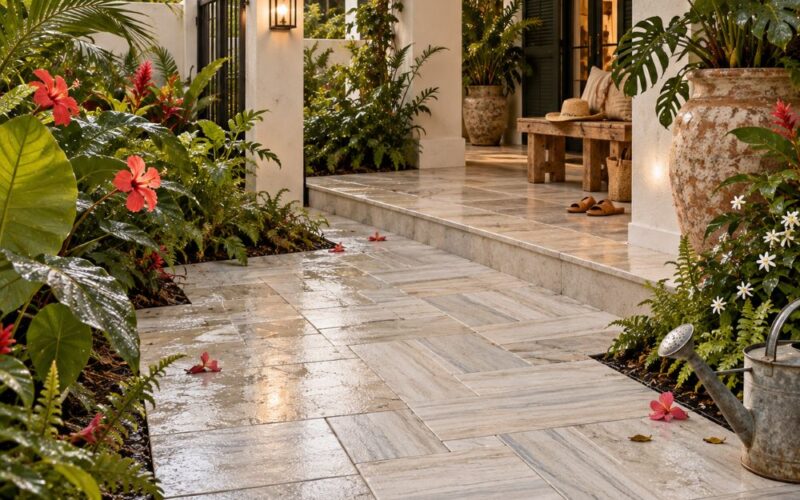
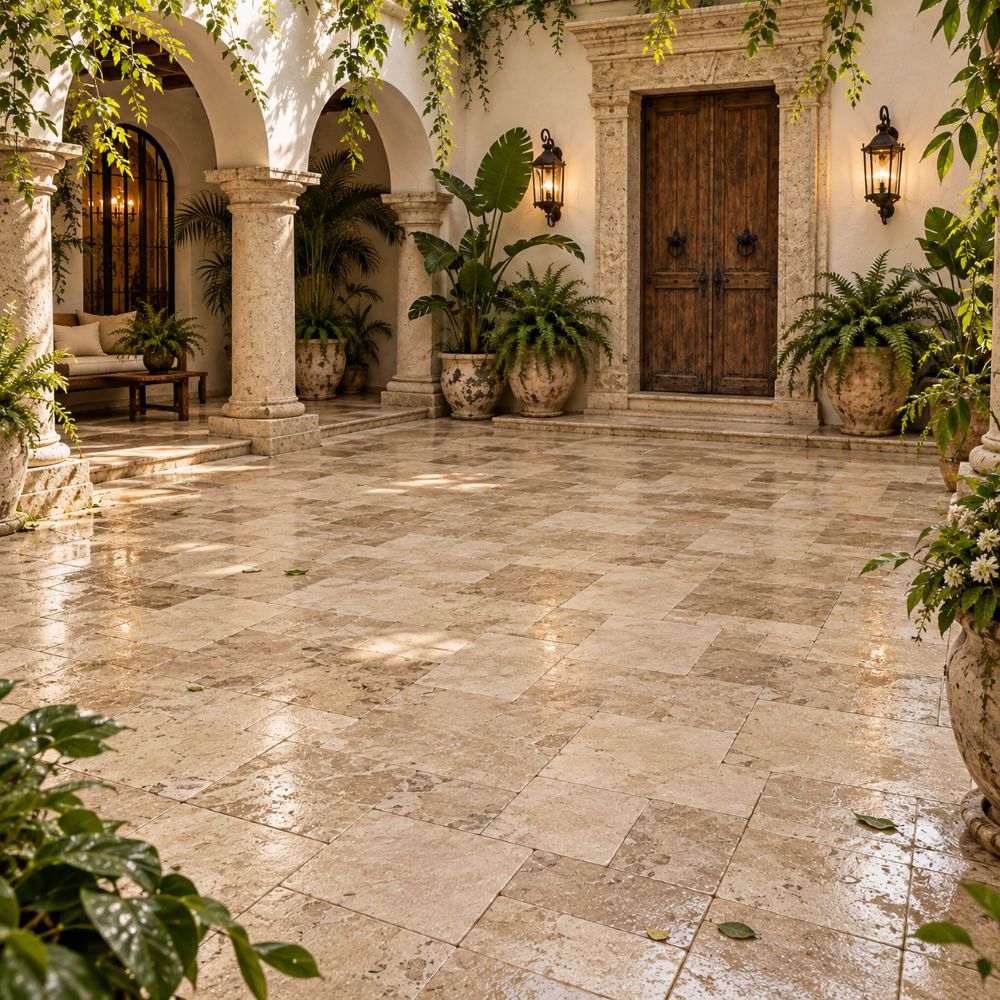
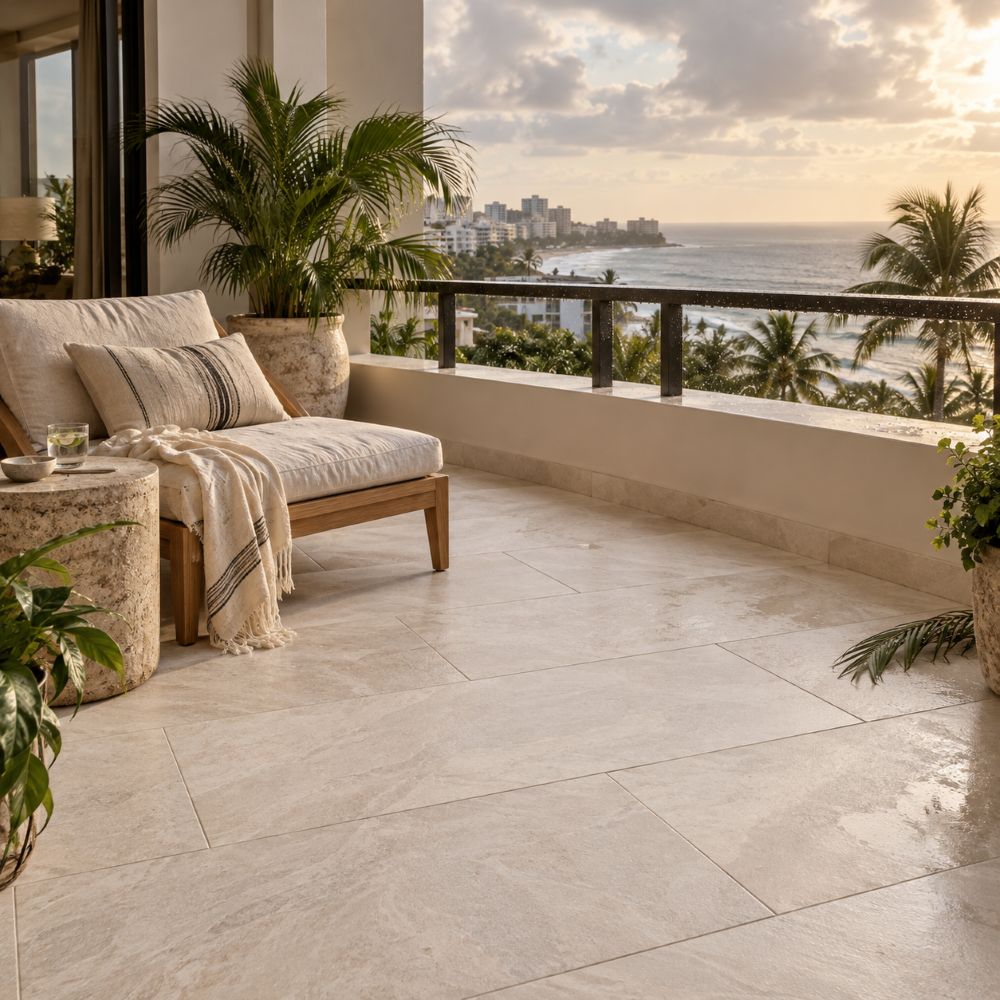
We see it most in the shaded interior courtyards of Old San Juan, the windowless bathrooms of older Condado towers and ocean-facing balconies in Ocean Park, where wind driven rain rarely dries before the next shower.
Know Your Stone Before You Clean
How to Clean Mildew From Natural Stone Indoors
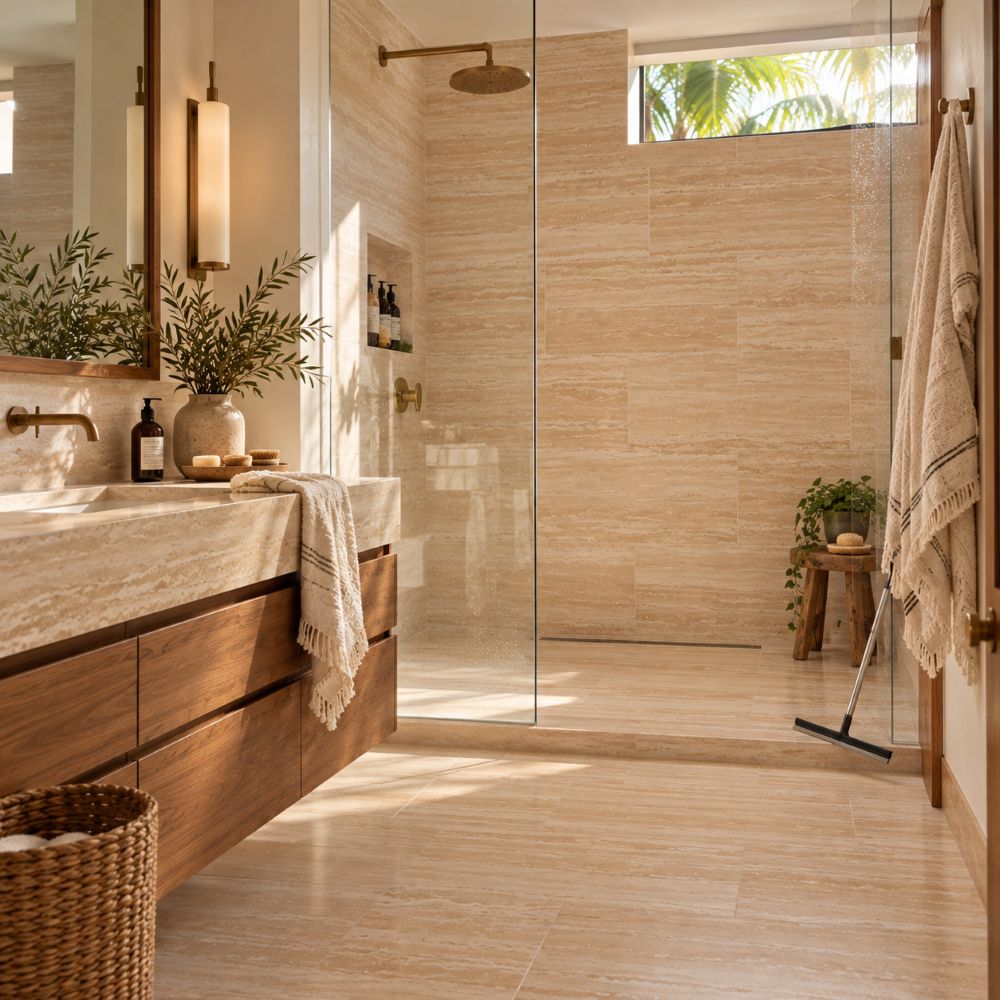
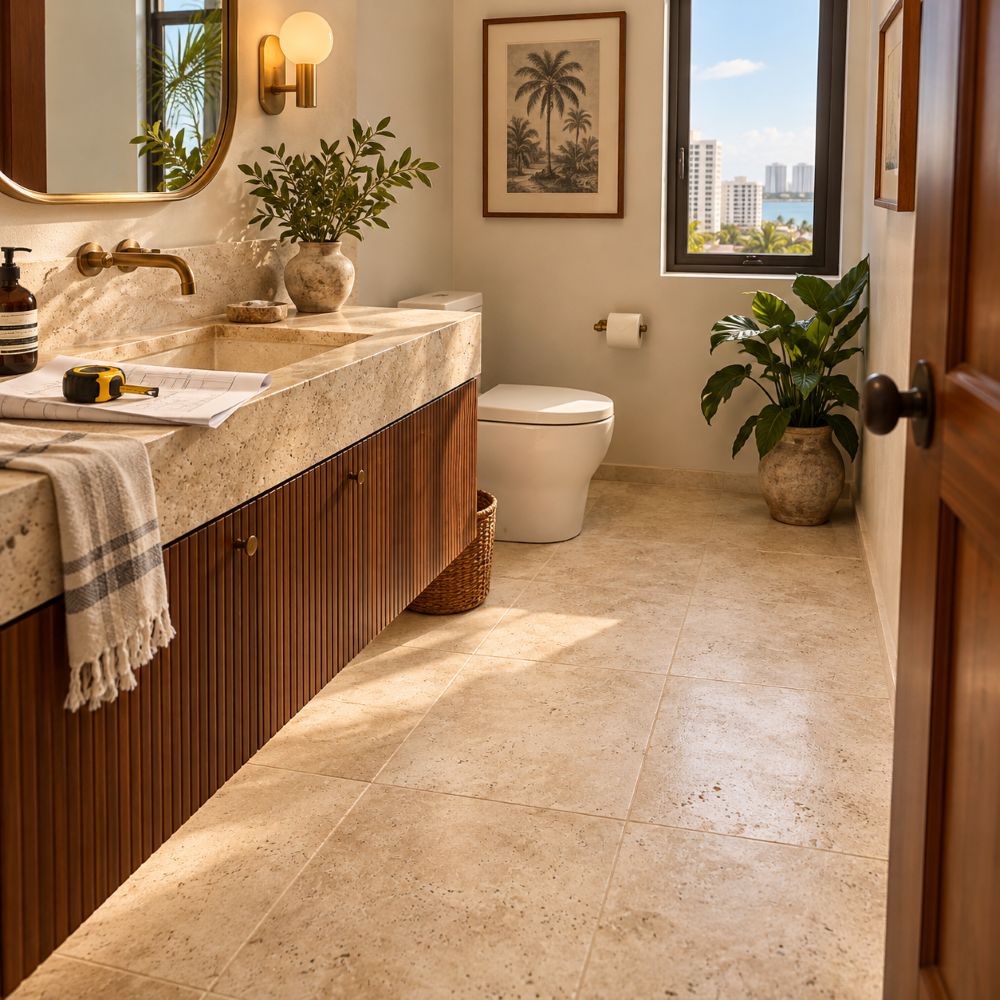
The Natural Stone Institute suggests half a cup of bleach, ammonia or hydrogen peroxide in a gallon of water for biological stains, and you must never mix bleach with ammonia. Test a hidden corner, apply with a soft brush, rinse and dry. In a bathroom with stone floors, a squeegee after every shower does more than any product.
How to Clean Mold From Grout Between Stone Tiles
Grout holds water longer than the stone around it, so it shows mildew first. The most common mistake we see is scrubbing marble mosaic tiles with a wire brush and scratching every small piece; a nylon brush and the diluted solution are enough. Give the flat tops of shower thresholds and stone corner shelves the same attention, because water sits there longest.
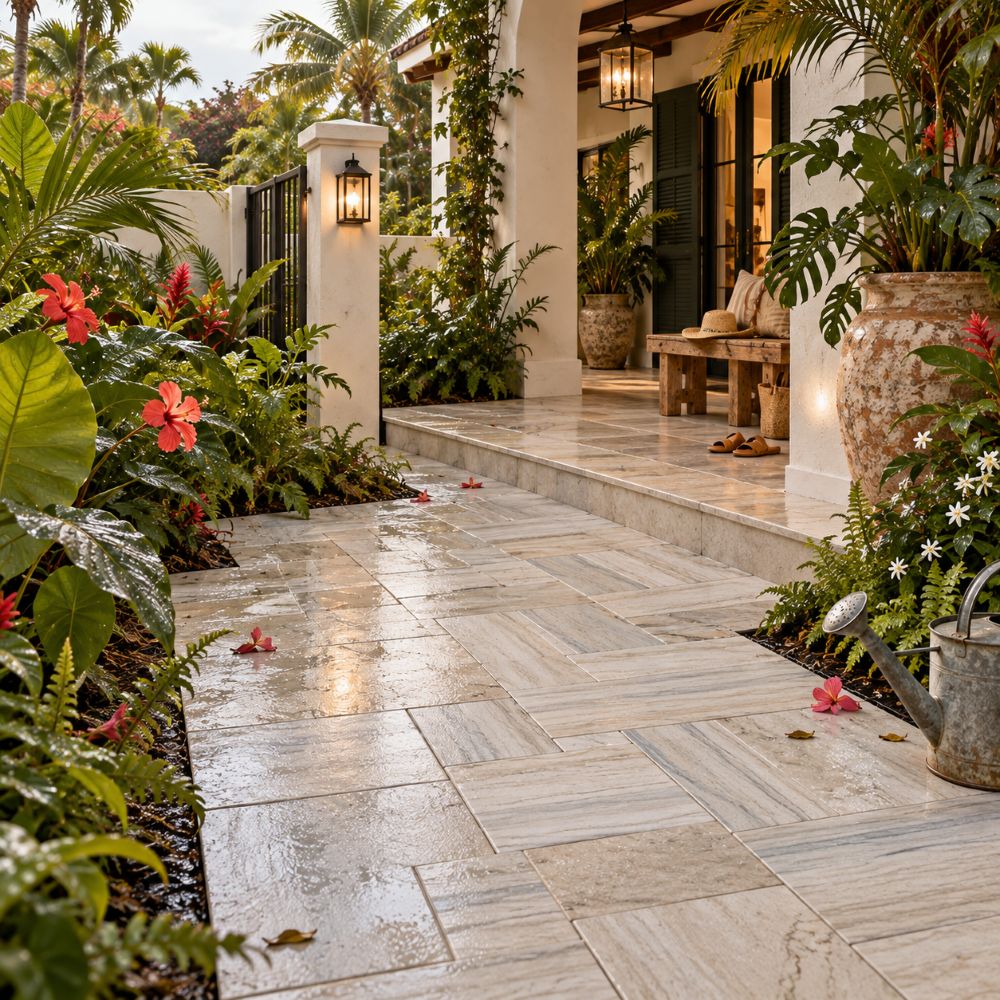
How to Remove Algae From a Stone Patio or Pool Deck
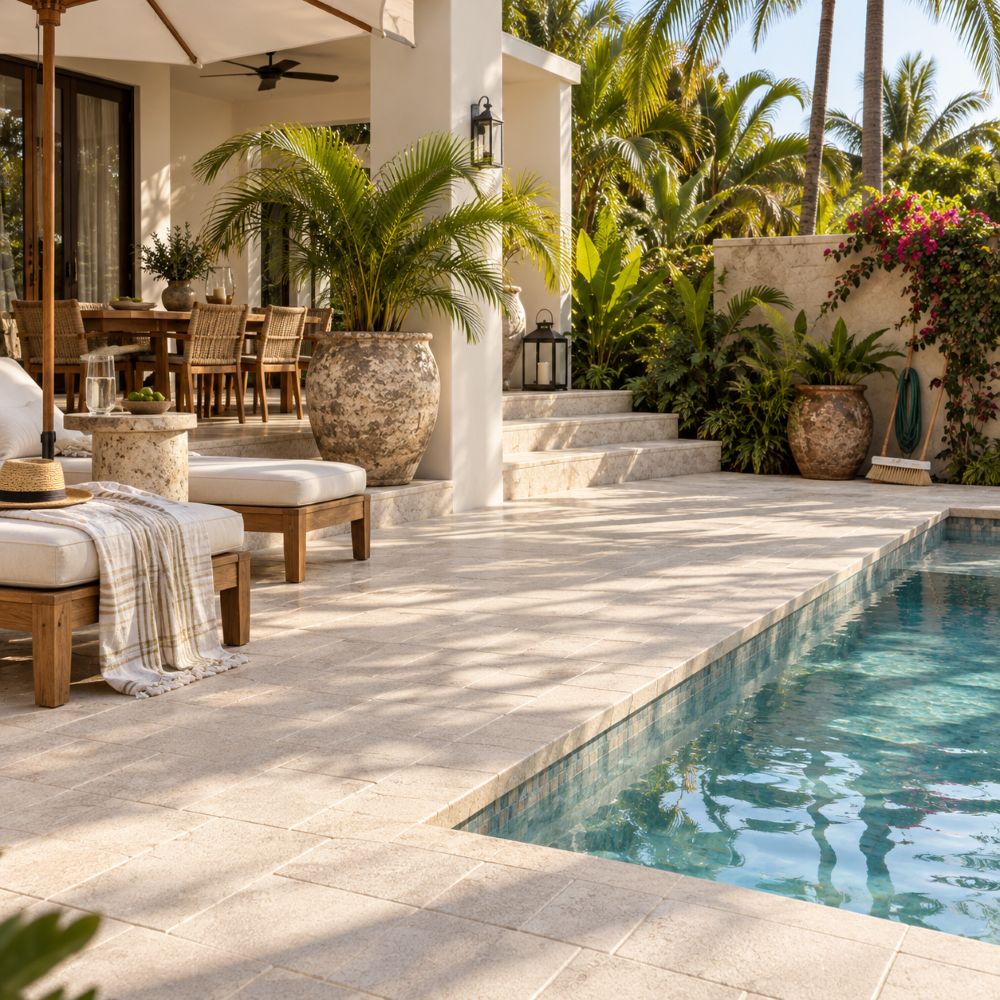
On outdoor stone floors, flush with clear water, then use a mild bleach solution and a soft brush, keeping runoff away from plants and out of the pool.
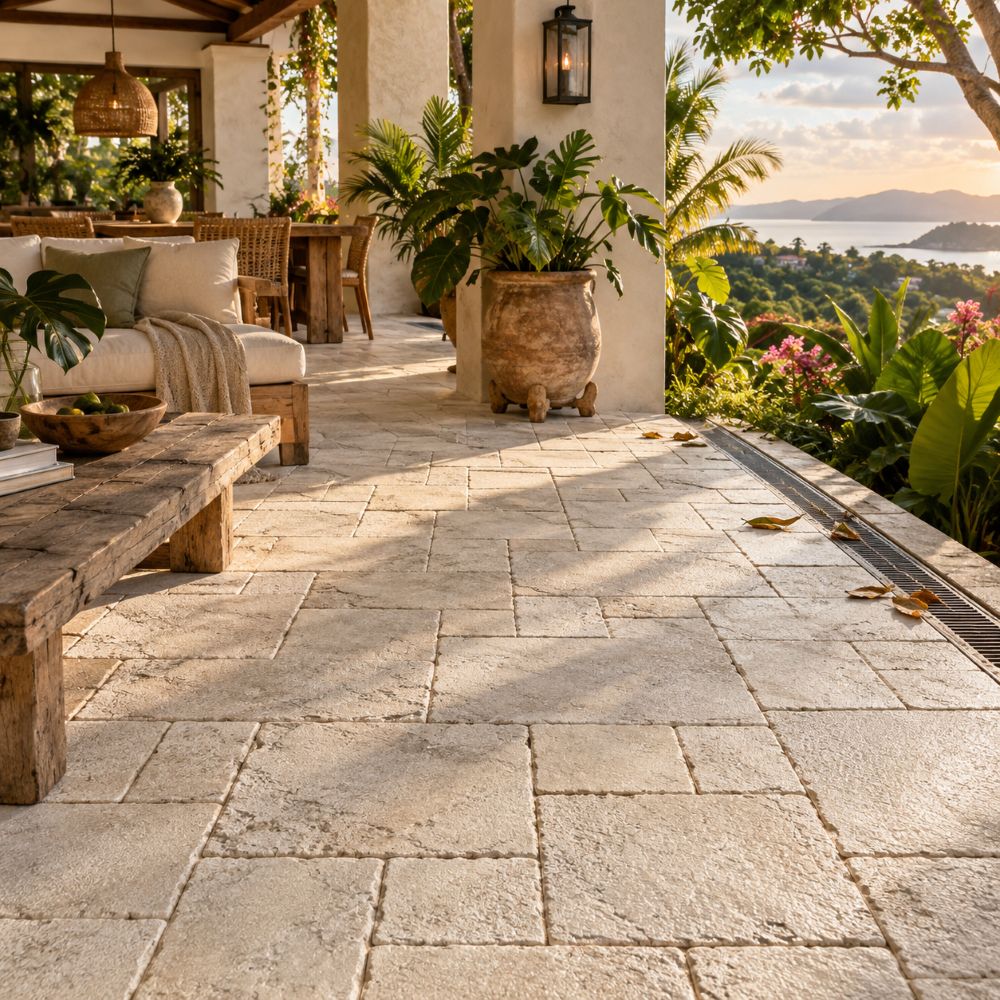
Clients often think a pressure washer is the fastest fix, but on tumbled stone pavers high pressure can rough up the surface, so go low and test first.
Is Bleach Safe for Marble and Travertine? Cleaning Mistakes to Avoid
Diluted bleach, used occasionally and rinsed well, is generally safe, though it can lighten some darker stones.
The real damage comes from vinegar, lemon, acidic tile cleaners and rust removers that contain hydrofluoric acid, which attacks even granite.
Customers usually think a dull patch is a stain, but in reality it is an etch, and no cleaner will lift it. Never seal stone that is still damp, or you will trap a white haze inside.
How to Prevent Mold on Outdoor Stone in Humid Weather
Prevention comes down to drainage, airflow and habit: decks should slope away from the house, leaves get swept weekly and bathroom fans should run after every shower. Sealing improves stain resistance but does not stop mildew.
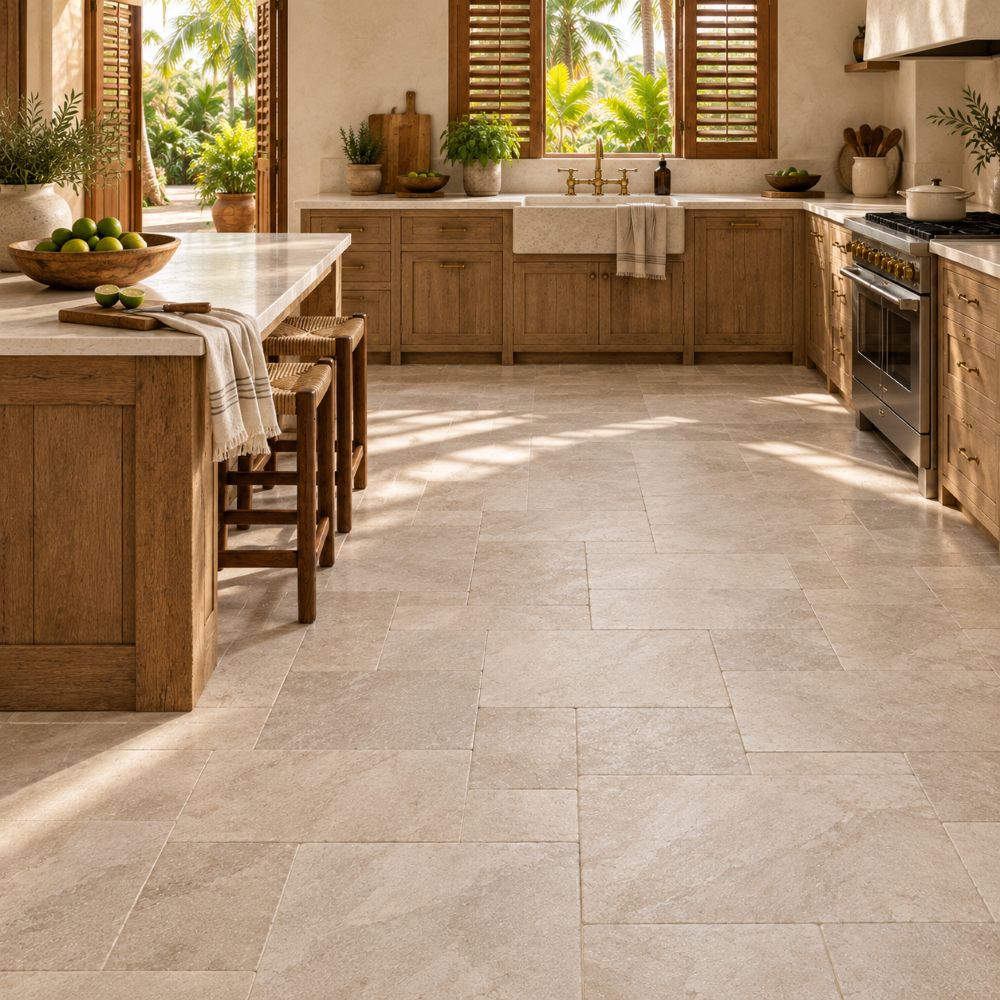
A good seal still matters, though, and knowing how to tell when stone needs resealing keeps moisture from soaking in between cleanings. Bathrooms and kitchens wear down sealer at different rates, so how often to seal marble in each room depends on how much water and traffic the surface sees.
A Seasonal Natural Stone Care Routine for San Juan Homes
Plan deep cleaning and resealing for February through April, when San Juan is at its driest. Before hurricane season opens on June 1, clear drains and check slopes.
On summer days when Saharan dust settles over the island, rinse outdoor stone before the dust mixes with morning dew into grime. After the heavy November rains, look for green on shaded pavers and white along the joints.
When to Call a Stone Professional
If mildew returns to the same spot within days, water is likely getting behind the stone. Persistent efflorescence, flooding after a storm and etched, dull areas that need honing are all jobs for a professional.