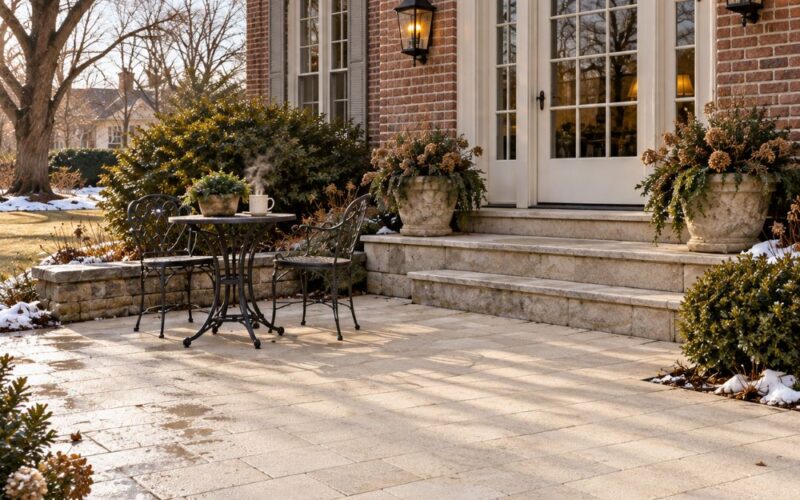
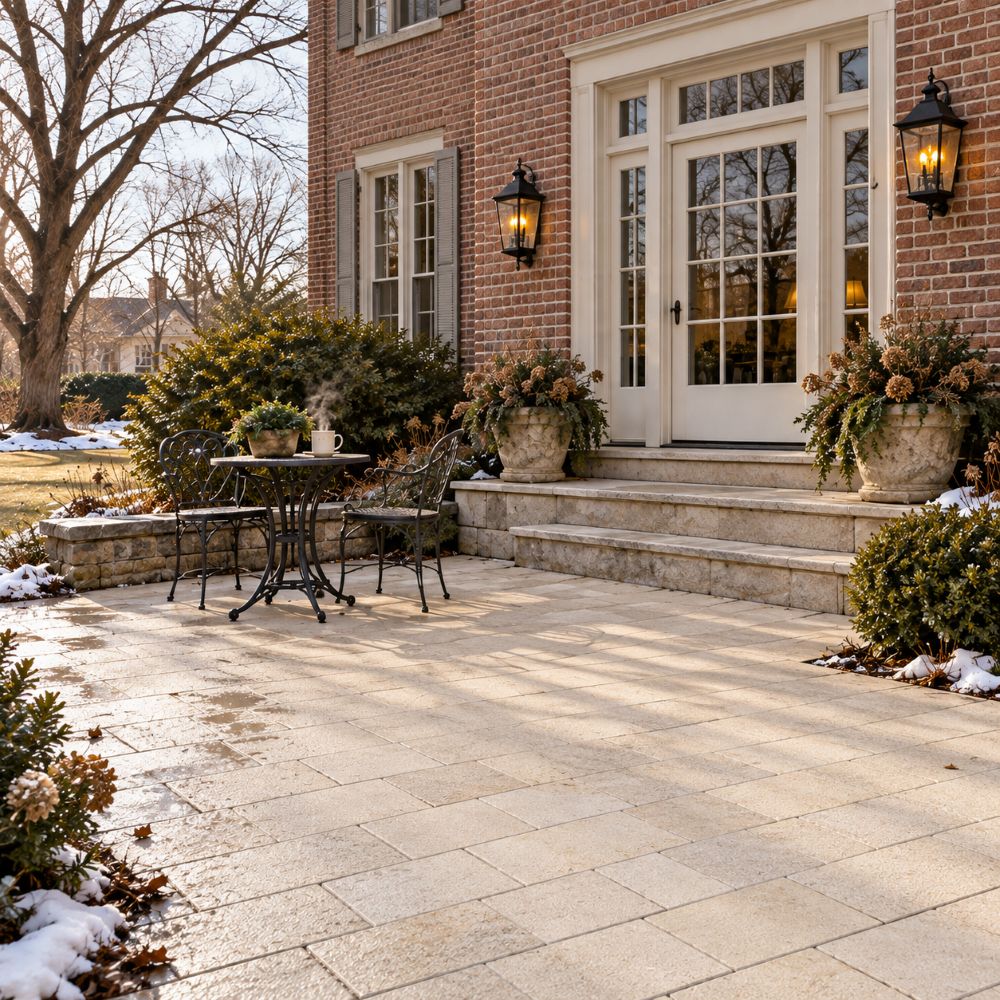
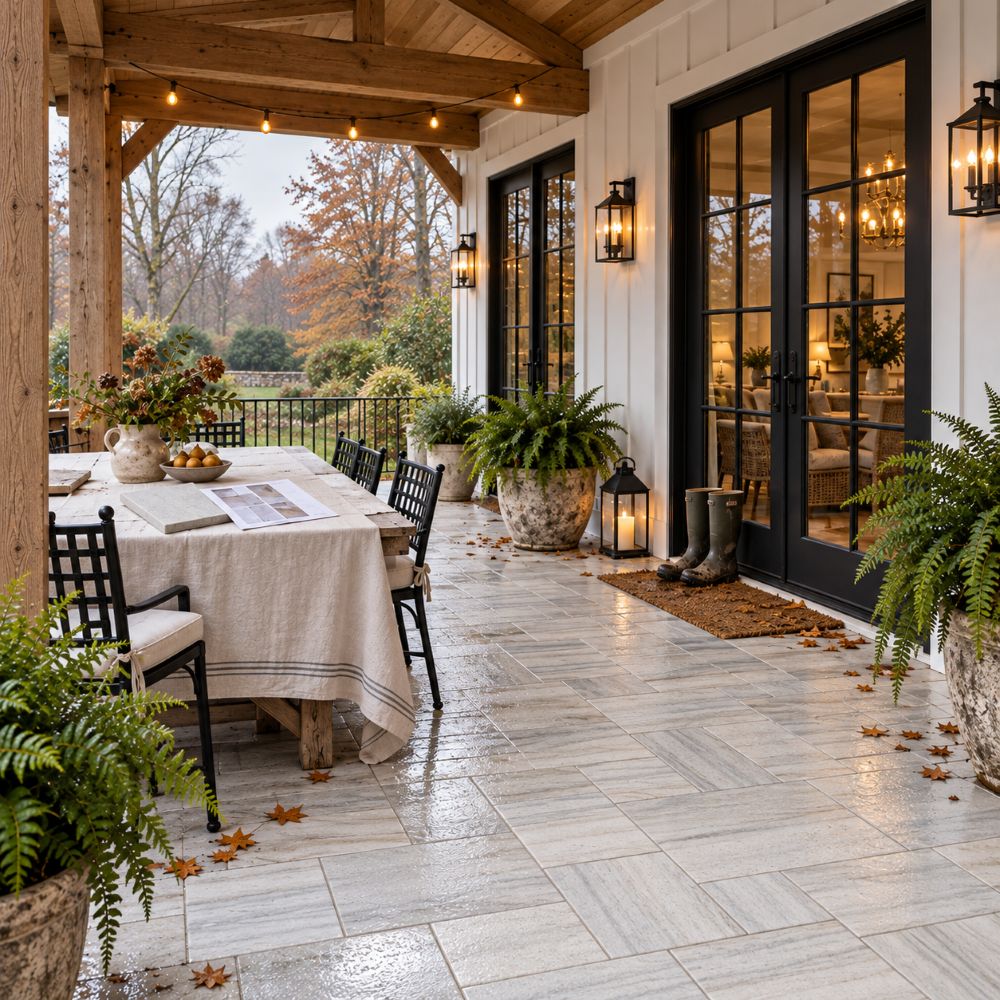
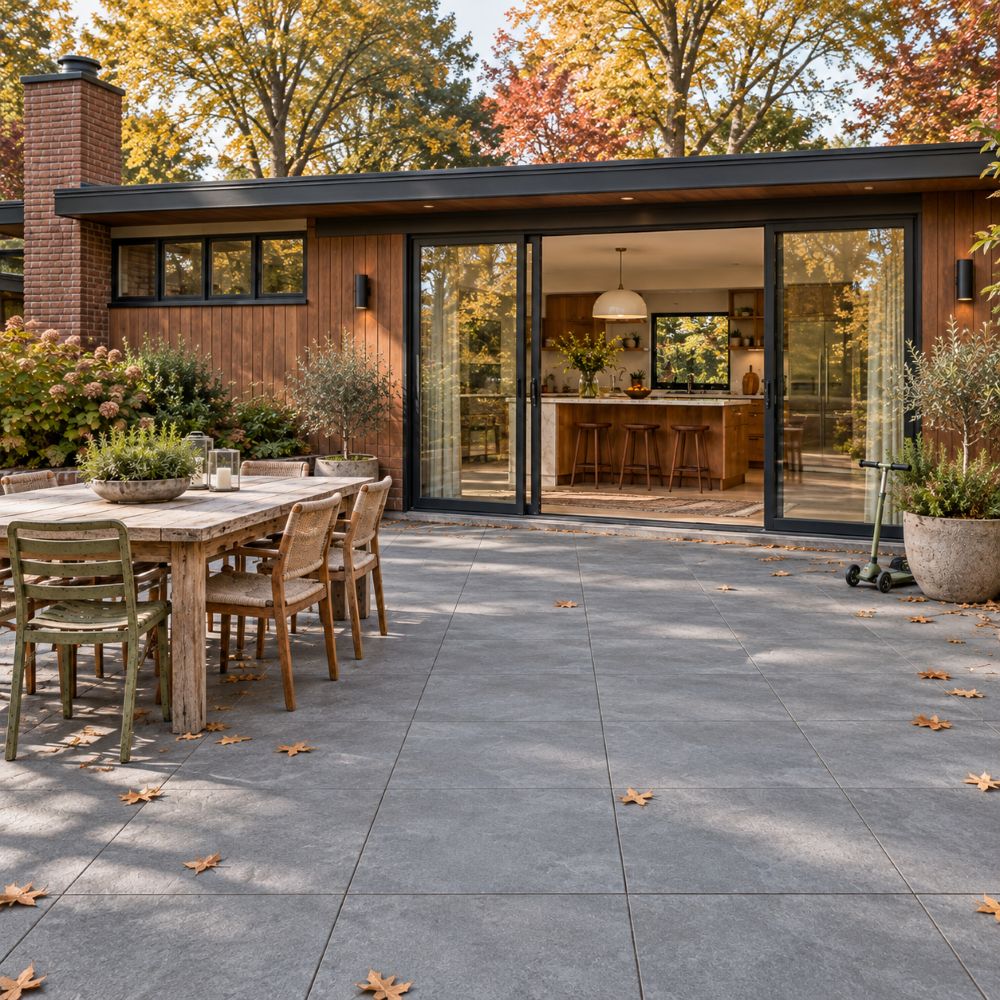
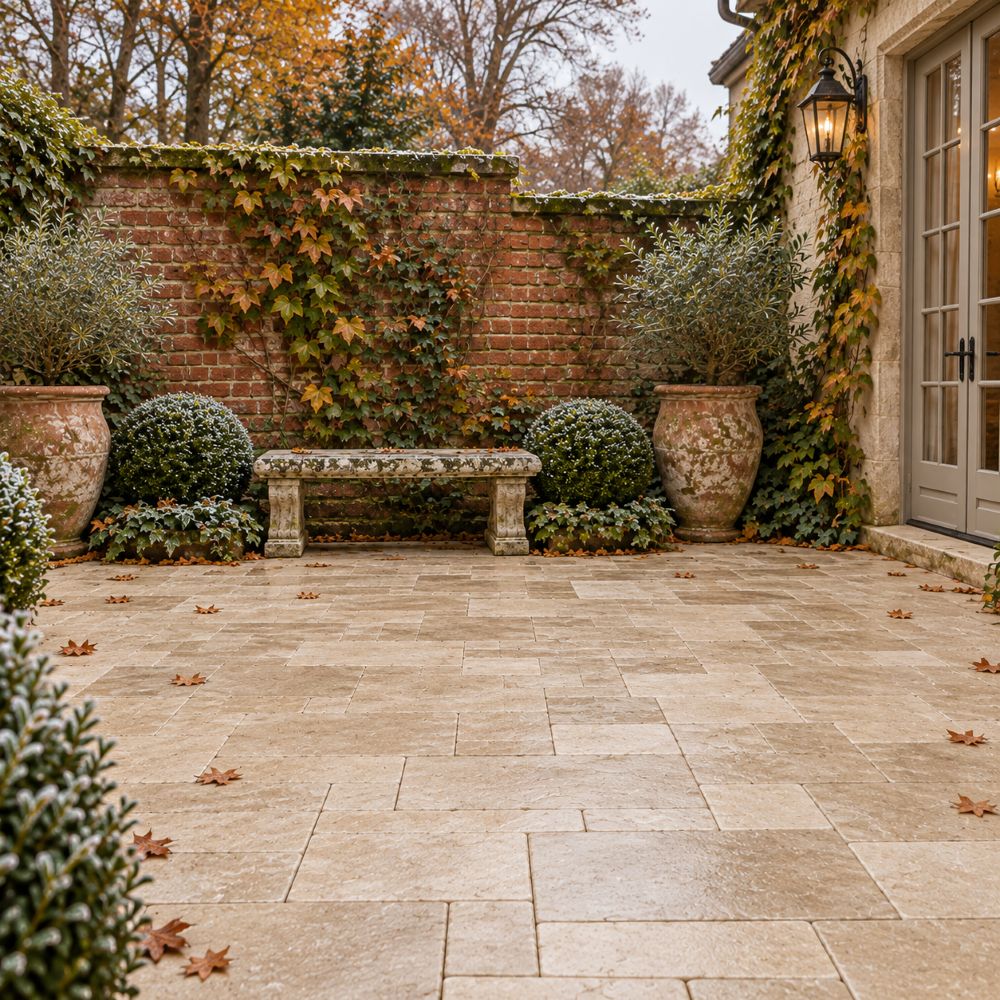
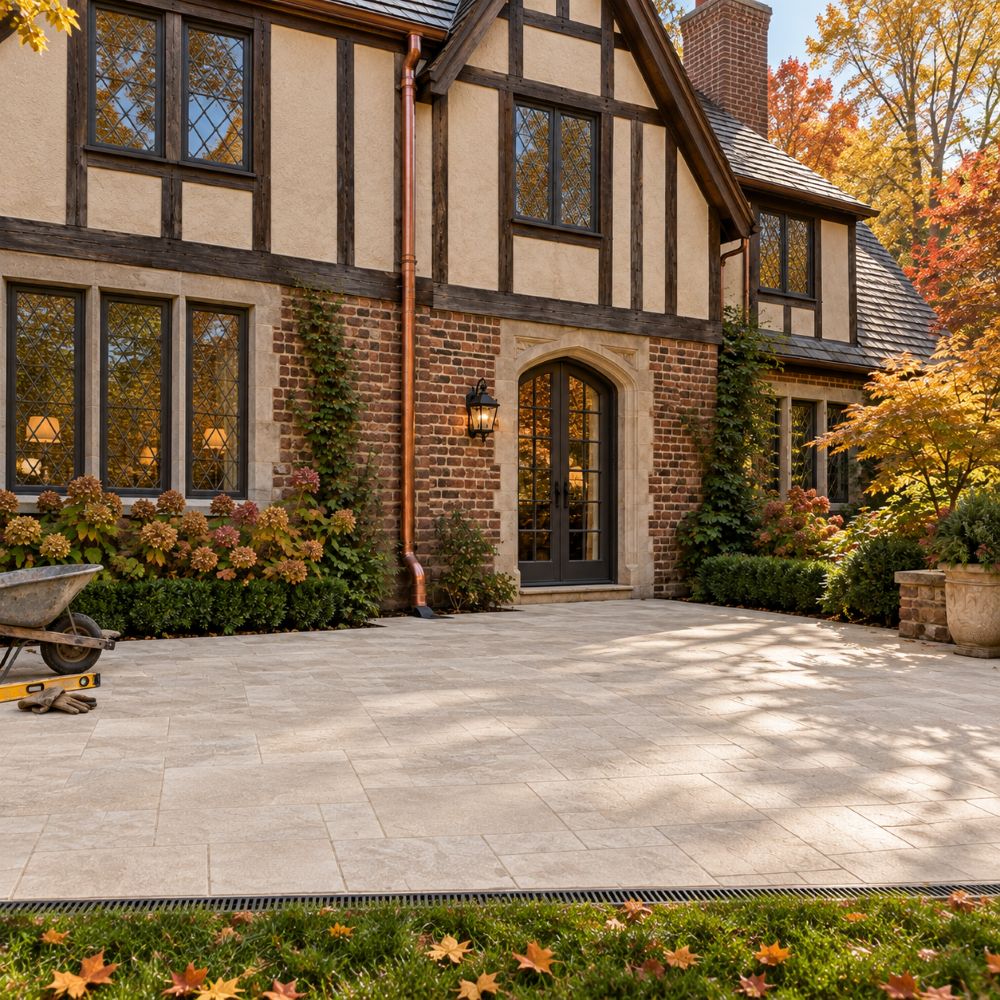
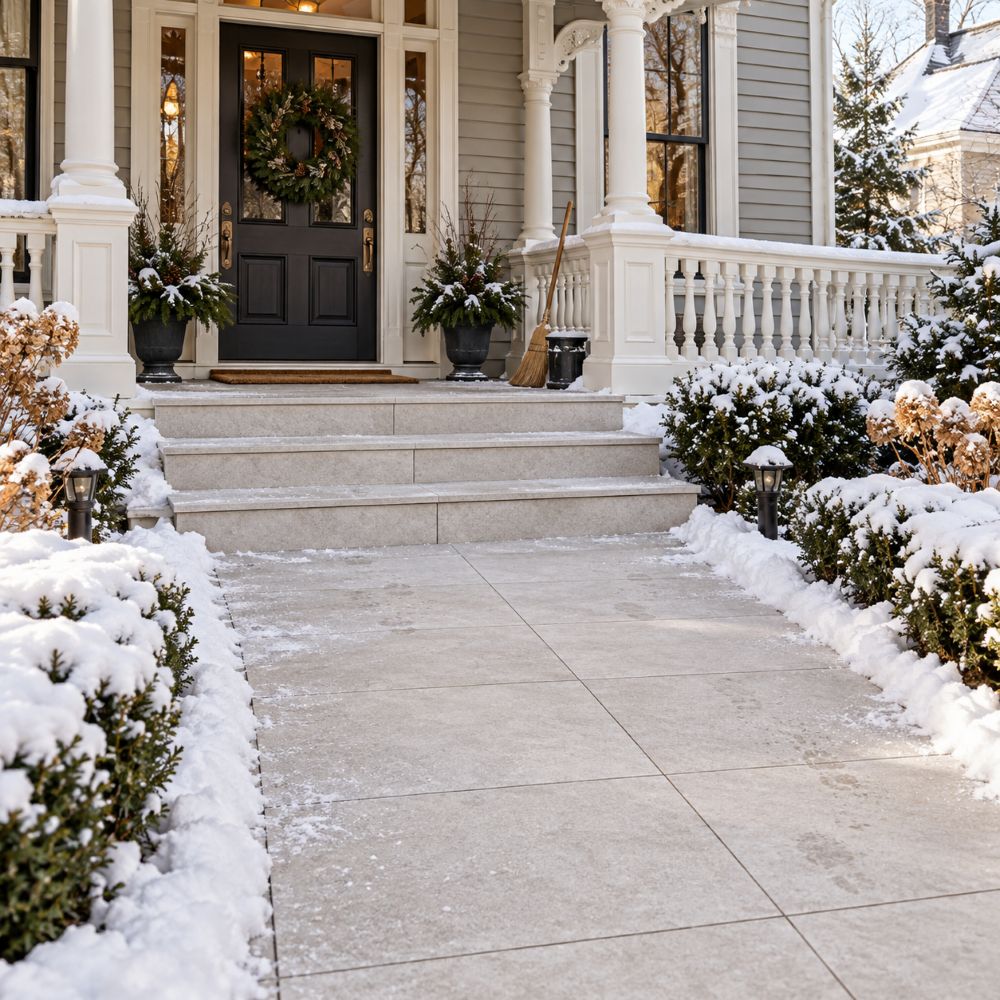
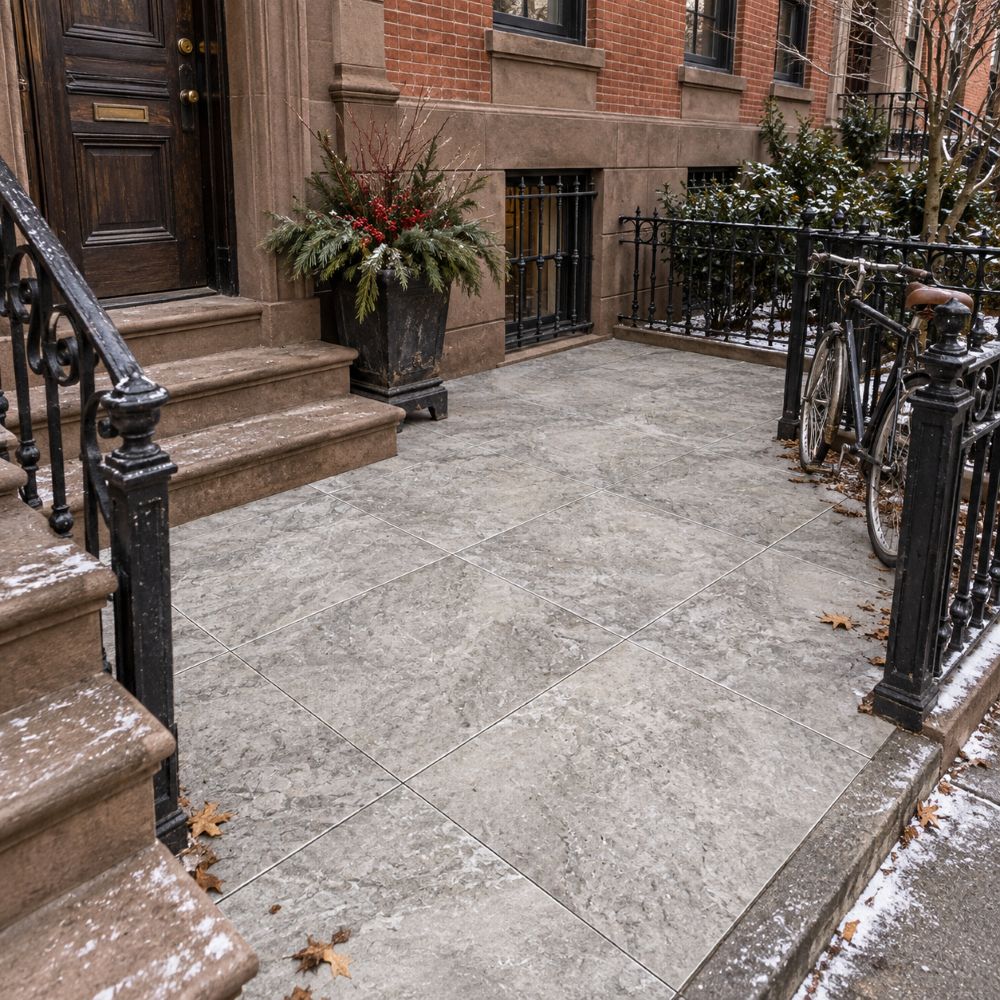
Every spring, the same photos reach our desk: a patio that looked flawless in October, now laced with hairline cracks and flaking edges. Choosing freeze thaw patio stone is less about finding a beautiful surface and more about understanding how a stone drinks, breathes and moves through a New Jersey winter.
Stone was shaped under pressure over millions of years, and outdoors it keeps answering to water, cold and salt. Respect that, and a patio ages with character instead of coming apart.
Best Patio Pavers for Freeze Thaw Climates
Why Patio Stone Cracks in Freeze Thaw Winters
Water is the quiet culprit. It slips into pores and joints, freezes, expands and pries the stone apart from within, and when it thaws, more water follows into the space it opened.
Rutgers’ Office of the New Jersey State Climatologist puts the northern highlands at roughly 163 freeze free days a year, against about 217 at the shore. Homeowners usually blame a bad batch of stone, but in reality the failure almost always starts with water that had nowhere to go.
What to Look for in Freeze Thaw Resistant Pavers
Read the data before you fall for the color. Porcelain should show water absorption of 0.5% or less and an ASTM C1026 freeze thaw result on its technical sheet; natural stone varies by quarry and grade, so ask for data on the exact stone, never the category. Most suppliers lead with color and price.
We lead with the data sheet, because a gorgeous paver that soaks up water will not see many Bergen County Februaries. Keep polished faces indoors and choose honed, tumbled or textured finishes for grip.
Natural Stone Pavers vs. Porcelain Pavers for Cold Climates
There is no single winner, only the right fit for the site. Porcelain tile offers low absorption and steady performance, which suits a hard-working family terrace or a commercial plaza that is salted often. Natural stone gives what porcelain can only imitate: real mineral depth and a surface that grows richer with time, from dense slate tile to the quiet weight of basalt tile.
After 30 years of specifying exterior stone, I can tell you the patios people love most were matched to how the space is lived in, not to a photograph.
Can You Use Marble or Travertine Outdoors in Cold Climates?
Yes, with conditions. A textured marble tile paver at proper exterior thickness, a dense travertine tile or a hard limestone tile can all live outside, but grade and density decide everything. A tight, well filled stone behaves nothing like a porous piece riddled with open voids.
Clients often assume natural stone simply cannot survive up north; in reality the right stone on the right base can. We always show a sample soaking wet, because a wet stone tells you more about January than a dry one ever will.
Patio Stone Installation in Cold Climates: Where Most Failures Begin
The most common mistake we see is not the stone itself but what lies beneath it. A well compacted base, a slope that carries water away from the foundation and joints that can drain are what keep pavers intact through a hard winter.
Sand set or mortar set should be the call of an installer who knows the soil on that lot, since a rigid bed that cannot move with the seasons can crack the very stone it holds.
Does Ice Melt Damage Natural Stone?
It can. The Natural Stone Institute has studied how de-icers recrystallize inside stone and damage it both at and below the surface, and NJDOT spread 238,480 tons of salt on state highways in the 2021–22 winter. That salt travels onto driveways and steps on every tire and boot.
Shovel first, melt second, use the least product that works and sweep away the residue. Many homeowners believe a sealer makes stone salt proof; in reality it slows water and salt down without stopping them.
Freeze Thaw Patio Stone Across New Jersey’s Regions
New Jersey holds several winters in one state. In Sussex, Warren and Morris counties, where the Northern Zone averages 40 to 50 inches of snow a year, we steer clients toward the densest textured surfaces and deeper bases. Along the shore from Asbury Park to Cape May, nor’easters between October and April bring salt air and driving rain, so drainage and spring rinsing matter as much as the stone.
On the brownstone stoops of Hoboken and Jersey City, gray tiles and beige tiles tones forgive salt residue far better than bright white tiles, which show every winter streak. If you prefer a darker look, Belgian bluestone has a long history on European streets and ages into a softer, weathered tone rather than flaking the way some slates do in freeze-thaw cycles.
Pool Coping, Steps and Outdoor Kitchens in Freeze Thaw Areas
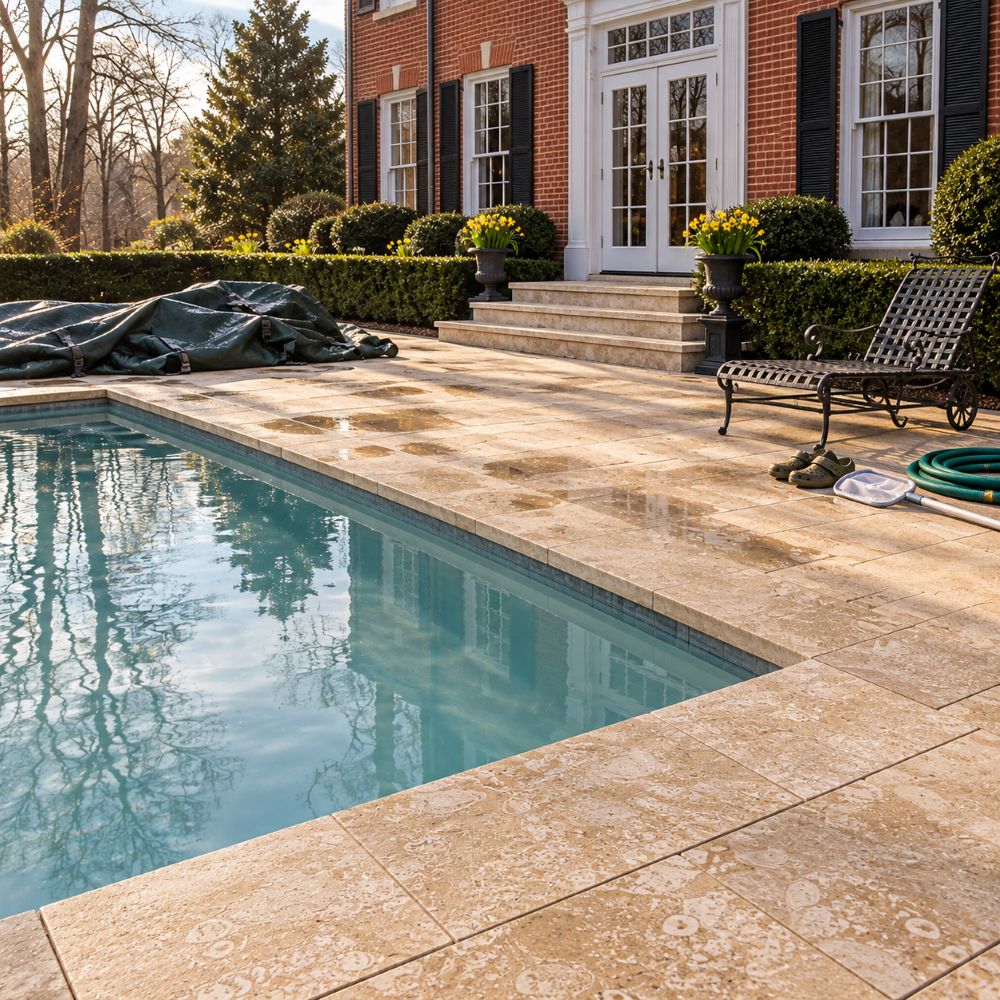
Pool edges take the hardest hit because they stay wet, then freeze once the pool is closed. Choose pool copings with a textured top, confirm exterior suitability before ordering, and remember that deep black tile stone looks striking but holds summer heat around a pool and spa area.
For an outdoor kitchen or wide steps meant to echo an interior floor, such as the natural limestone tile flooring from our sister brand Country Floors, work with a natural stone slab supplier who can show you the full slab, so color and veining carry from inside to out, finished at the door with dense stone thresholds. That continuity is what makes an outdoor space read as architecture.
Winter Care for Stone Patios
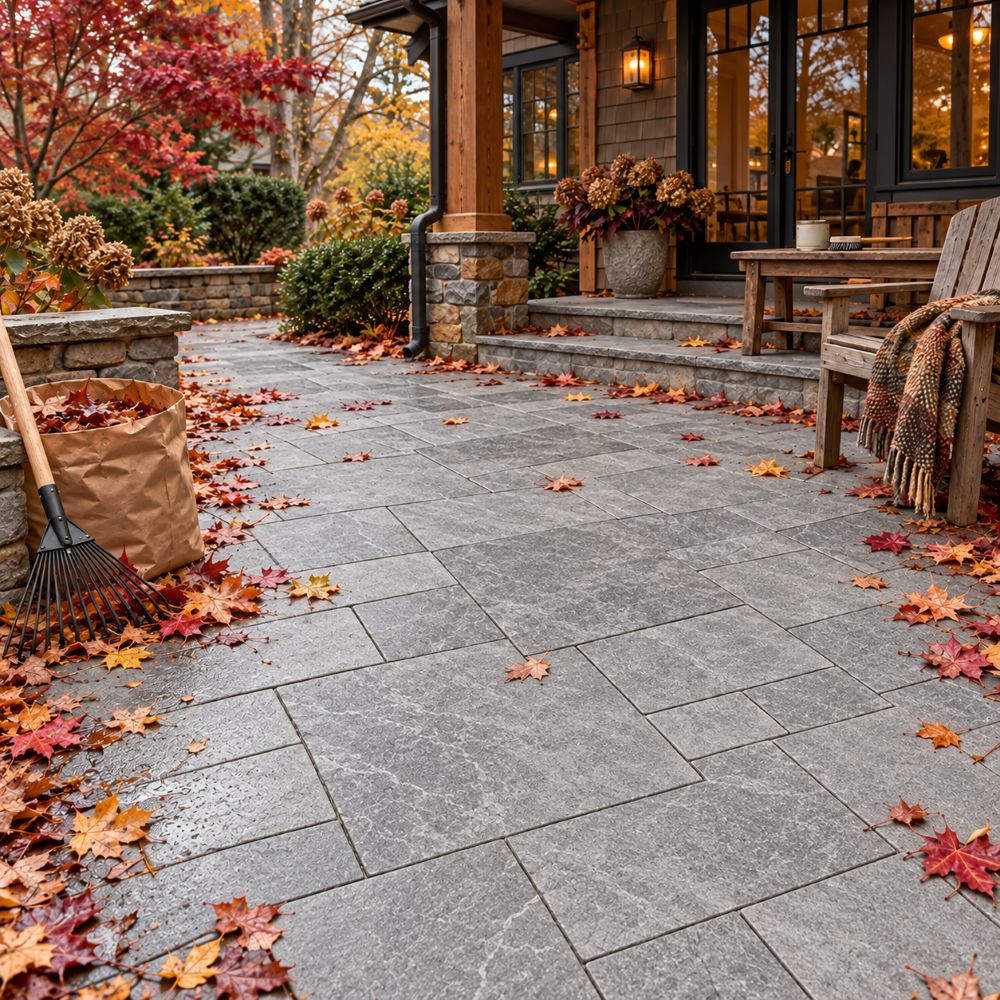
Good stone rewards a little attention. Before the first freeze, clear leaves that hold moisture, check the joints and reseal where the sealer manufacturer recommends it. In spring, rinse away salt and look for loose pavers near downspouts.