
Table of Contents
Some floors make a room look like it’s just finished and you’ve just started to live in it. Belgium bluestone makes a room feel like it was never new, in a good way. That’s a different thing entirely, and it’s why farmhouse kitchens, barn conversions, modern and contemporary design lovers, and old world interiors keep coming back to this stone, even generation after generation, long before anyone put it on something called a mood board.
It’s Not Actually That Blue, But Why Do We Call It Blue?
350 million years ago, southern Belgium was a warm, shallow sea. Crinoids, small marine creatures with calcium skeletons, lived and died there in enormous numbers, their remains slowly settling into the seabed alongside coral and shells. Over millions of years, tectonic pressure compacted those layers into something dense, crystalline, and almost impossibly dark.
The blue and black-ish color isn’t a finish. It’s carbon, finely divided, locked into the micro crystalline structure of the stone, exactly where it settled three and a half centuries ago. The white specks across the surface are fossil fragments. The more visible they are, the more valuable the stone.
You may have heard it in other ways; don’t be so shocked. Pierre Bleue de Belgique. Petit Granit, a name earned because its crystalline surface catches light just like granite. It’s quarried exclusively in Belgium, from a single geological vein running east to west across the country. You cannot source it anywhere else. After sixty years of working with natural stone, that kind of specificity tells you something about a material’s soul.
350 Million Years of Dark Seas: A Stone Decides the Whole Atmosphere
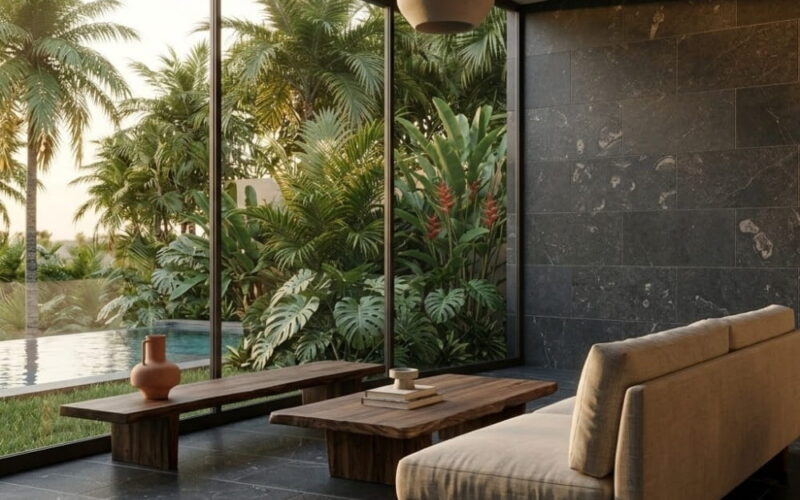
Walk into a room with Belgium bluestone on the floor, and something will totally make you feel like you’re experiencing something just different. Not dramatically, just quietly. The natural stone absorbs light rather than throwing it back. Morning is a vibe and afternoon is another. Candlelight does something to it that no other dark floor material can achieve.

This is the quality that Belgian bluestone modern interiors have always understood. Not that the stone looks old. That it is old, genuinely, geologically, undeniably old. Village squares in Wallonia, monastery corridors, farmhouse kitchen floors worn smooth by a century of foot traffic. The brushed and chiselled tile finishes lean hardest into that heritage, surfaces that look like the house was built around the stone, not the other way around.
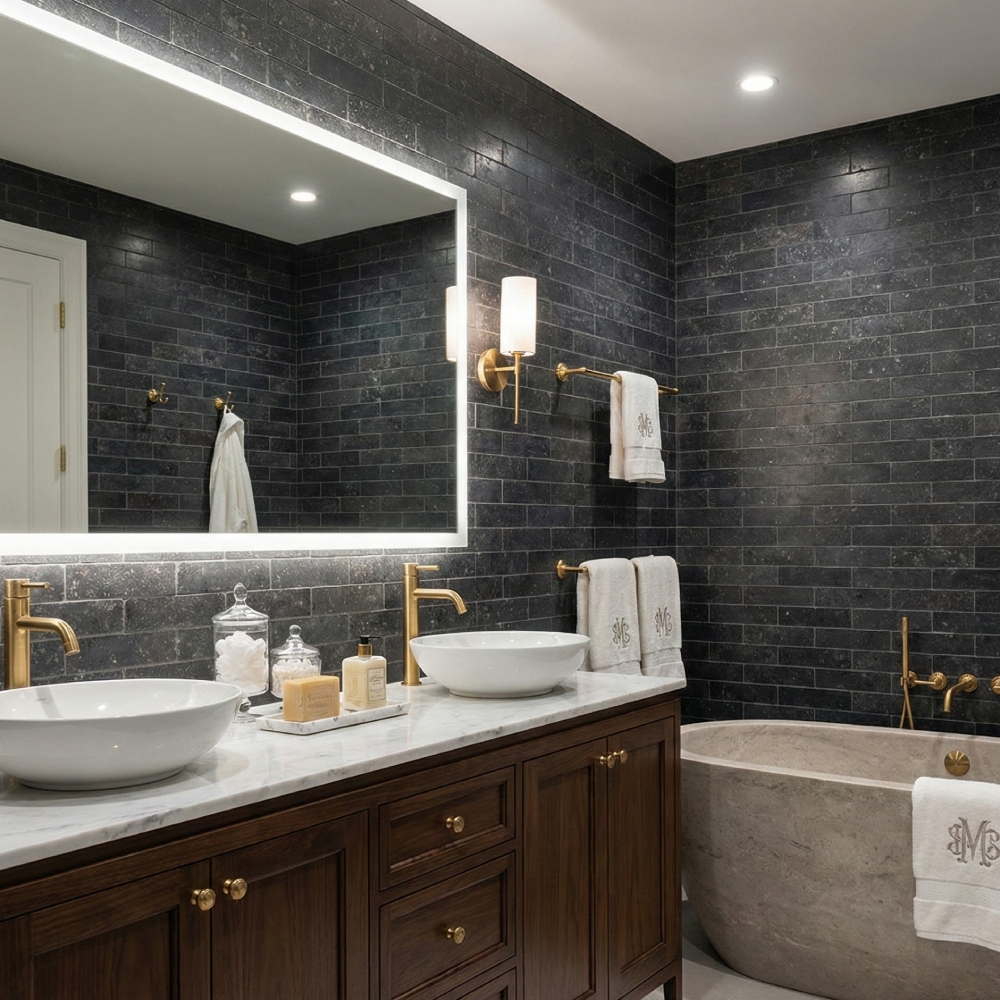
And there is a nuance that you need to catch: finish changes everything here. Honed Belgium blue looks like it’s precise and considered, fossils visible, color sitting at that deep register between black and blue. Brushed and chiselled brings the raw and untouched texture and shadow. Lappato limestone gives a semi reflective quality that works in contemporary rooms without losing any depth. Same stone. Three entirely different rooms, three different aesthetics with the same material.
Bluestone or Slate: Your Hand Will Know the Difference
Both dark, both textural, both with that quality of having earned their place. But hold them side by side.
Slate is layered, lighter, with a surface that can feel almost papery in thinner formats. Belgian black limestone is dense and crystalline; it doesn’t split, it holds. The fossil variation gives it a surface depth that slate doesn’t have. Slate weathers faster outdoors and can delaminate over time. Belgium bluestone has been paving village squares in northern Europe for centuries.

We’ve had clients come in asking for slate and leave with chiselled limestone tile without any hesitation. Not because we talked them out of it, but because once they felt the weight and saw the fossils up close, the comparison made itself. That’s why ordering samples is important, or just visiting us would be an amazing trip to experience some stones.
You Won't Stop Covering the Whole House with Belgium Bluestone
One Wall. Belgium Bluestone. Nothing Else Needed.

Behind a fireplace, it becomes the architectural anchor. In a bathroom, it turns the room into something between a spa and a stone cellar. In a living room, it gives everything else something to respond to. The stone doesn’t announce itself; it establishes. One wall, and the room is decided.
Walk on 350 Million Years Every Morning
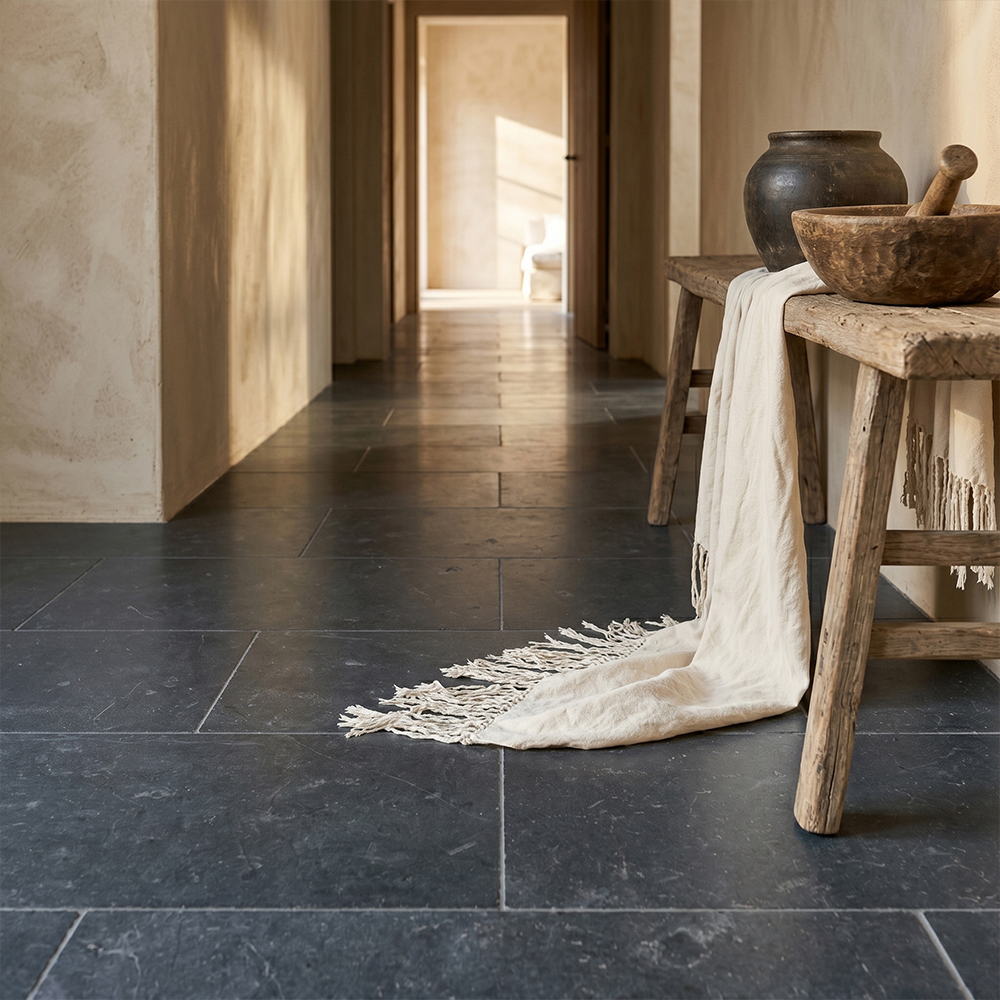
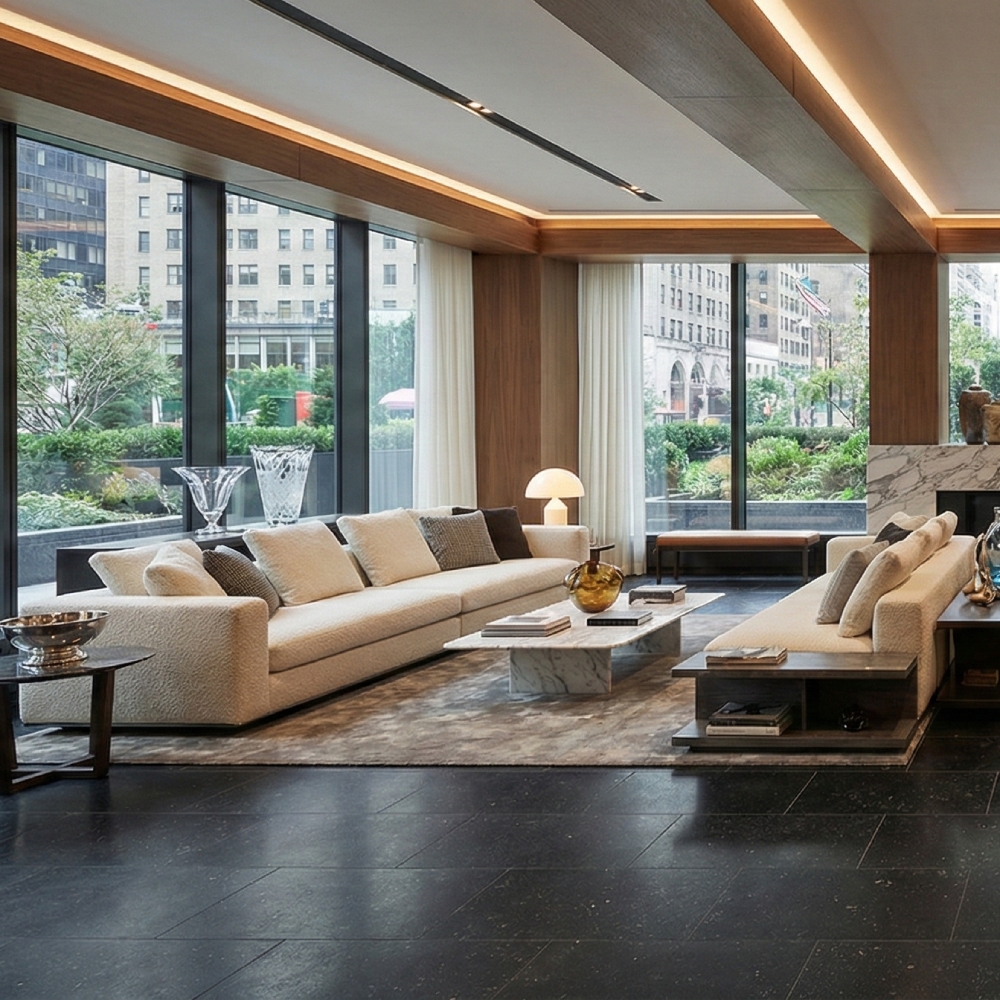
Black limestone floor tiles in Belgium blue have movement without pattern, depth without distraction. The fossil variation means no two sections of the floor look identical. And it ages with use; foot traffic polishes certain areas naturally over time, creating a patina that makes the floor look more itself, not less. Rustic limestone flooring that gets better every year you live with it.
The Backsplash That Turns Cooking Into an Experience

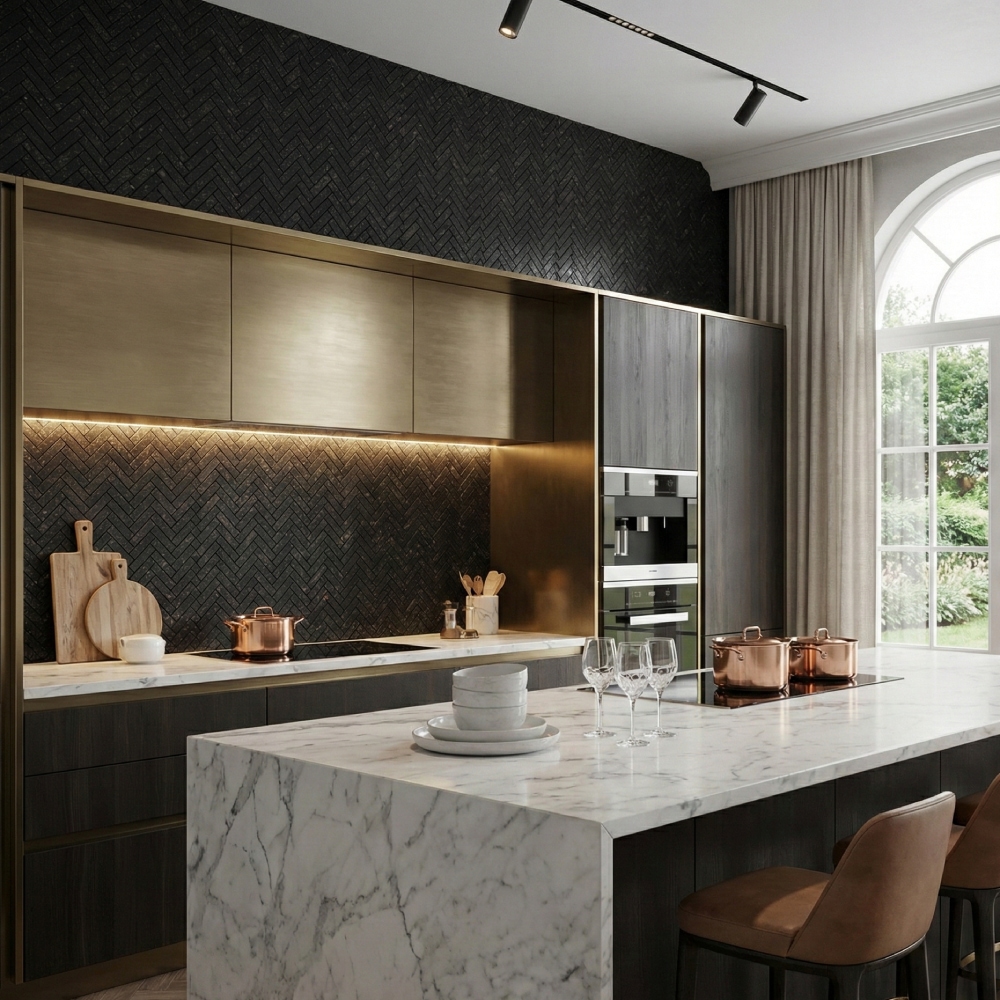
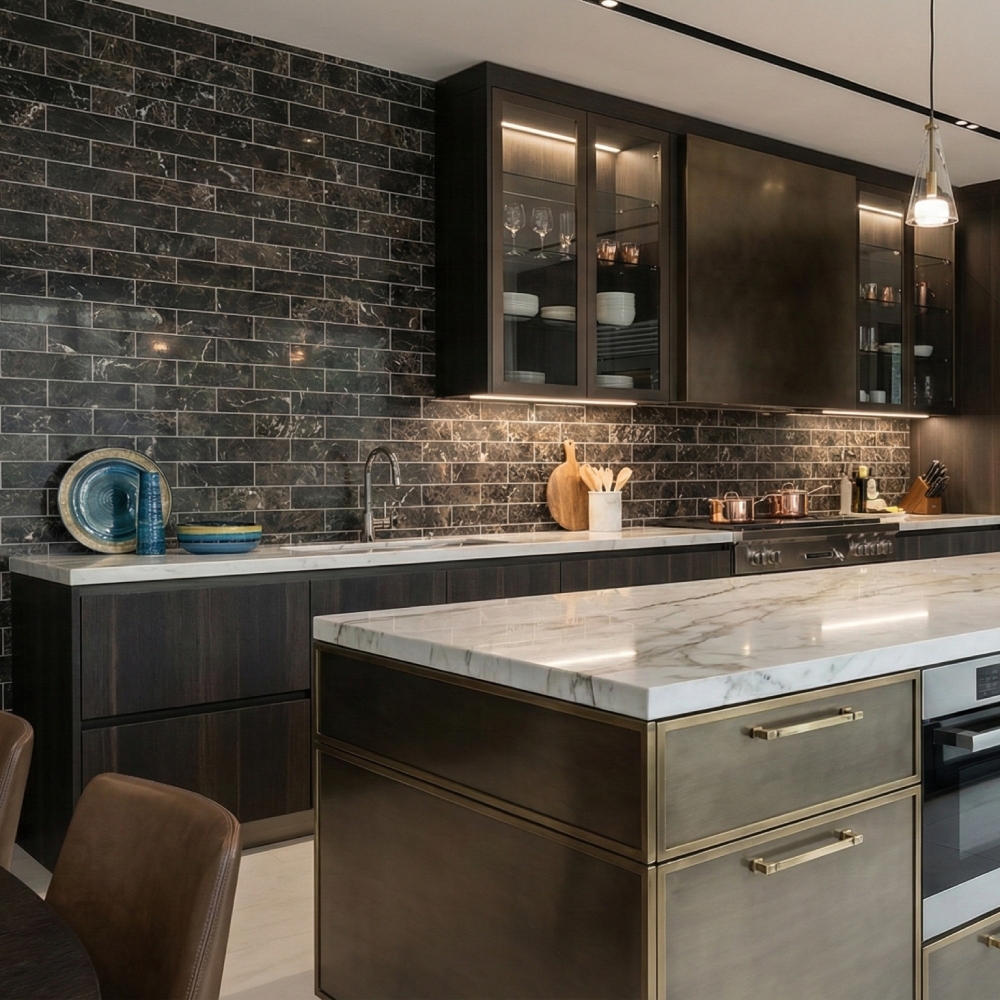
Black brushed limestone tile on a kitchen backsplash, behind copper cookware, warm wood shelving, brass fixtures, with marble countertops. The dark ground makes everything in front of it come forward. Stone mosaic tiles in Belgium blue in a shower niche or behind a vanity do the same: the room gets quiet, then the surface speaks.
Commercial Spaces That Don't Look Commercial Anymore
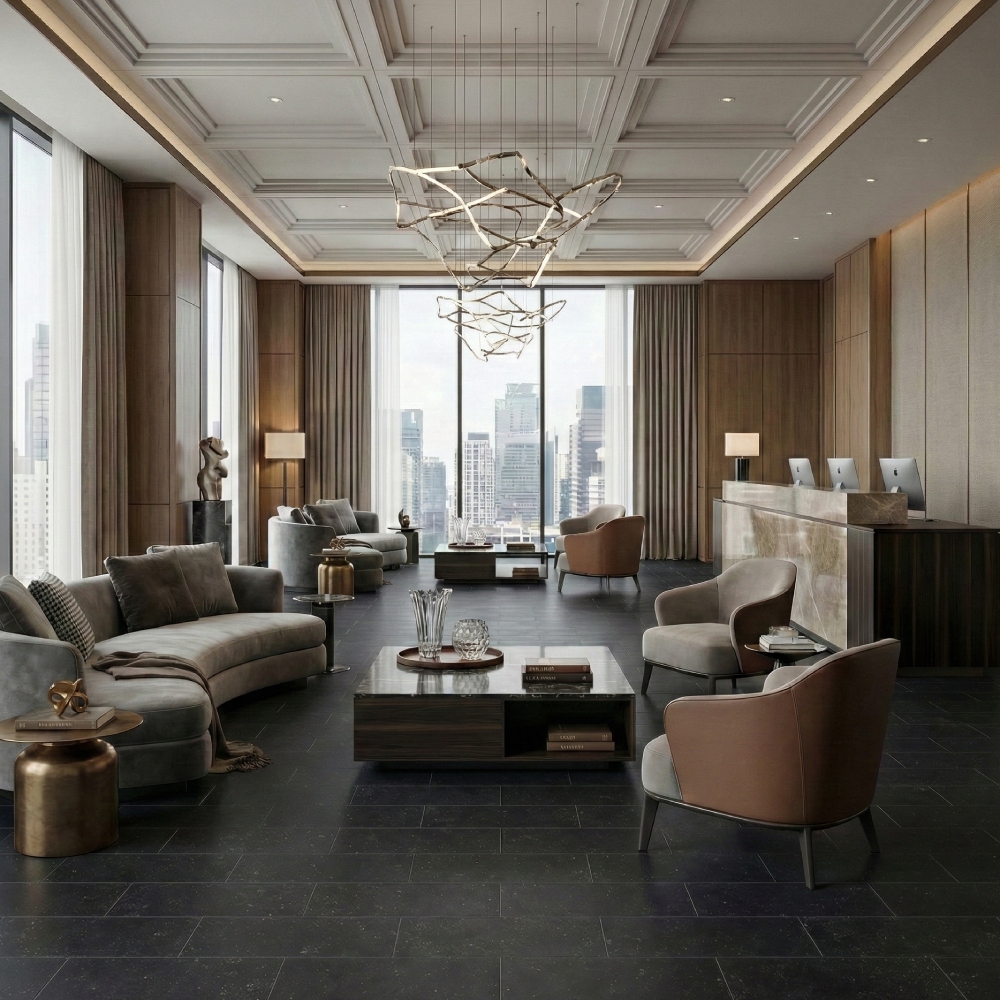
Restaurants, hotels, wine bars. Belgium Bluestone in a commercial space entirely removes the feeling of a designed space. Guests don’t think it’s just a good tile. They think the building was always this way, and those black tiles were always there for brand reputation.
Browse our Belgium Blue Honed Limestone and La Roche Limestone collections to experience black limestone in real life. Order your samples, and hold one before you decide to witness the 350 million years old storytelling.