

Late September’s king tide flooding in Pompano Beach put knee high water on Riverside Drive near Atlantic Boulevard and turned Canal Drive, just off A1A, into something closer to a channel than a street. For many owners of canal homes and ground floor condos, the water didn’t stop at the doorstep.
I have spent 40 years helping South Florida homeowners, designers and contractors choose stone, and every fall the question I hear most at our Pompano Beach showroom is the same: which floor can I clean and keep, instead of tearing it out again next year?
1. Why King Tide Flooding in Pompano Beach Reaches Ground Floors
The city reports that more than 32 percent of its buildings sit in a FEMA Special Flood Hazard Area, and it considers the entire city potentially flood prone. Pompano’s tidal canals connect to the Intracoastal near the Hillsboro Inlet.
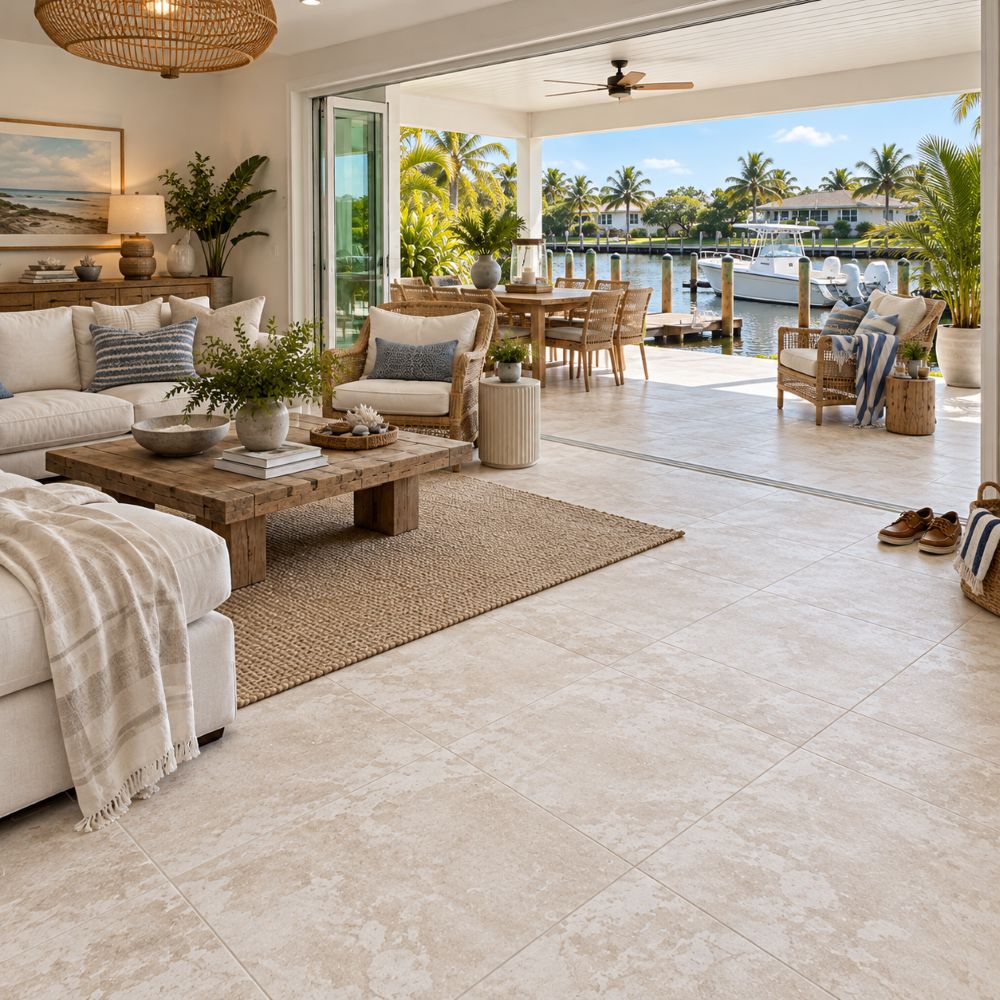
When a seasonal high tide lines up with an afternoon downpour, storm drains back up instead of emptying. The streets east of Federal Highway, the older block homes of Old Pompano and the low first floors of canal homes feel it first. Life on the water is why people choose this city, and it is also why the floor here has to be chosen differently.
2. What Makes the Best Floor Tiles for Flood Prone Homes
FEMA’s flood guidance asks one plain question of any floor: can it sit in floodwater for 72 hours and come back with nothing more than cleaning? Clients usually think the answer depends only on the tile, but in reality it depends just as much on what holds the tile down.
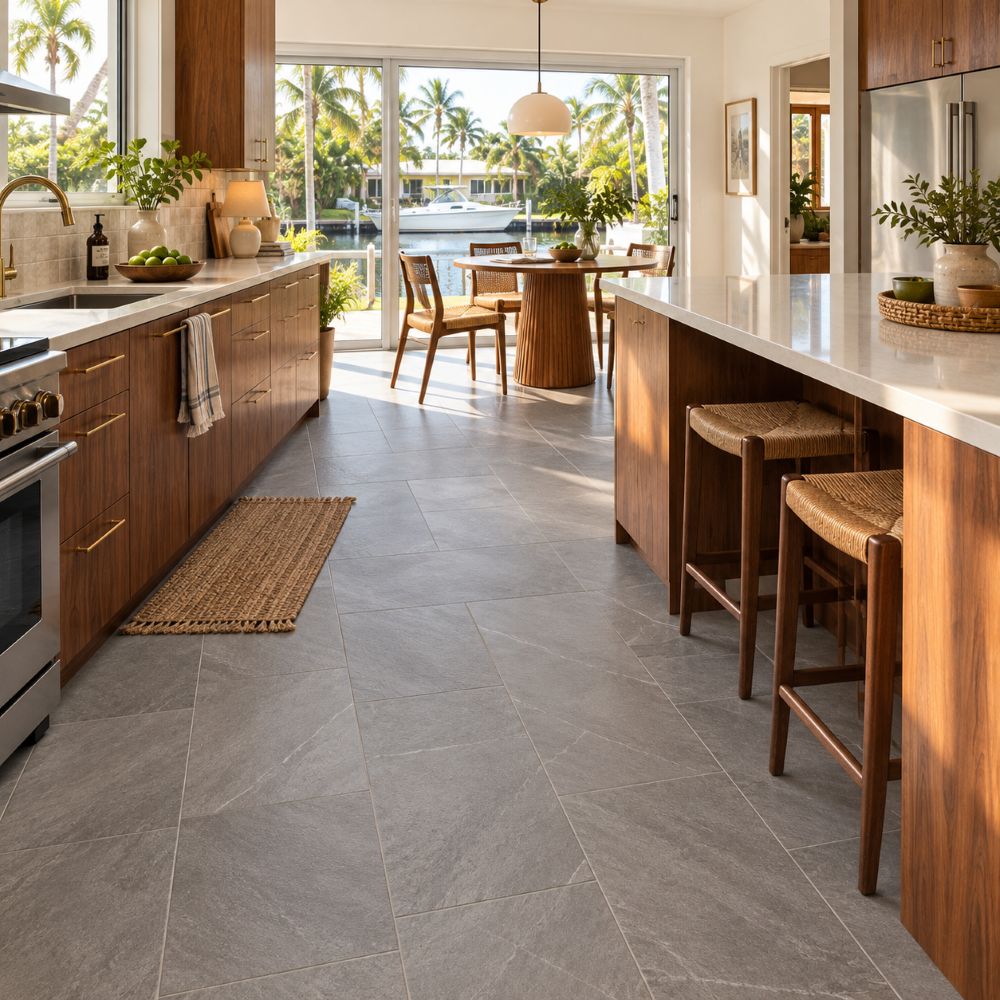
FEMA rates porcelain tile and ceramic tile as flood damage resistant when they are set in mortar, and not when they are set with organic adhesives. Natural stone qualifies only when it is non absorbent and paired with waterproof grout. Country Floors shares our Pompano Beach showroom, so you can compare their natural stone and ceramic floor tiles alongside ours in a single visit.
3. Is Porcelain Tile Good for Flood Prone Areas?
For a family room that takes water every October, porcelain is the most forgiving choice. Its very low absorption keeps floodwater on the surface, where it can be pumped out, scrubbed and sanitized.

Large format tiles in a matte or textured finish keep grout lines to a minimum and give bare feet better grip on a floor that may still be damp the next morning. Today’s stone look porcelains carry convincing veining, so a resilient floor never has to feel like a utility space.
4. Can Natural Stone Floors Survive Flooding?
They can, if you choose the stone for its density rather than its color. Every stone took millions of years to form, and that history decides how it behaves in water. Dense stones such as basalt tile and many granites typically absorb very little.

A honed marble tile floor can come through a short flood when properly set and sealed, although the acidic contaminants in floodwater may etch its surface. Slate varies from quarry to quarry, so we always check its absorption data before recommending it for a ground floor.
5. Why We Keep Travertine and Limestone Above the Waterline
Most suppliers will sell travertine for any room in a coastal home. We don’t, because its natural voids and open pores can hold contaminated water long after the street has dried.
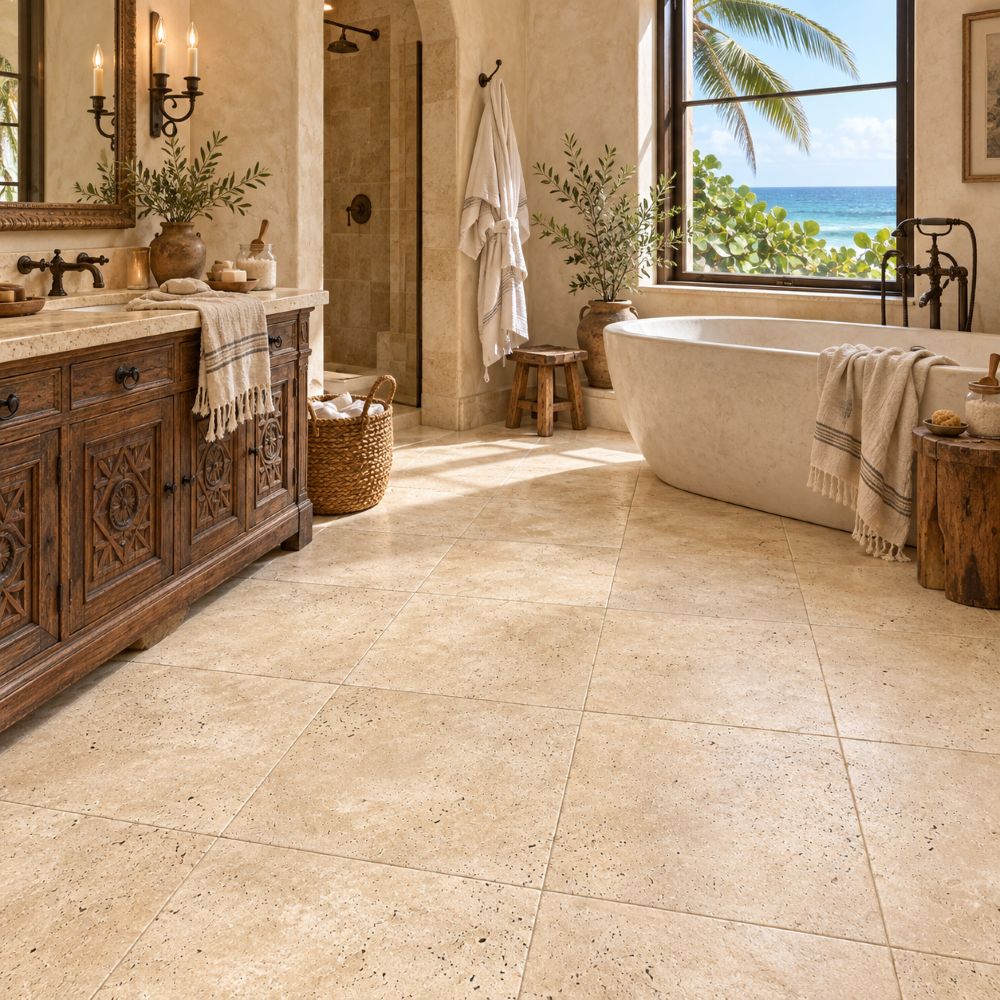
Travertine tile and softer limestone tile belong on upper floors and in bathrooms well above the flood line. Outdoors, the same porosity becomes an advantage: water drains through rather than sitting on the surface, which is why travertine remains one of the best pavers for pool decks, and our outdoor pavers come in sizes and finishes made for that kind of exposure.
6. Terrazzo Tile: A South Florida Classic That Handles Water
Terrazzo tile has a long history in South Florida floors, and its performance explains why. FEMA rates terrazzo as flood damage resistant, and its speckled, stone rich surface hides the wear of everyday coastal life. Our terrazzo tiles bring that character into a renovation. They suit a living room that opens straight onto a canal side patio.

7. The Installation Mistake We See Most After King Tides
The mistake we see most often is replacing a flooded floor with exactly the same system that failed, simply because it matched the rest of the house. Specify a cement based mortar, a grout rated for wet areas, and a stone threshold for a clean, cleanable transition at sliding doors.
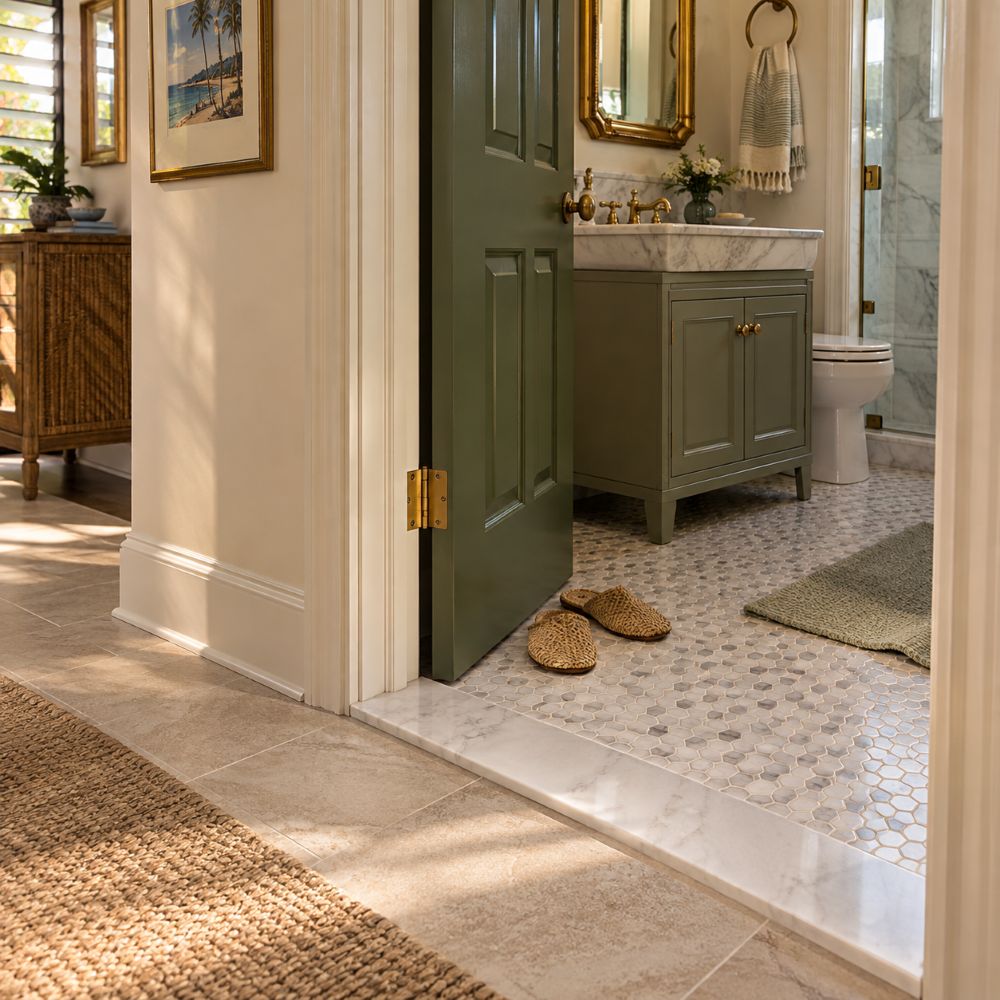
Small format mosaic tiles in a ground floor bathroom or around a kitchen island should follow the same rules, because water does not respect room boundaries.
8. Check Pompano Beach Flood Zone Renovation Rules First
Before ordering a single box, look up your property on the city’s flood information portal. When repairs or alterations exceed 49 percent of a building’s market value, the city requires the whole structure to meet new construction flood standards, so a flooring job inside a larger remodel can change the scope entirely.

Condo owners have one more layer to consider, since many associations set their own rules on materials, waterproofing, and approved contractors, and knowing what to know before retiling a condo balcony can help you get your plans approved the first time.
Bring Your Flood Story to Our Pompano Beach Showroom
If you have been searching for “marble near me” since the water receded, our Pompano Beach tile showroom at 2010 West Atlantic Blvd. is only minutes from the neighborhoods hit hardest this fall. Bring photos showing how high the water reached, and your elevation certificate if you have one.

We will put the stone in your hands, share its technical data and help you choose a floor that carries real character, one you only need to clean, never replace. For room by room guidance, see our how to choose the right floor tiles for your home.