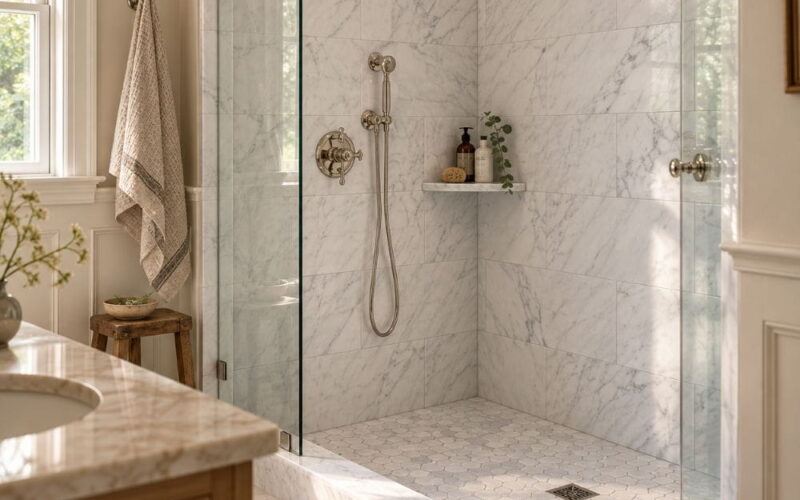
Most of the marble conversations at our Fairfax showroom start in the bathroom. A homeowner is halfway through an older home bathroom renovation, the original vanity is already on the curb, and the question arrives before the stone is even chosen: how often will I have to seal this?
After three decades of walking contractors, designers and families through our slabs, my honest answer is that marble doesn’t keep a calendar. It answers to where it lives, how it’s finished and how it’s used. Here is how that plays out, room by room.
1. Why “How Often to Seal Marble” Has No Single Answer
Clients usually think sealing is a yearly chore, like changing a furnace filter. In reality, the Natural Stone Institute describes stone sealers as impregnators that make marble more stain resistant, never stain proof, and it advises matching the schedule to the stone and the product rather than to a date.
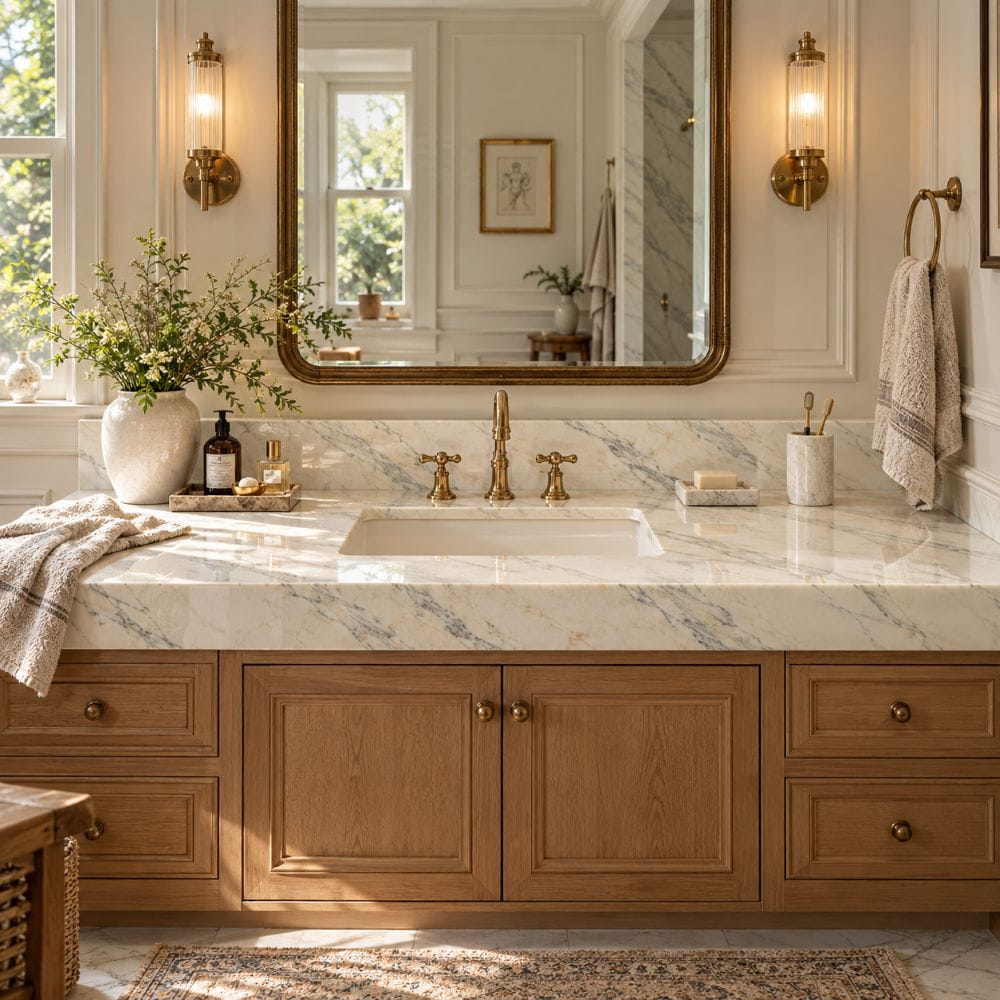
The stone tells you when it’s thirsty: water that darkens the surface instead of beading on it is the signal. Our step by step sealing guide walks through the full test and application.
2. How Often to Seal a Marble Vanity in an Older Home Bathroom
The vanity is where most bathroom projects begin, and it is gentler on marble than people expect. Toothpaste, hand soap and the occasional perfume bottle are the real adversaries, and they threaten the polish more than the seal. A vanity cut from one of our marble slabs usually holds its stain resistance far longer than a kitchen counter, so a quick test each spring and fall is often enough.
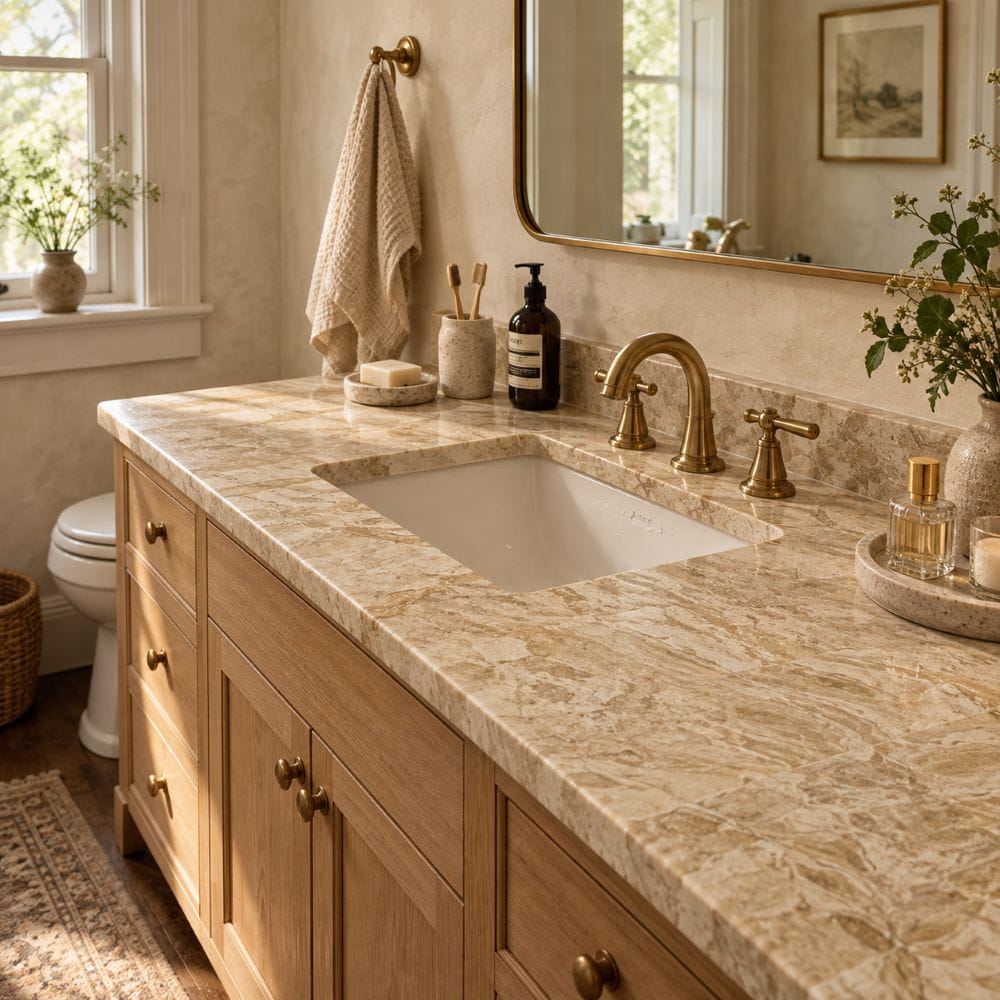
If you pair it with a carved natural stone sink, check the rim and drain edge too, where water lingers longest. In many older Fairfax homes, clients keep marble on the vanity and floor and bring color to the walls with handcrafted decorative tile from Country Floors; most glazed wall tile needs no sealing at all, which keeps the care plan simple.
3. Sealing a Marble Shower: Walls, Thresholds and Mosaic Floors
Showers are the one room where I ask clients to pay closer attention. Water is a daily fact there, and soap film and mineral residue settle faster than anywhere else in the house.
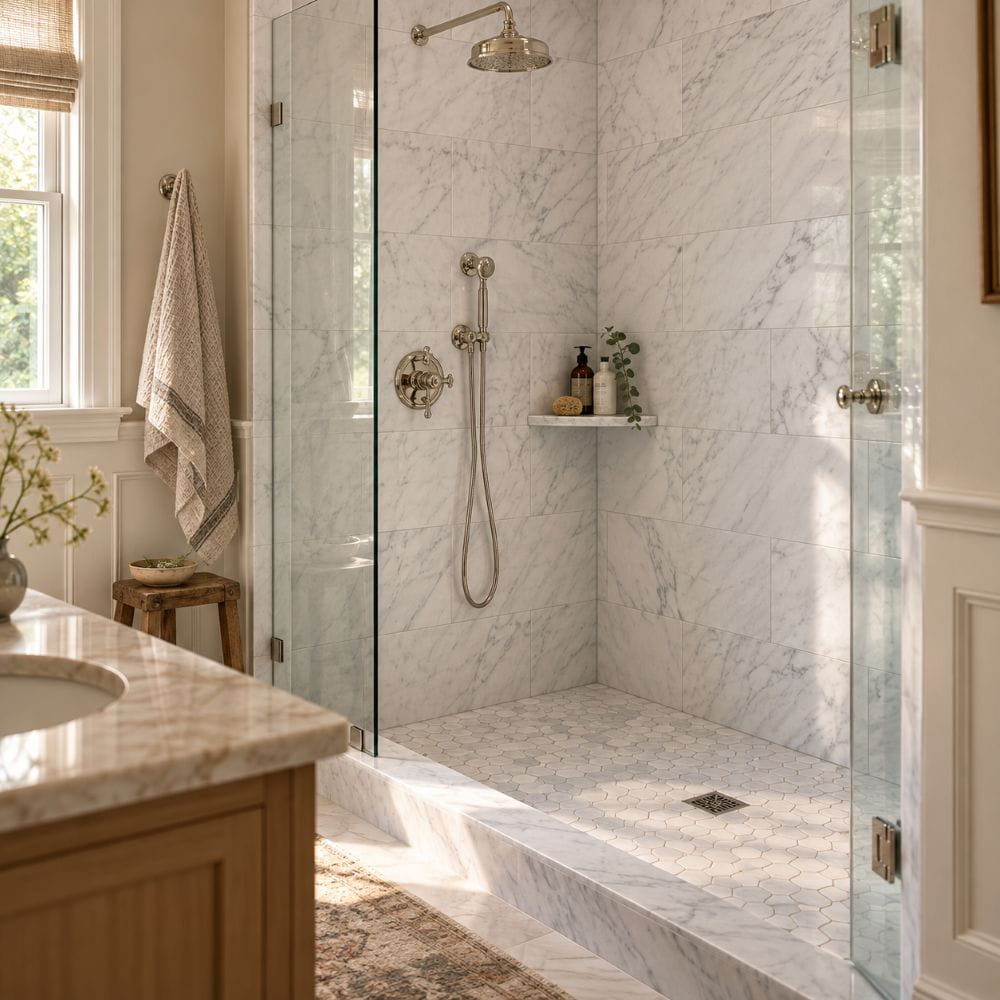
Most suppliers sell shower marble exactly the way they sell a vanity; we spend extra time on the details, because that’s where trouble starts: the grout rich field of a marble mosaic floor, the top of a curb or shower threshold, and the flat ledge of a corner shelf where bottles stand in puddles. Test those spots first, and treat them on their own schedule if they drink faster than the walls.
4. Marble Bathroom Floors in Older Fairfax Homes
Roughly a quarter of Fairfax County’s homes were built before 1970, according to the county’s own demographic data, and many of those bathrooms are getting their first natural stone floors now. Floors face grit, foot traffic and cleaning products more than spills, so the surface tends to wear before the seal gives out.
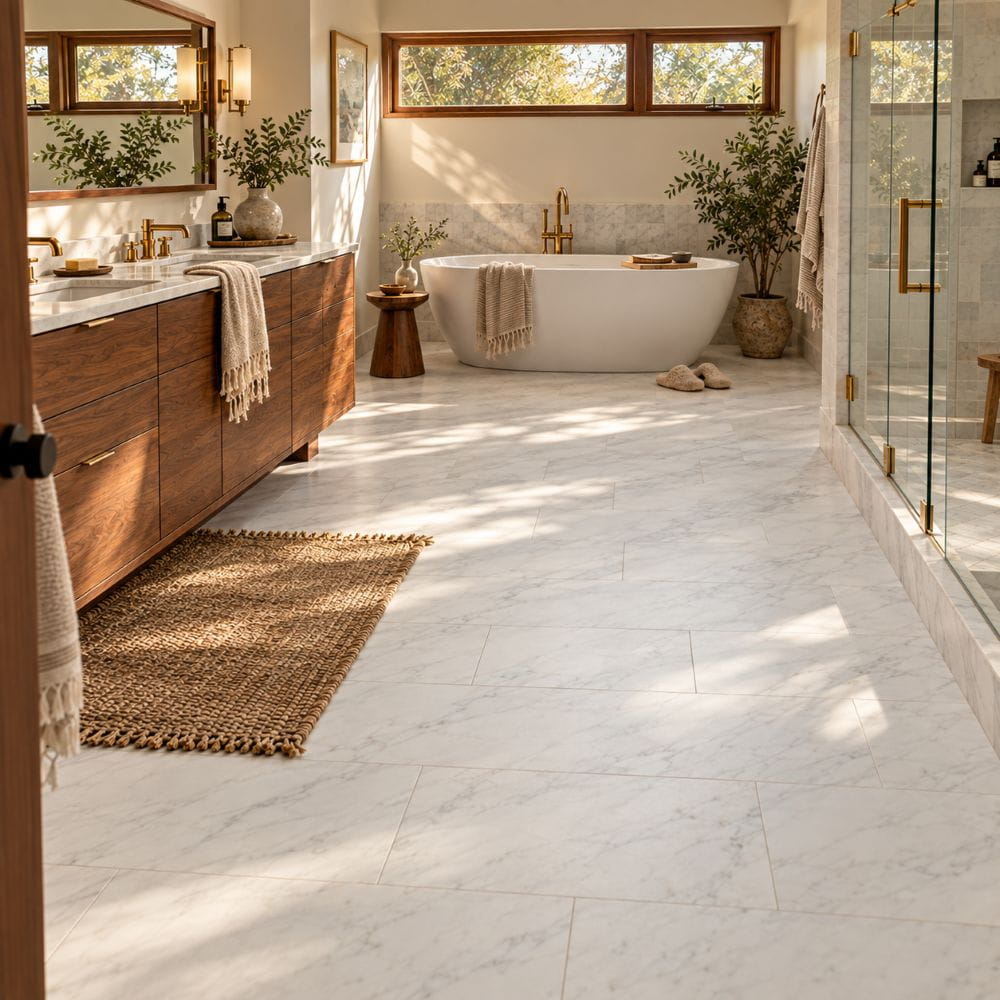
A honed marble tile floor in a guest bath can go a long stretch between treatments, while a primary bath floor beside the tub deserves a test every few months. Our bathroom collection brings floor ready options together so contractors can specify with confidence.
5. How Often to Seal Marble Kitchen Countertops and Islands
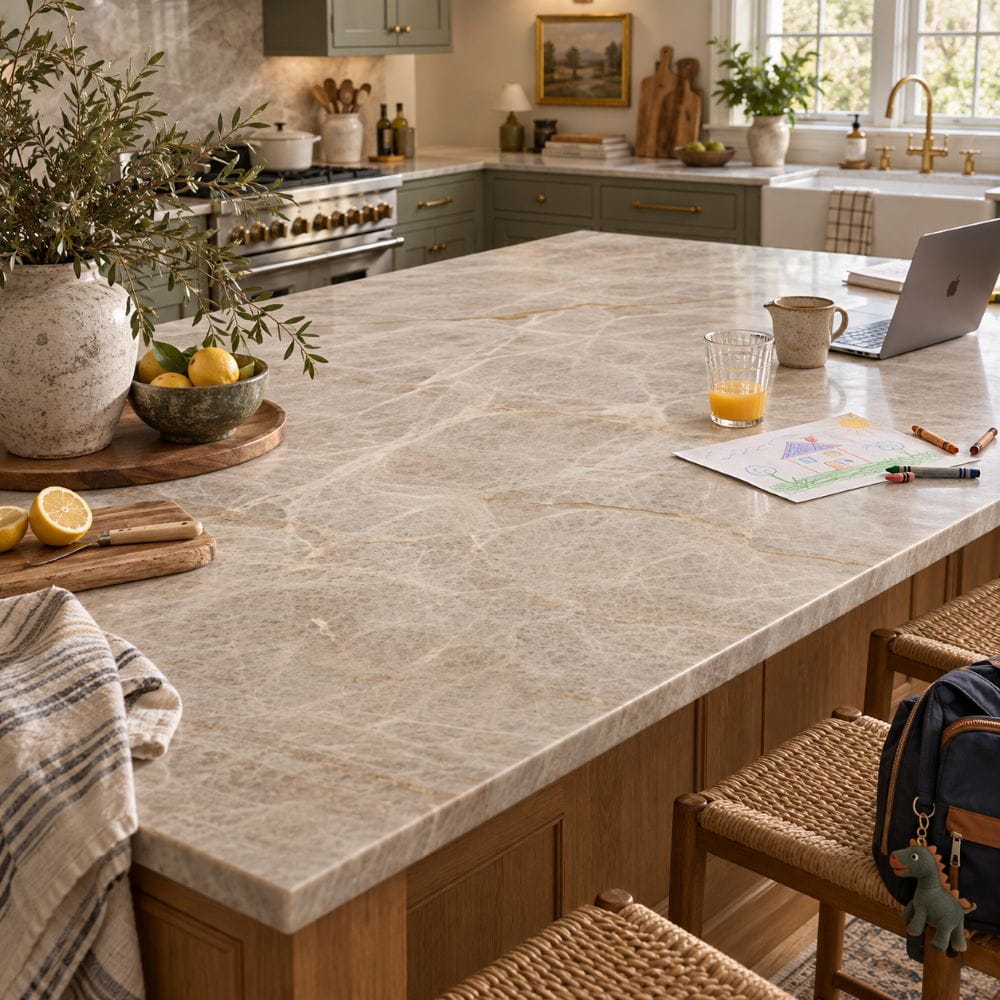
Once the bathroom is finished, many Fairfax clients turn to the kitchen, and this is where marble works hardest. Olive oil, red wine and coffee find their way into the stone far more readily than bath products, and an island near the range can lose its stain resistance well before a vanity does.
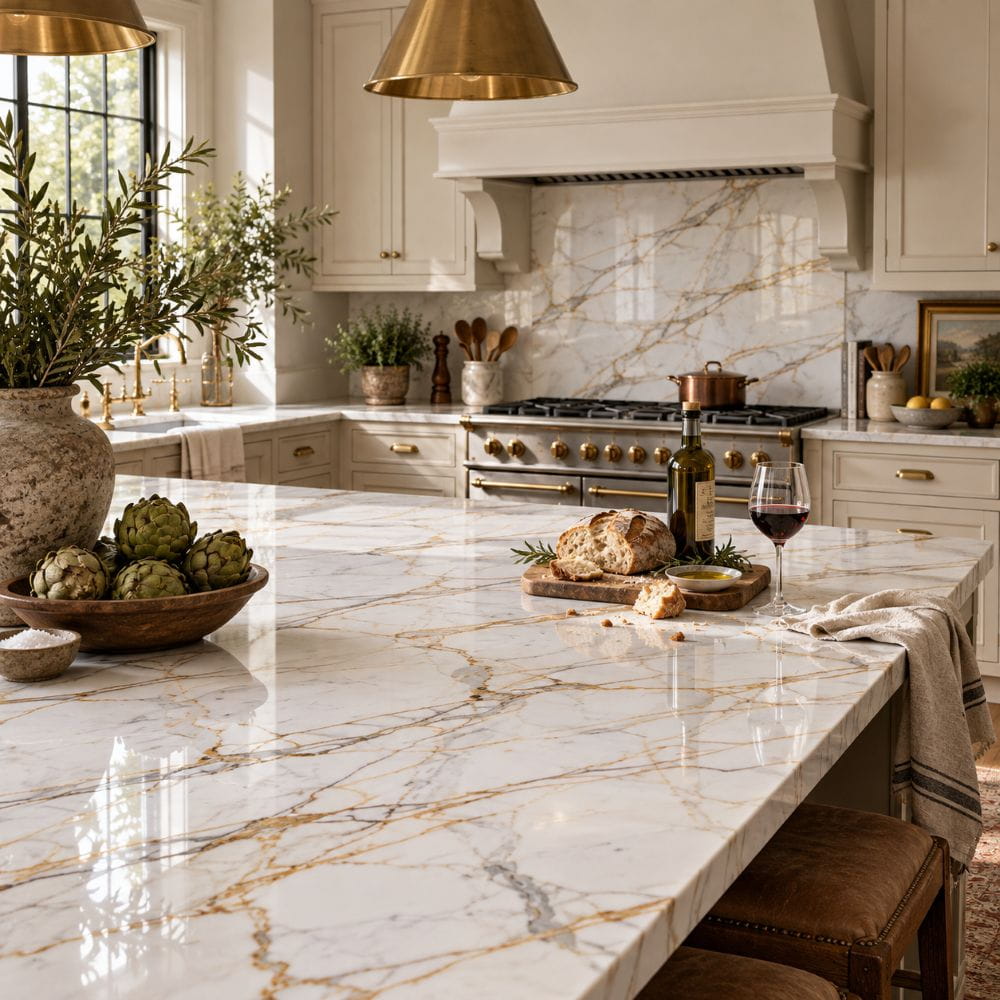
I suggest a water test every few months on the prep zone and around the sink. If you’ve fallen for the look in our black cabinets and white marble guide, plan for this rhythm from day one.
6. Honed vs Polished Marble: Which Finish Asks for Less?
Clients usually assume polished marble is better protected because it looks sealed. In reality, the finish doesn’t replace sealing; what it mostly changes is how visible daily wear will be. Polish shows etch marks clearly, while a honed surface softens them into a quiet patina.
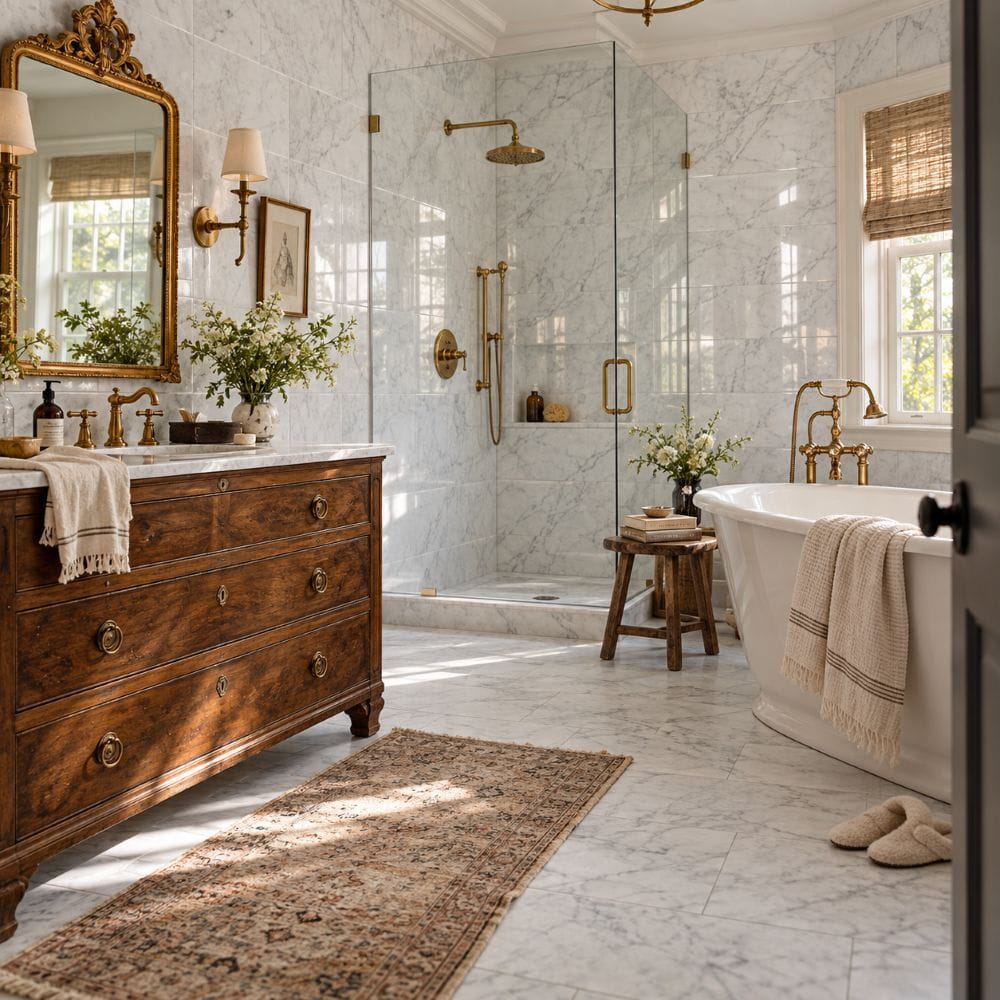
Most suppliers lead with polished because it photographs beautifully; we set both finishes side by side in daylight, because a white marble that looks calm in a showroom still has to live with real hands. Our marble kitchens and bathrooms guide shows each finish once installed.
7. Etching vs Staining: What Sealing Marble Can’t Do
A stain is something that soaked in; an etch is a reaction, where acid from lemon, vinegar or the wrong cleaner dulls the calcite at the surface. A penetrating sealer slows the first and does nothing for the second.
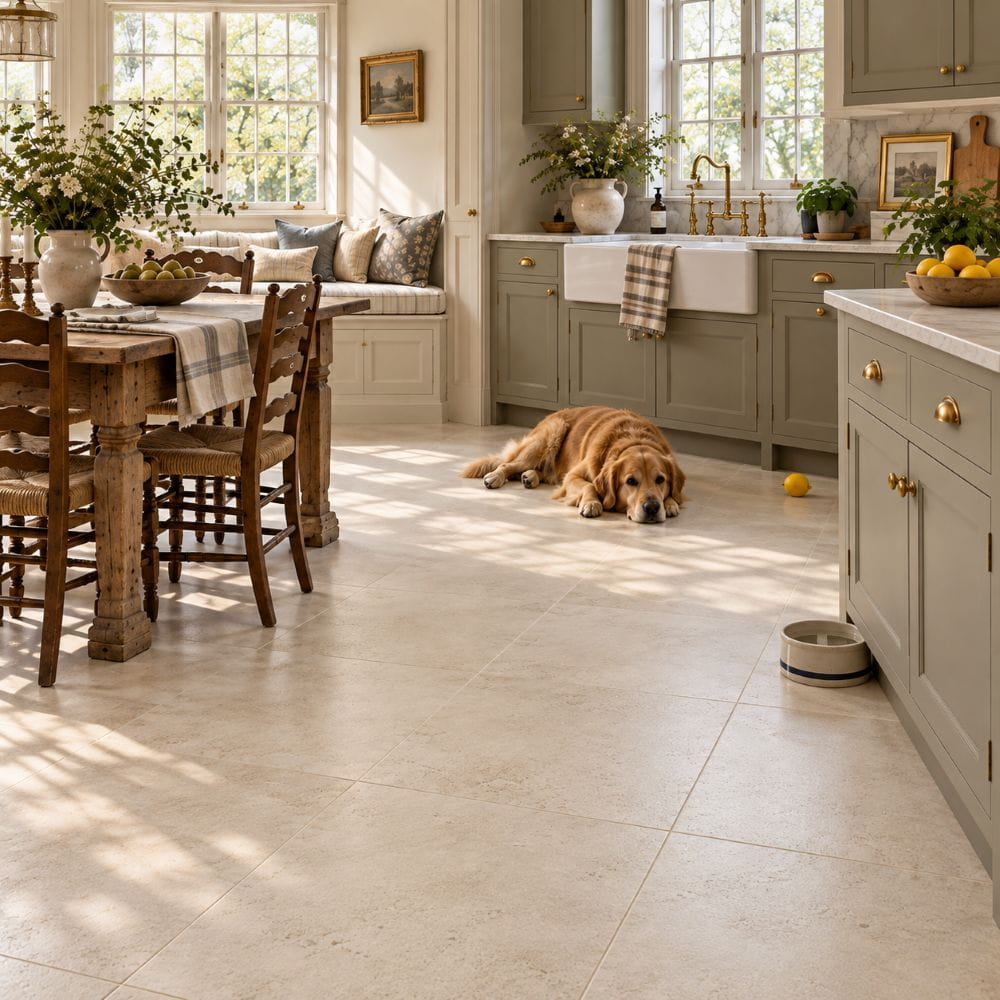
The same holds for limestone and travertine, which share marble’s calcium carbonate roots, as we explain in our marble, limestone and travertine comparison. Wipe acids quickly, clean with a pH neutral product and accept a fine etch pattern as part of the stone’s lived in character.
8. When Marble Isn’t the Right Stone for the Room
In thirty years I’ve talked as many clients out of marble as into it, and I stand by both. If a family wants a surface they never have to think about, large format porcelain tile gives a stone look with no sealing at all, and dense quartzite slabs bring natural veining with far more resistance to acids.
When the walls call for color and pattern rather than stone, our sister brand’s classic bathroom tile designs sit beautifully beside a marble vanity. We would rather match the material to how you live than sell you a slab you’ll resent. You can compare every option across our full slab collection.
Plan Your Marble Bathroom Renovation With Our Fairfax Team
Knowing how often to seal marble has less to do with the calendar and more to do with knowing your rooms. Bring your floor plan, your contractor’s measurements or simply a photo of the bathroom you’re taking apart to our Fairfax slab showroom. We’ll walk the slabs with you, test samples in front of you and leave you with a care plan for every room the stone will touch.