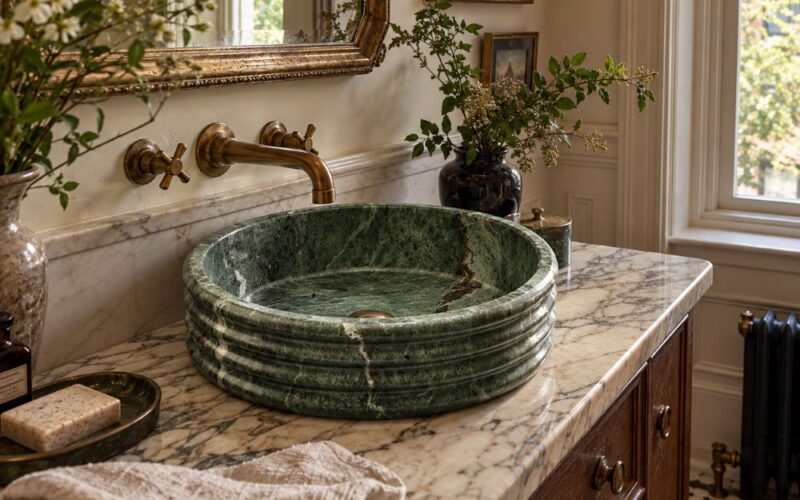
An older home bathroom renovation in New York rarely begins with a tile sample. In a prewar co-op on West End Avenue or a brownstone in Park Slope, it begins with the building: its board, its plumbing stacks and floors that have been settling for a century.
In thirty years of specifying stone for these rooms, I have watched the most beautiful bathrooms come from owners who learn the building’s rules before they fall for a slab. At Marble Systems New York showroom, these are the five rules we walk every client through.
Why an Older Home Bathroom in NYC Starts With the Building
Clients usually think the hard part is choosing between Calacatta and Carrara, but in reality the hard part sits behind the walls. Prewar apartments along Riverside Drive and on the Upper East Side were built with cast iron stacks, steam radiators and floors that are rarely level today.
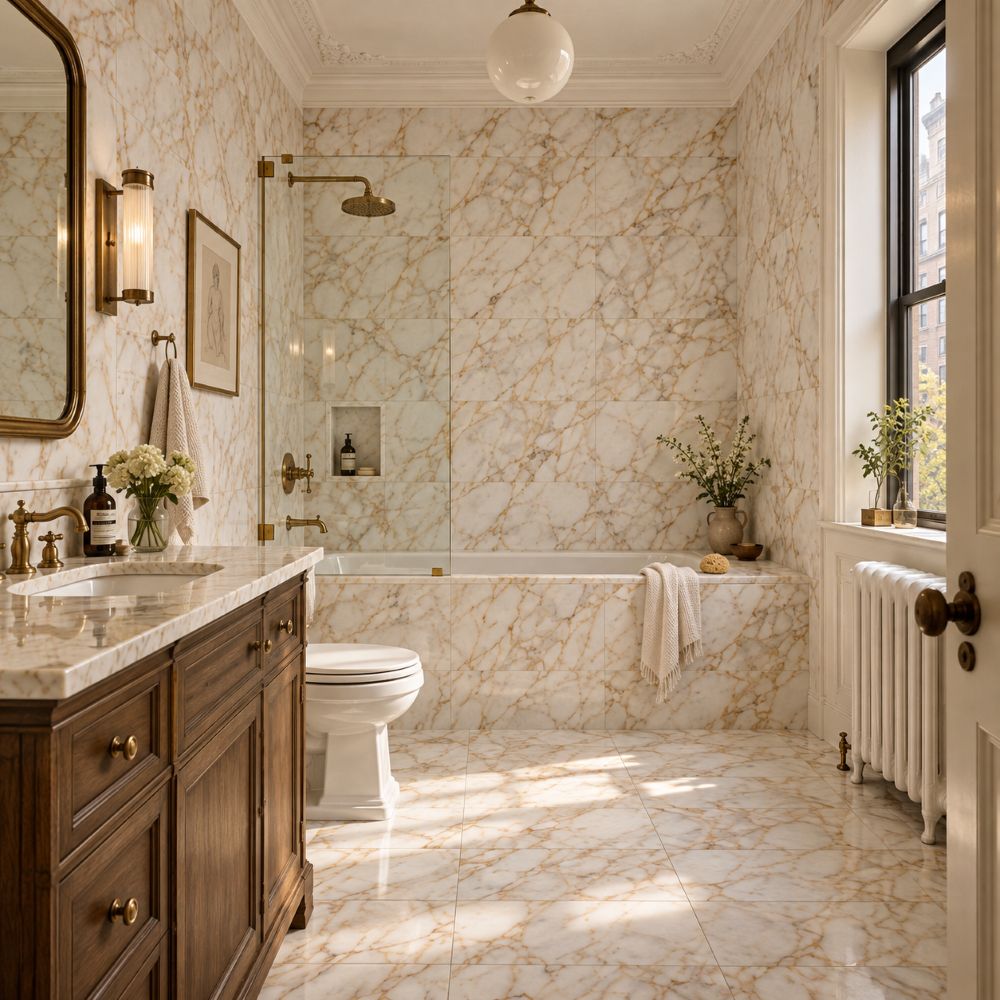
Every bathroom decision, from slab size to floor thickness, has to respect that structure. Stone formed over millions of years can live happily in an old building, as long as the plan respects the building too.
Rule 1: Read the Co-op Alteration Agreement Before Choosing Marble
Nearly every co-op, and most condos, require an alteration agreement before work begins, covering insurance, work hours, floor assemblies and wet areas. Most suppliers show you a slab and a price.
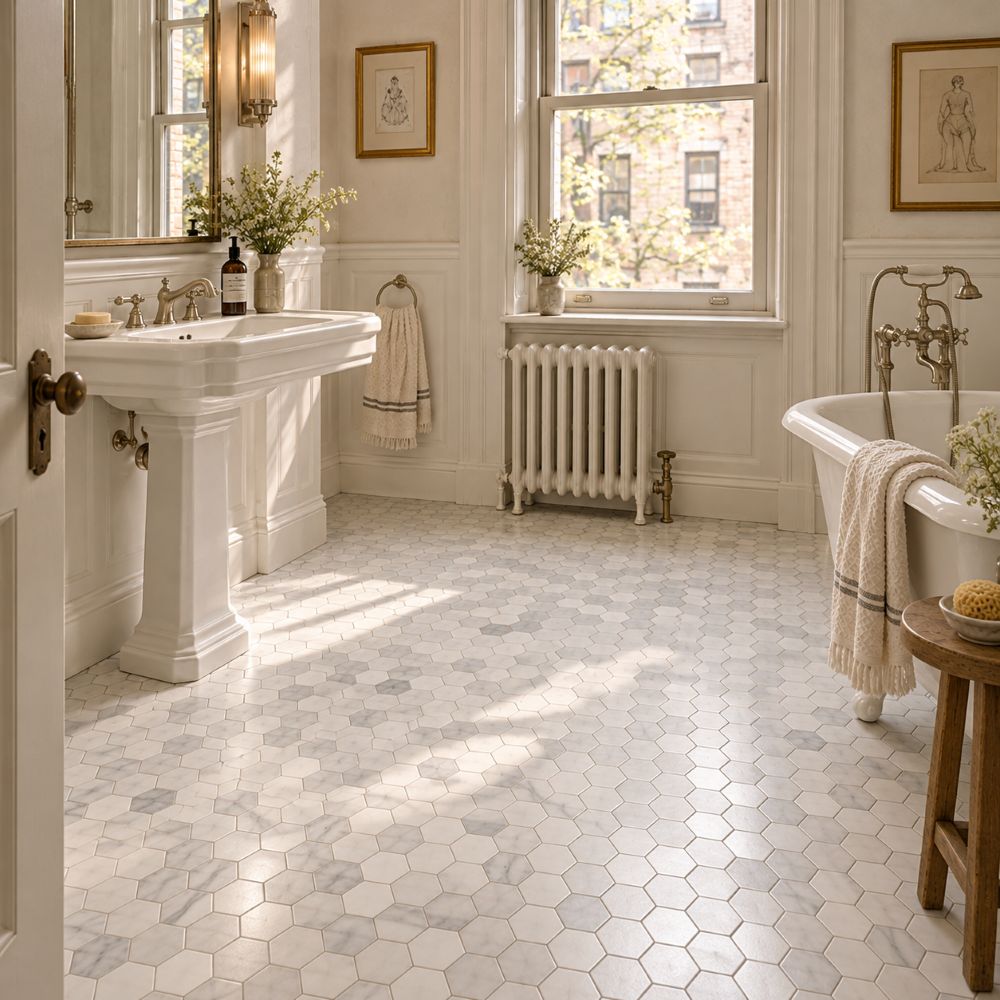
We ask to see the agreement first, because a stone the board will not approve is not really an option. Mark every clause that touches the bathroom, bring those pages to your appointment, and choose your marble knowing it will clear the board.
Rule 2: The Wet Over Dry Rule Keeps Your Bathroom Where It Is
Most co-ops will not place a bathroom above a neighbor’s bedroom. Wet over dry is a building policy rather than city law, yet it shapes nearly every prewar layout, so the footprint usually stays fixed and the stone has to open the room.
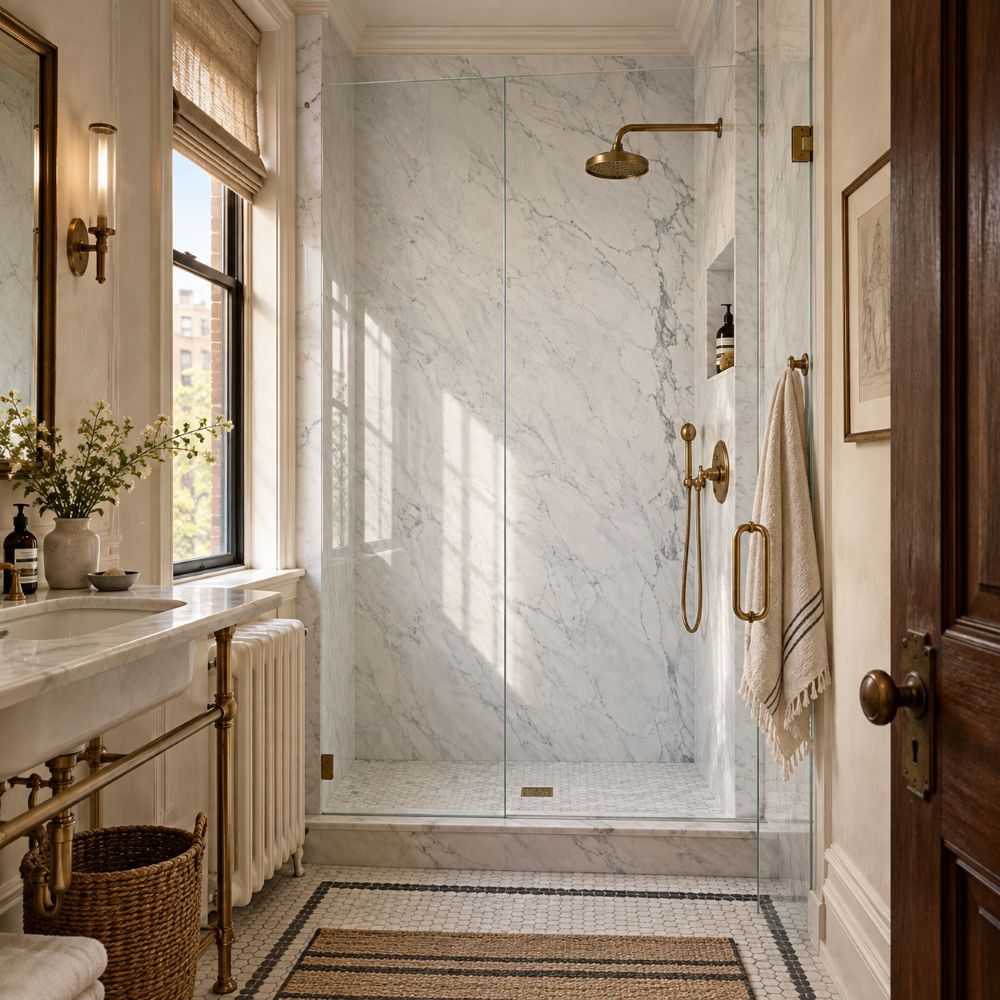
Full height slab walls in the shower remove the grid of grout lines, and a white marble with vertical veining draws the eye up toward those generous prewar ceilings.
Rule 3: Marble Floors in a Co-op Apartment Need the Right Underlayment
Yes, you can install marble floors in a co-op apartment, but the board will want to know how they sound downstairs. Owners often assume any membrane works under any tile; in reality, the stone and the acoustic underlayment have to be tested together.
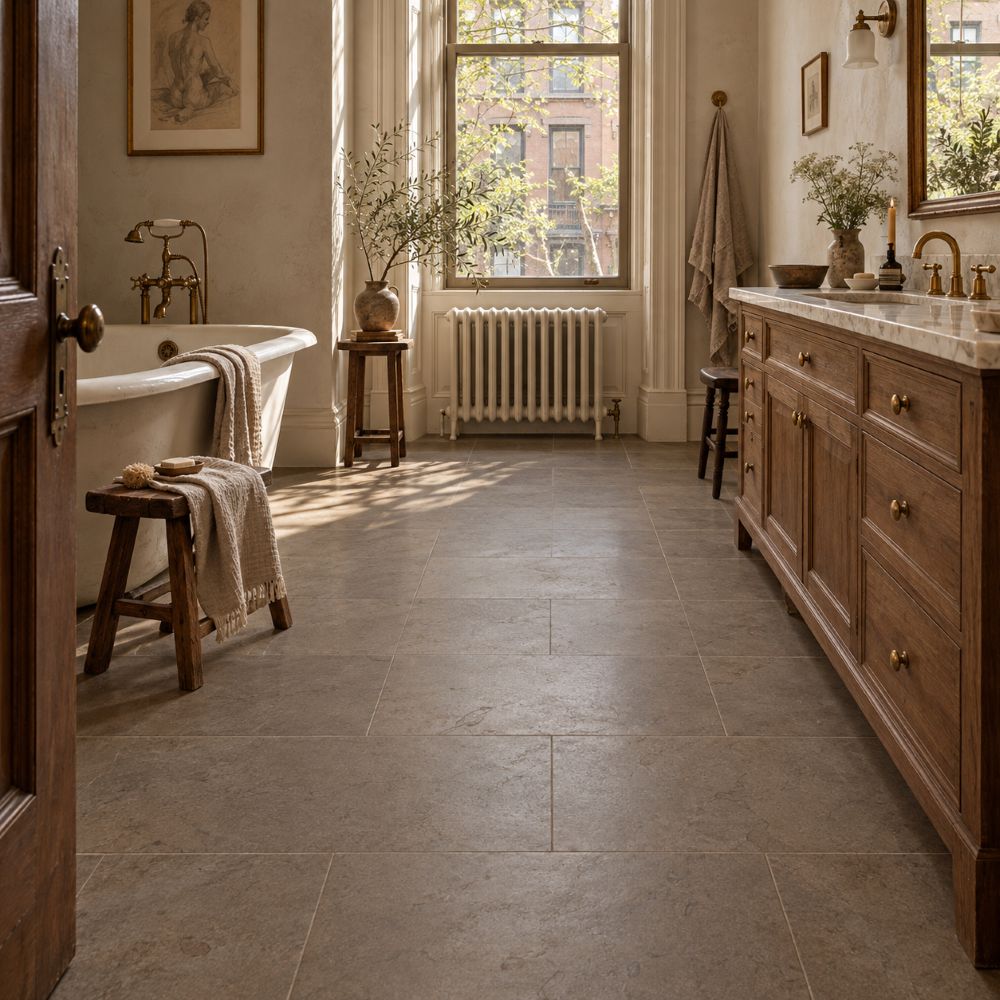
A honed 12×24 limestone floor in a soft gray behaves differently from a large slab over the same layer. Confirm your building’s required rating, then ask the manufacturer which natural stone assemblies it has tested.
Rule 4: A Marble Threshold Solves Uneven Prewar Bathroom Floors
A new bathroom floor almost always sits higher than the hallway, because waterproofing, mortar and stone add height the original floor never had. Clients expect the contractor to feather that difference away, but on century old joists it rarely lasts.
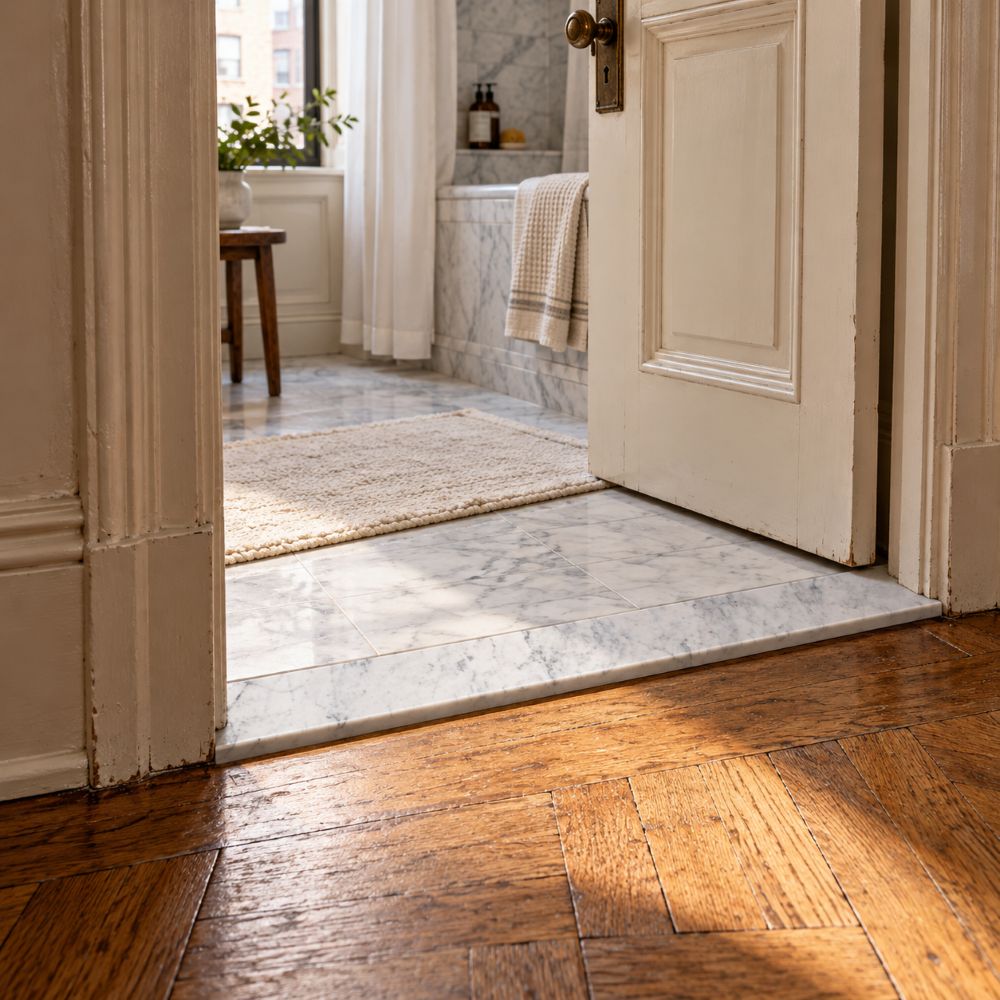
A beveled marble threshold bridges the change cleanly, holds water inside the room and gives oak parquet a crisp edge to meet. Small pieces like this can be collected through free curbside pickup at our East 16th Street showroom.
Rule 5: Slab Delivery in NYC Decides Your Shower Wall Size
A floor to ceiling slab can be the soul of a prewar bathroom and still never reach the ninth floor. Service elevators on the Upper East Side and narrow stair turns in Brooklyn Heights townhouses set the real limit.
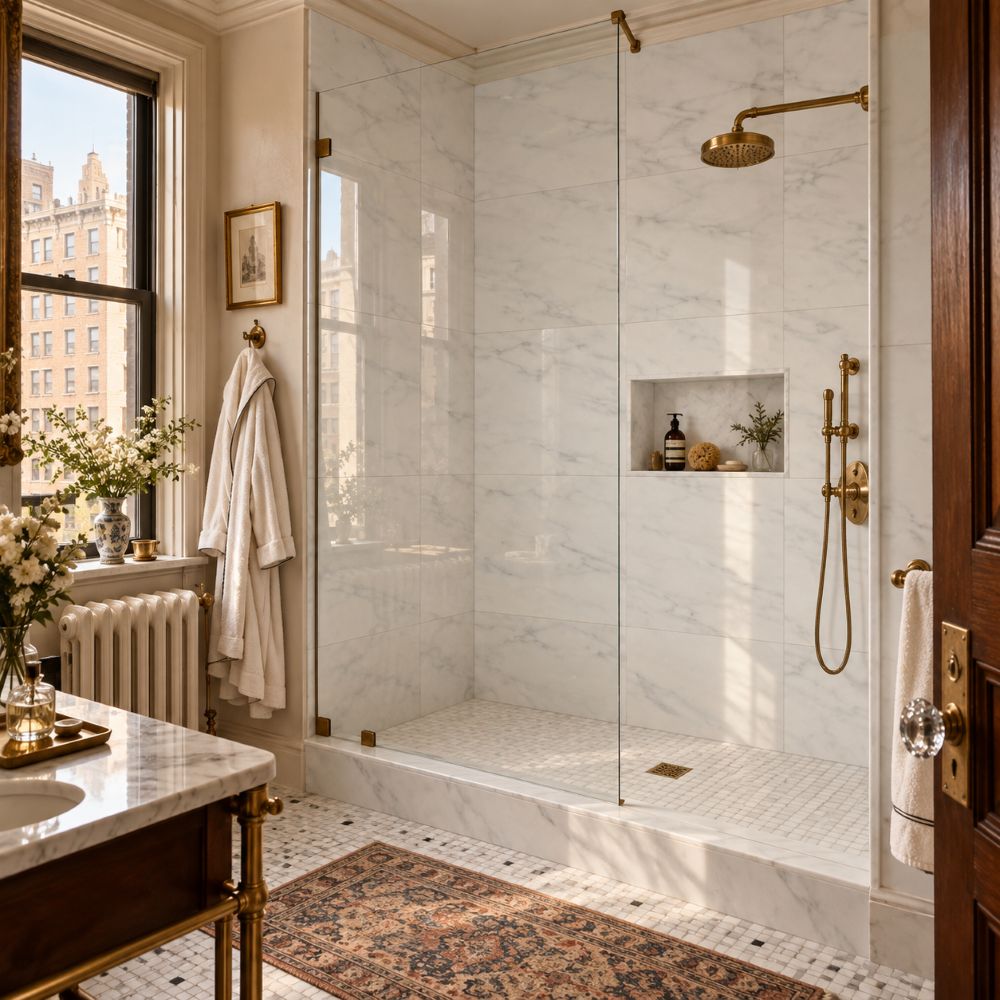
Most suppliers leave that problem to the fabricator; we build it into the selection, because a seam should be placed while you stand in front of the stone. If slabs truly won’t fit, large format natural stone tiles keep the look, and porcelain can serve inside a tight steam shower.
Choosing Marble, Limestone and Travertine for a Prewar Bathroom
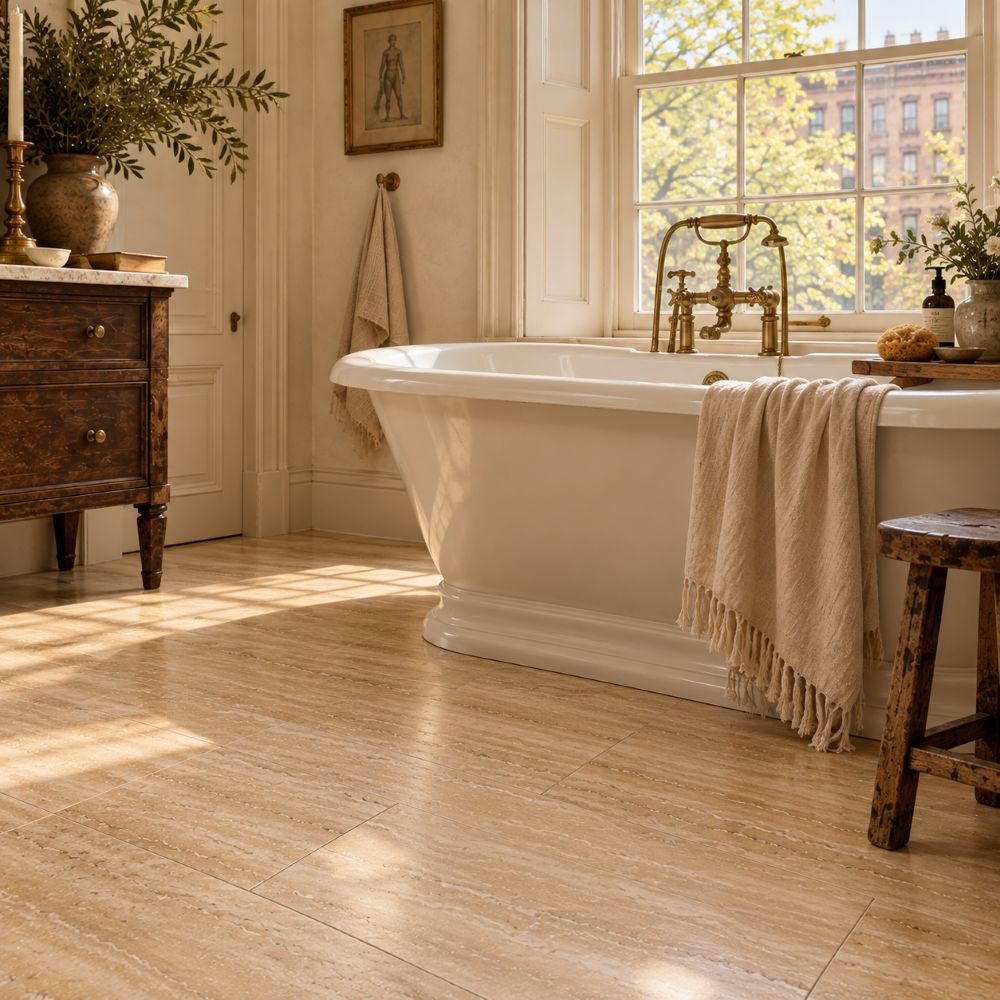
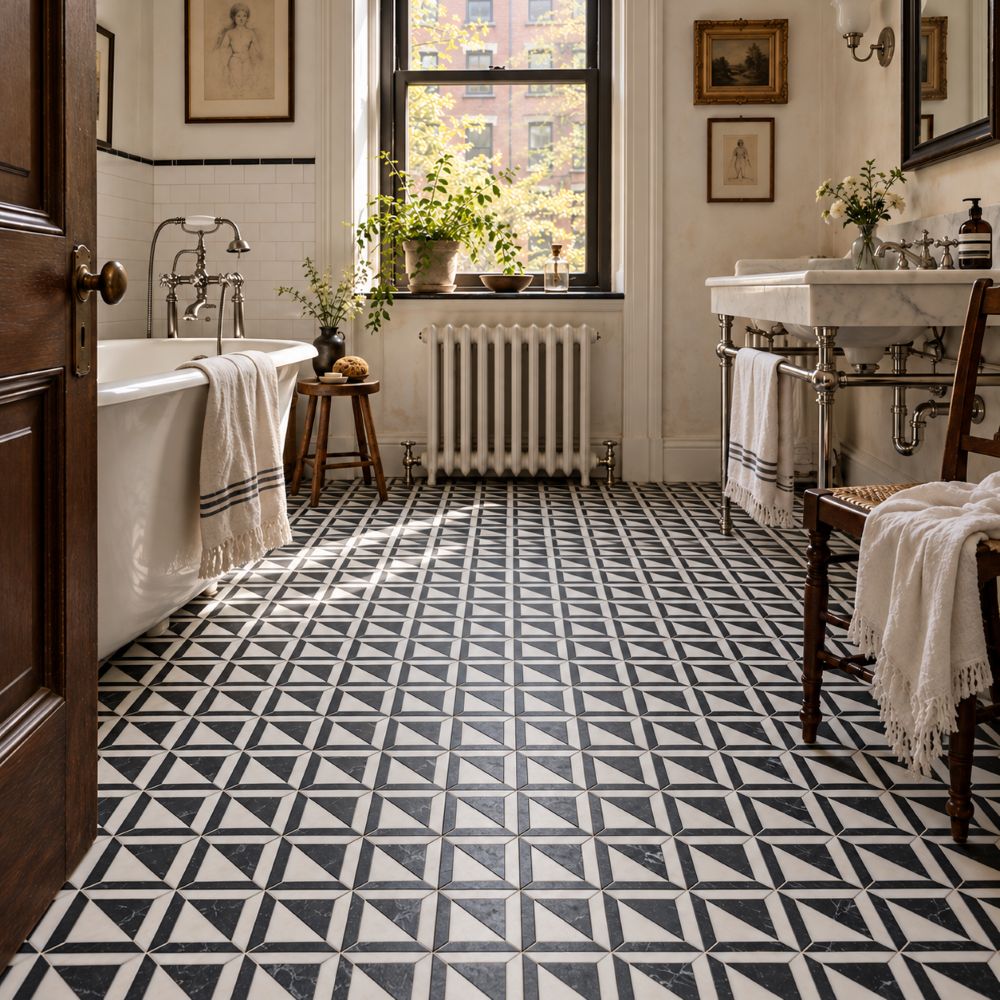
Prewar bathrooms were built around stone, and the most convincing renovations stay close to that language. A honed travertine floor warms a north facing room, and small mosaics follow the slope to a shower drain far better than large tiles.
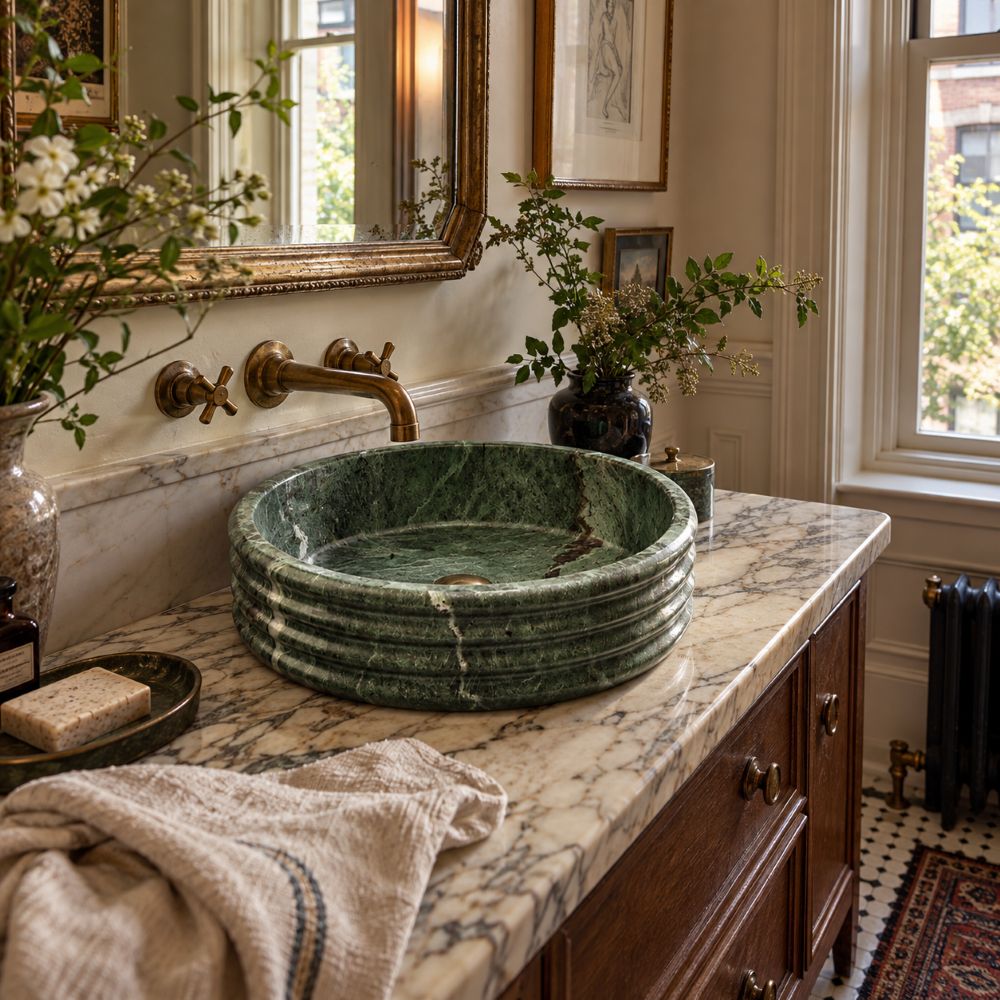
Classic black borders or a deep green marble inlay nod to early twentieth century palettes. Homeowners often believe sealer makes marble invincible; in reality it slows staining but will not stop etching, which is why honed finishes forgive daily life best.
Prewar Bathroom Details That Make New Stone Feel Original
Details convince the eye. Stone moldings used as a chair rail echo prewar plaster profiles, marble corner shelves replace plastic caddies in the shower, and a solid stone sink carries the material story to the vanity.
In a powder room where pattern can take the lead, our sister brand’s hand painted tiles sit beautifully above a honed marble floor. Renovating a townhouse instead? Our Brooklyn brownstone bathroom ideas cover those narrow rooms, and our marble tile guide for New York explains finishes in depth.