
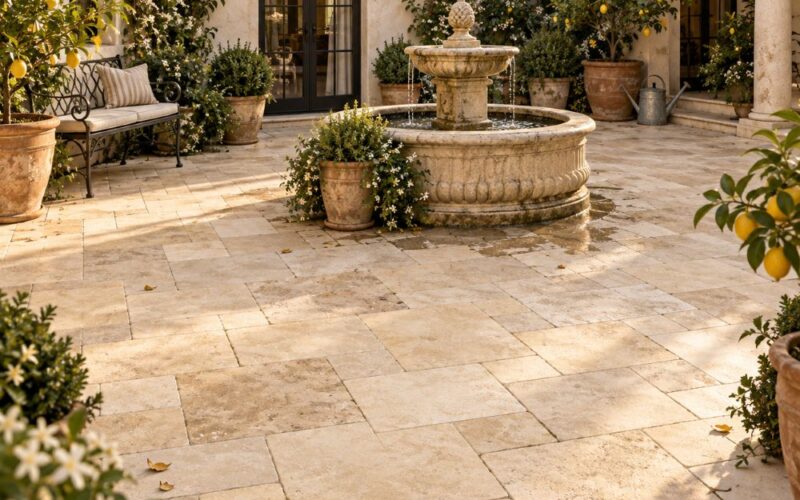
Choosing Coral Gables Mediterranean home stone is never only a style decision. These houses were built from the ground they stand on: in the early 1920s, Bahamian stonemasons cut coral rock from the quarry that became the Venetian Pool, and that same stone shaped homes and landmarks like the Alhambra and Douglas entrances.
I have spent 30 years helping architects, contractors and homeowners match stone to houses like these, and the lesson never changes. The right stone looks as if it was always there. Here are six places where that choice matters most, all of which you can see and touch at our Miami showroom in Coral Gables.
1. Entryways and Front Steps: The Best Stone for Mediterranean Front Steps
The front steps are where a Mediterranean Revival home introduces itself, so the stone has to carry weight both visually and physically. Clients often assume a polished surface will feel more luxurious here, but in reality a honed or brushed limestone reads warmer against stucco and coral rock and stays safer after a summer downpour.
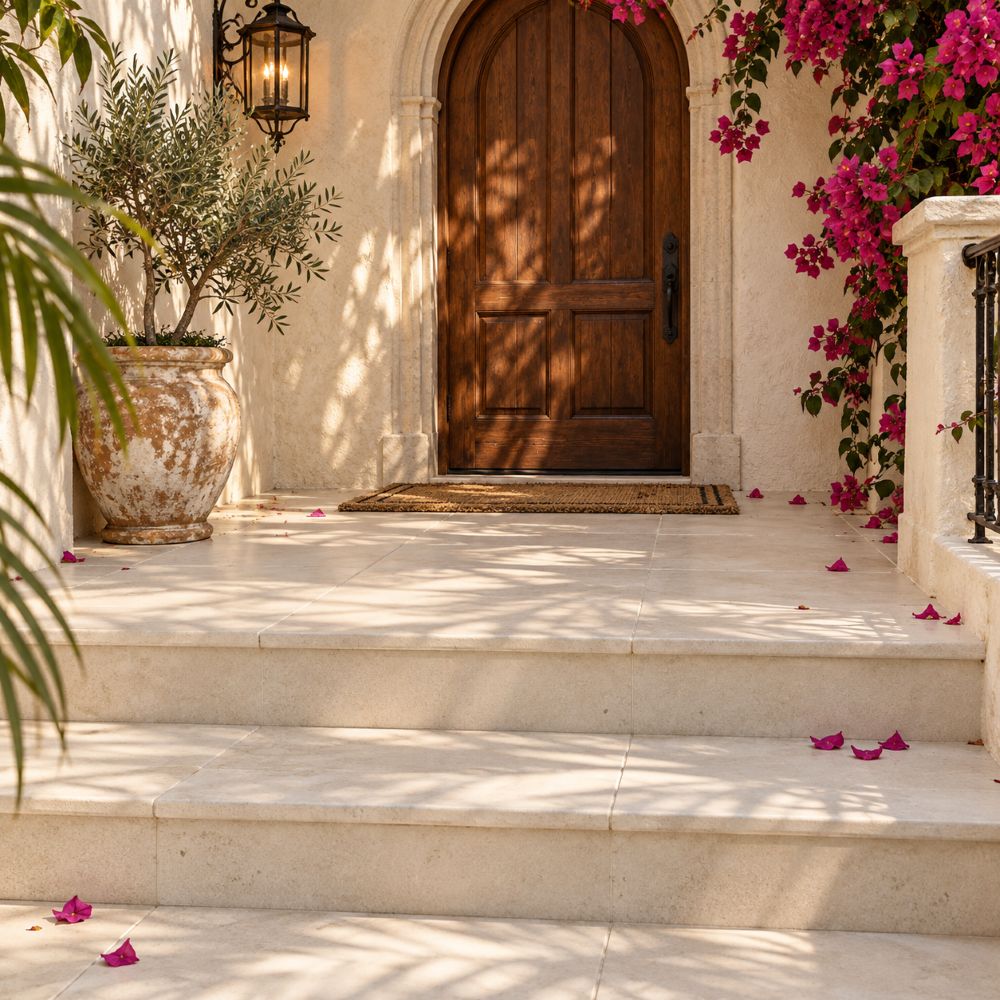
Ask for full thickness treads with a matching nose, so the step looks carved rather than clad. For the risers, a classic Mediterranean Revival pairing sets stone treads against Mediterranean hand painted tiles, a small detail that gives the entry its sense of place.
2. Natural Stone for Covered Loggia Floors
The loggia is the room Coral Gables was designed around: shaded, open to the breeze, half inside and half out. Because it is protected from direct rain and midday sun, it can take a softer, more refined stone than an open terrace.
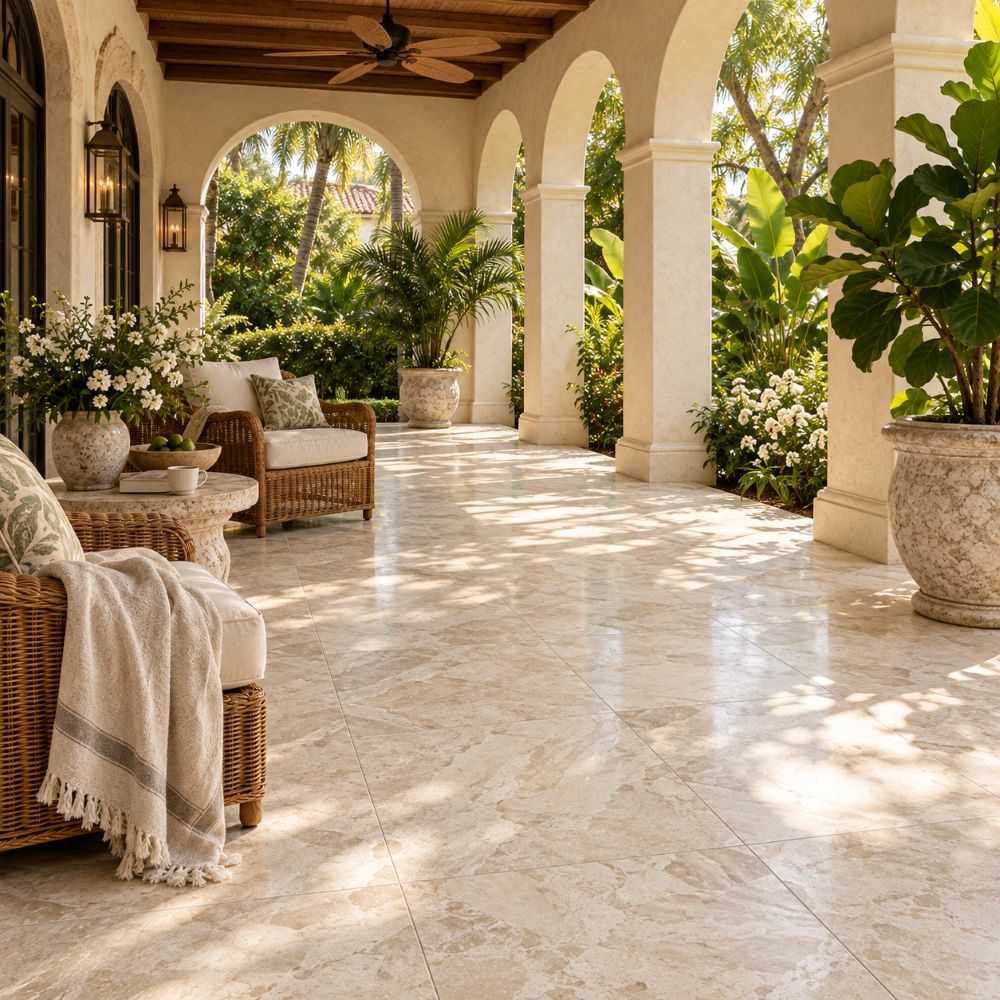
A honed marble in a quiet cream or warm gray gives the space that cool, lived in calm underfoot, provided it is sealed and the grout joints are kept tight against humidity. Run your hand across a honed sample before you decide; the slightly velvet feel is what people remember about these rooms.
3. Courtyard Paving Ideas for Mediterranean Homes
A courtyard takes the full Miami weather, so texture and pattern do as much work as color. Most suppliers sell courtyard stone by the box in a single size.
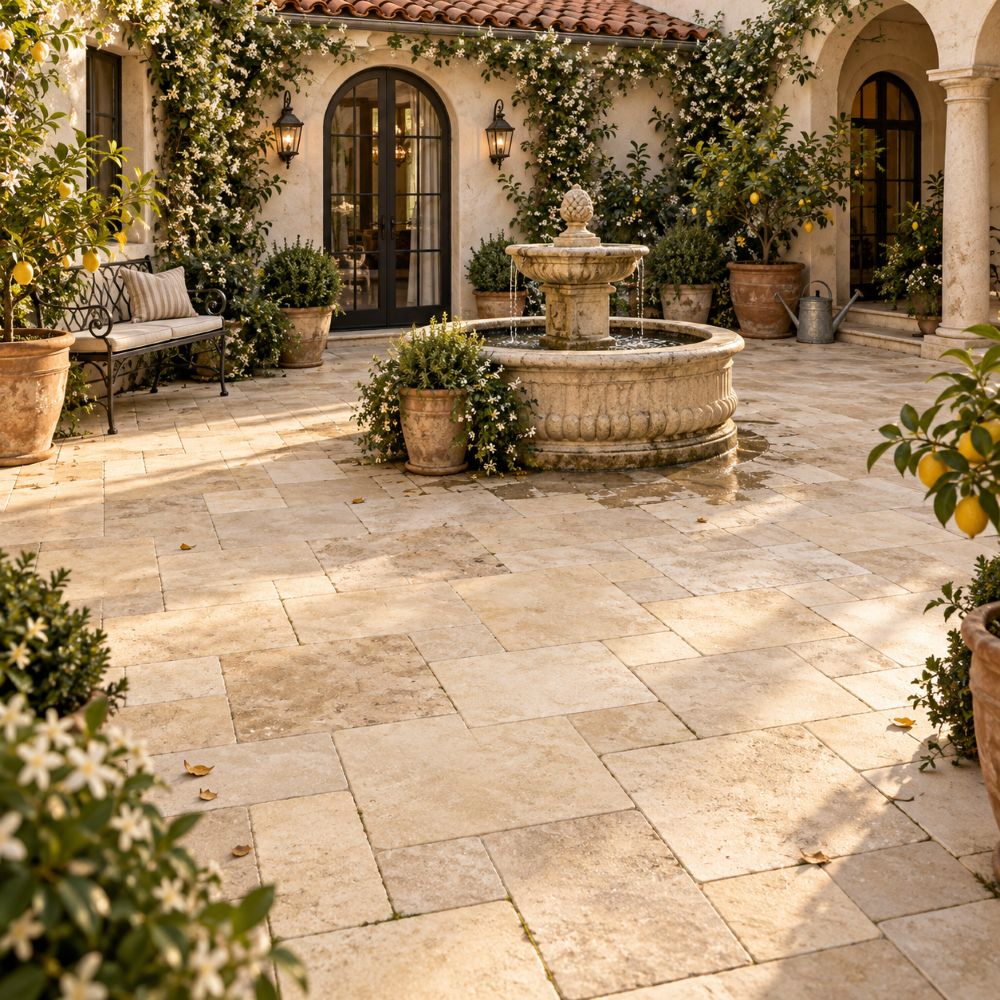
We lay out a Versailles or French pattern with the client first, because multi size pavers hide minor settling, break up glare and echo the old world plazas that inspired George Merrick’s city. Tumbled edges soften the geometry and let moss and age read as character rather than wear.
4. Travertine Pool Coping for Mediterranean Homes
Around the pool, comfort is as important as appearance. Light toned travertine stays noticeably cooler underfoot than dark pavers, and a tumbled or brushed face gives grip when wet. Pair matching pool copings with the deck stone so the edge looks like one continuous piece of architecture, and rinse salt and chlorine off regularly.
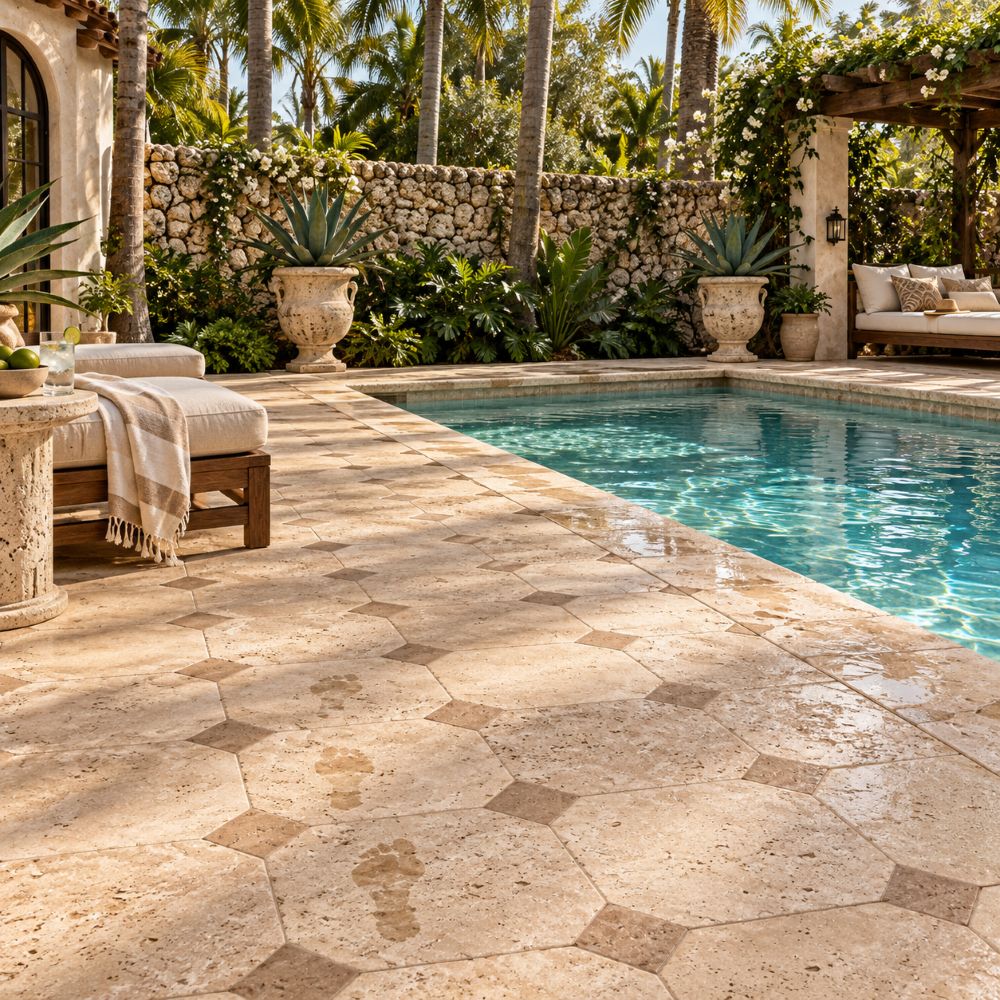
In older Gables yards, where the pool often sits close to coral rock walls, an ivory or honey travertine sits more naturally than a stark white. Our travertine guide for Miami’s climate covers finishes and sealing in more depth.
5. Same Stone Indoor and Outdoor Flooring
The most convincing Mediterranean renovations let one stone travel from the living room through the French doors and onto the terrace.
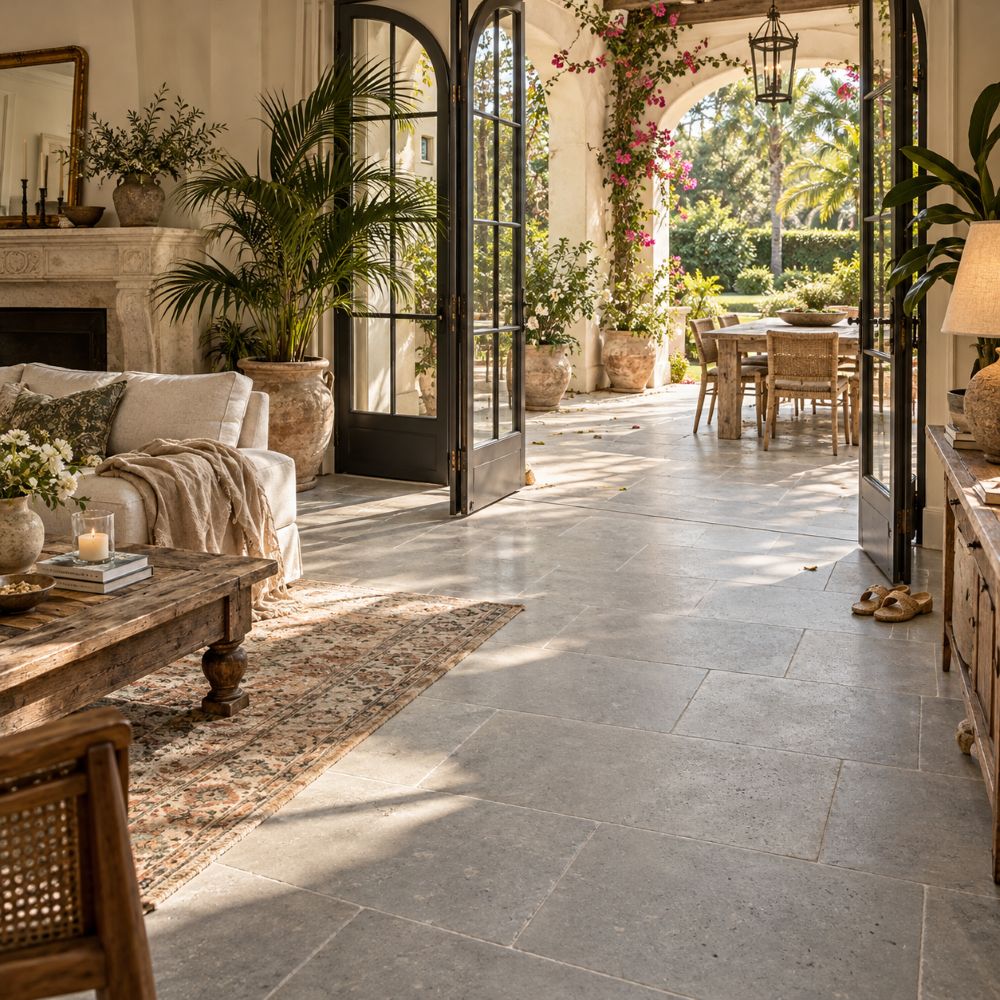
Clients often expect to choose between a stone that feels good indoors and one that is safe outdoors, but in reality a tumbled finish does both: soft and lived-in underfoot in the living room, with enough texture to stay sure footed on a wet terrace.
6. Limestone Window Sills and Moldings
Coral Gables notices details. Carved sills, column bases and cornices are what separate an authentic Mediterranean Revival facade from a stucco box with arches.
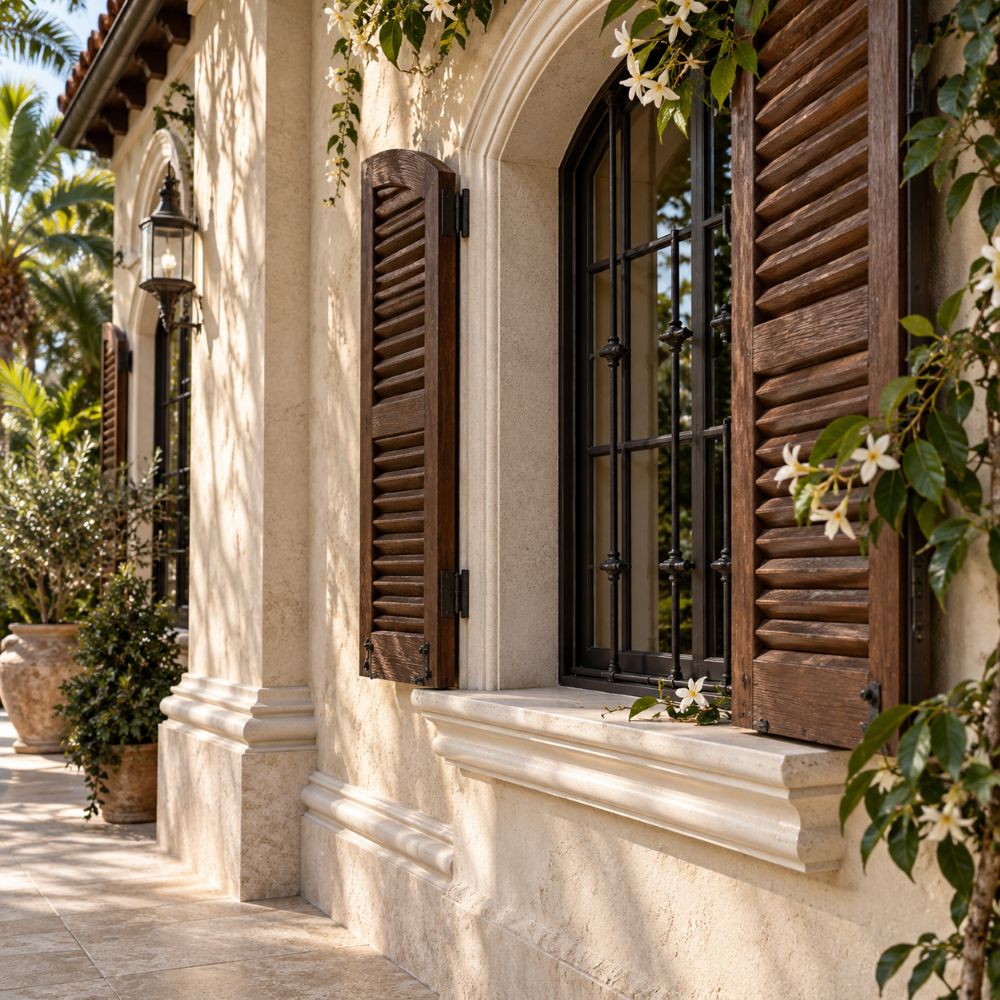
Natural stone moldings in a beige limestone tie the facade to the paving, and their slight variation in tone gives back the hand built feel these homes were known for. I always ask clients to bring a photo of the existing trim, because matching profile matters as much as matching color.
Before You Apply: Coral Gables Board of Architects and Historic Review
Coral Gables reviews exterior work closely. The Board of Architects evaluates new homes and additions for compatibility of color, materials and proportion, and homes on the local historic register need a Certificate of Appropriateness before permits are issued for exterior changes.
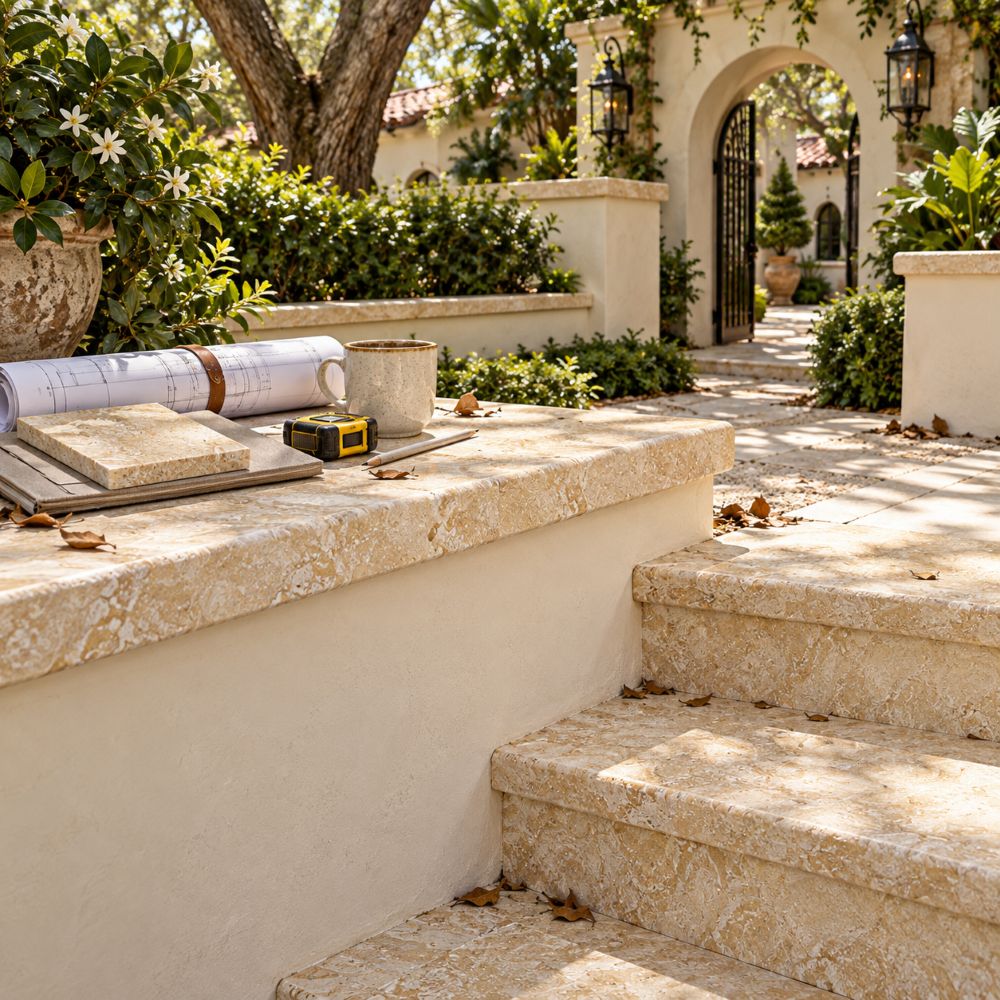
Most suppliers hand over a catalog number and step back. We send physical samples with finish and size noted, because a reviewer judges stone in daylight, not on a screen. Bring those samples to your architect early. Confirm with the city which review applies to your address, since requirements depend on the scope of work.
Find the Stone That Belongs to Your Home
Stone carries its own story: formed over millions of years, then chosen to sit beside walls cut from the same local rock a century ago. The best way to choose is in person, with your samples in hand and daylight on the slab.
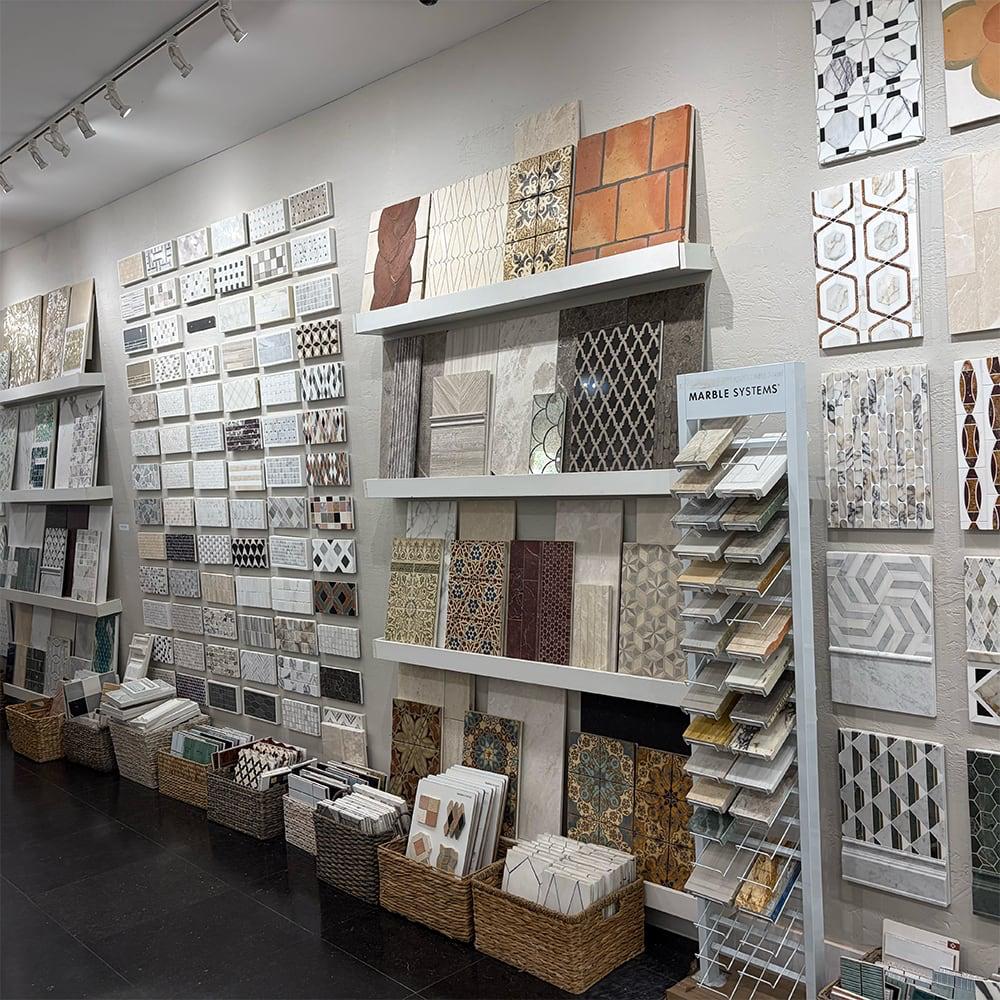
Visit our tile store in Miami, on Ponce de Leon Boulevard in the heart of Coral Gables, explore our outdoor collection and our guide to natural stone for Miami homes, and let our team help you find the stone that fits.