

Table of Contents
Having worked with these materials for years, we’ve noticed that even the most design enthusiast homeowners, and occasionally, some newer industry professionals, mix them up. And if you want me to be honest, I’m so bad at remembering names that even I can mix them!

The names sound almost identical, but the reality of living with them could not be more different. Walk into any countertop showroom near you, and the quartz vs quartzite debate is usually the very first hurdle a homeowner faces when planning a kitchen remodel. Don’t worry, you’re not the only one.

At Marble Systems, we want to inform you about what you’ll get exactly. Today, we are skipping the glossy sales pitches and talking about the difference between quartz and quartzite, straight from the fabricators and designers who work with it every single day.
What Are We Actually Comparing? Engineered vs. Natural Stone Slabs
To understand how these surfaces will behave in your kitchen, you first have to understand how they are made. Our tile experts often point out that the fundamental difference comes down to manufacturing versus geology. (I’ll explain it in the shortest way I can)

When we talk about the engineered quartz vs natural quartzite comparison, we are looking at two totally different origins. Quartz countertops are a human made products, they’re not made by nature. Manufacturers take crushed quartz dust and chips, mix them with chemical resins and synthetic pigments, and bake them into large slabs.
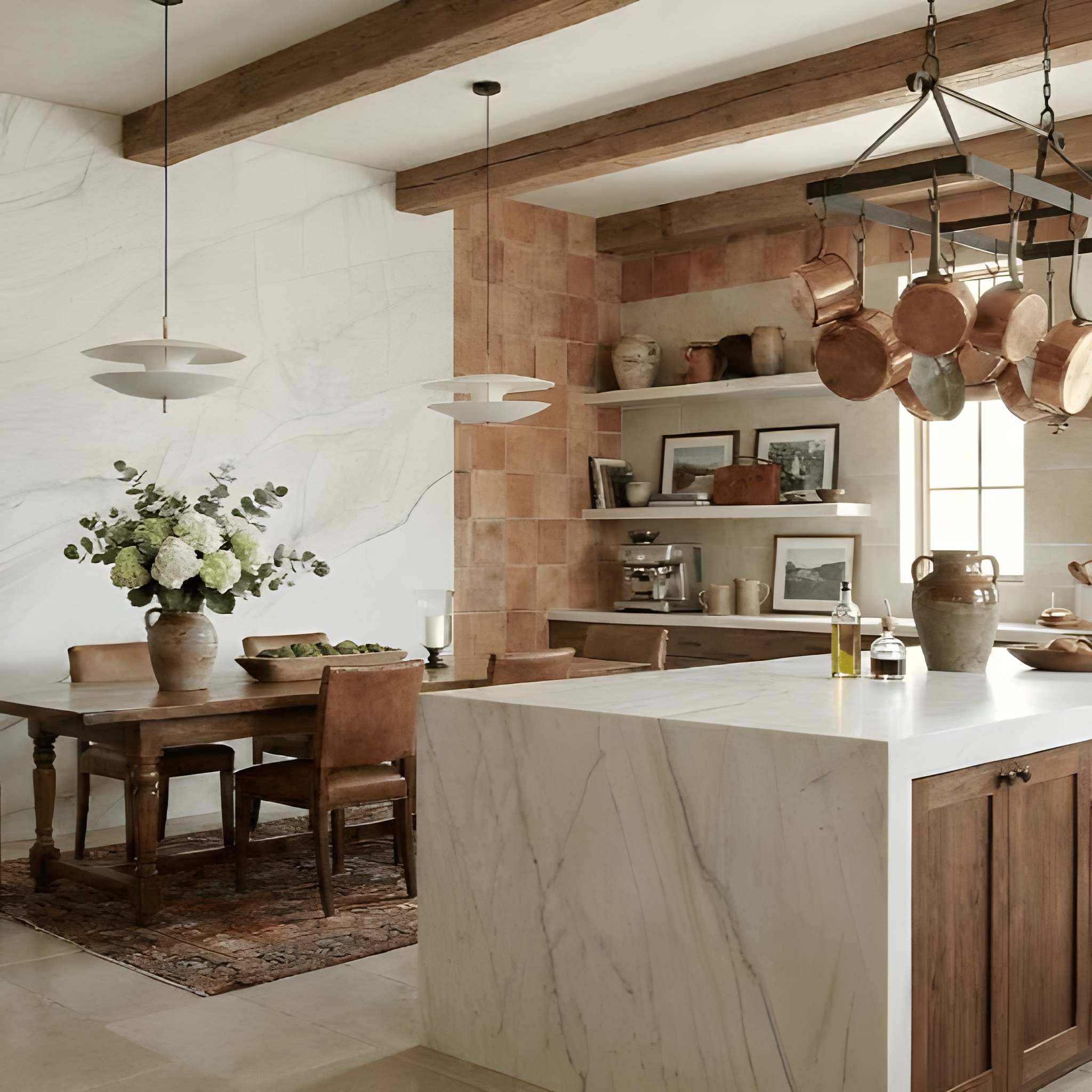
Because it is engineered, it can be designed to look like almost anything. Their veining, white background, and other aesthetic details are totally planned and manufactured. That’s a pro for quartz because if you’re running an interior design project and need the exact match for the remodel, it’s easier to find.

Natural quartzite, on the other hand, is a purely organic masterpiece. It is a naturally occurring metamorphic rock that starts its life as sandstone. Over millions of years, intense heat and pressure beneath the earth’s crust fuse the quartz grains together, creating an incredibly dense, glassy stone. When you look at quartzite countertops, you are looking at geological tension; wild veining, raw color shifts, and deep, living texture that none of us can create with a manufacturing process. It’s the artwork of nature.
How Would They Face Difficulties: Scratches, Heat, and Spills
Everyone knows, a countertop isn’t just a design item to make your kitchen cooler; it is a high functioning workbench. When we put this to the test in a high traffic kitchen environment, the differences in quartz vs quartzite durability become more obvious than even I expected.

Let’s talk about heat, one of the biggest question marks in your head. A recurring nightmare for homeowners with engineered quartz is the burn mark. Because quartz slabs contain a significant amount of plastic resin, they are highly sensitive to sudden temperature changes. If you place a hot roasting pan directly out of the oven onto quartz countertops, the resin can scorch, leaving a permanent, cloudy white or yellow burn mark that cannot be buffed out.

Conversely, the heat resistance of quartzite is what you’re looking for if you’re playing with fire. Because it was forged by magma and tectonic pressure, a hot pan is not enough of a threat for it. You can confidently place hot cookware directly on the surface without fear of melting or scorching the stone.

However, we’ve observed that over long term use, these tend to perform differently when it comes to porosity. Engineered quartz is non porous because the resins seal up all the microscopic gaps. Natural quartzite is a natural stone, as we can guess, which means depending on the specific block it was cut from, it can have varying levels of natural porosity.
Sealing, Maintenance and All the Details We Should Cover
The most frequent feedback we hear from clients is that they want a beautiful kitchen, but they don’t want to spend their weekends understanding how to maintain it without opening a Reddit page. If you are weighing the quartzite countertops pros and cons, you have to be honest with yourself about your cleaning habits.

Because quartz is bound by resin, it never needs to be sealed. It is a “set it and forget it” surface that handles spilled wine, coffee, and acidic tomato sauce with ease.

Quartzite requires a bit more maintenance. To protect that living stone from absorbing heavy, pigmented liquids, sealing natural quartzite countertops is a mandatory step. Industry standards suggest that for the best results, one should apply a high quality, penetrating stone sealer upon installation, and reapply it annually (or as needed, depending on the stone’s specific density). It is a simple wipe on, wipe off process that takes about twenty minutes, but it is a necessary part of owning authentic stone. Beauty requires maintenance, you know.
Let's Talk Budgets and Fabrication Costs: Which One Makes More Sense?
A recurring question we get during consultations is, “Is quartzite more expensive than quartz?” The short answer is almost always yes. But it is vital to understand why.

You aren’t just paying for the rarity of the raw material; you are paying for the extreme difficulty of the labor. Quartzite is arguably the hardest natural stone used in residential interiors (but it is worth it for that beautiful look you’ll get!) It is actually significantly harder than granite countertops. Contractors frequently specify this for high end, luxury commercial & hospitality projects because of its incredible visual depth and scratch resistance. However, because it is so incredibly dense, fabricators burn through expensive diamond tipped saw blades just to cut it. It takes much longer to cut, polish, and edge a quartzite slab than it does a softer, resin bound quartz slab.

When you compare quartz vs quartzite countertops pricing, engineered quartz offers a more predictable, budget friendly baseline because the material is simpler and easier to fabricate. Quartzite requires specialized craftsmanship, making it a premium countertop option.
We’ve Compared Them But, Which One?
What we look for when sourcing these is absolute structural integrity and the aesthetic needs of your project. Both materials are incredibly high performing, but they serve different philosophies of living.

We recommend this specific approach for users who are deciding between the two:
If your primary goal is absolute color uniformity, zero maintenance, and a slightly friendlier budget, engineered quartz is a fantastic, highly durable option that will serve your family well for decades.

However, if you crave a stone with soul, just like any other natural stone at Marble Systems, a material that brings historic, architectural gravity to your kitchen, there is no substitute for the real thing. If you want a stone countertop that works as a one of a kind piece of Earth’s art, you want natural quartzite.
If You Decided on Quartzite Slabs, Explore Our Quartzite Collections
Even though quartz is a sensible choice, I know you can’t stop yourself from thinking about to get a quartzite slab. If you are ready to witness the dramatic, living beauty of natural stone in person, explore Marble Systems' premium collection of quartzite slabs with us!