
Table of Contents
We’re working with homeowners, interior designers, contractors, and you wouldn’t believe how many times we’ve been asked this question in our tile projects. You have probably spent more time on this decision than you expected. You pulled samples. You scrolled through projects online. You priced both options, but something still feels off or unsure. And the answer is almost never as simple as one being better than the other. It depends on what kind of life you are living; that’s the answer to decide between those two.
Why Do Most Of Our Customers Decide Between Those Two?
Here is the simplest way we know how to put it after forty years in this industry. Marble is a luxurious and aesthetic gift from the earth. Every vein, every color shade, every characteristic variation you see in a tile was formed over millions of years underground. It’s like a painting that took a very long time to finish.
Porcelain is engineered to perform, to be an easy maintenance option with maximum durability. It is consistent, controlled, and today’s manufacturing technology has gotten remarkably good at printing natural stone patterns onto its surface. Good enough to fool a photo. And sometimes, it’s so good enough to fool someone standing in the room.
One is made by nature, and one is made by people trying to look like nature. Both are aesthetically pleasing, and to be honest, confusing choices. But they are not the same choice.
When You Put Them In Real Life: Maintenance & How Much Will They Last?
So, in our residential and commercial tile projects, most of the people are curious about marble durability. Marble sits at around a 3 to 4 on the Mohs hardness scale, depending on the variety. That makes it softer than porcelain, which typically measures between 6 and 7.
What does it mean? That means you can scratch marble (not on purpose), and it can be stained if you put something acidic on it.
How can you avoid that? Sealing your marble floor tiles once or twice a year with a penetrating sealer significantly reduces the risk of staining. This is not a complicated process. It takes about an hour, ask us how to do it when you visit our marble tile showroom, and let us explain how you can do it even on your own. Trust me, you’ll be saving your marble flooring.
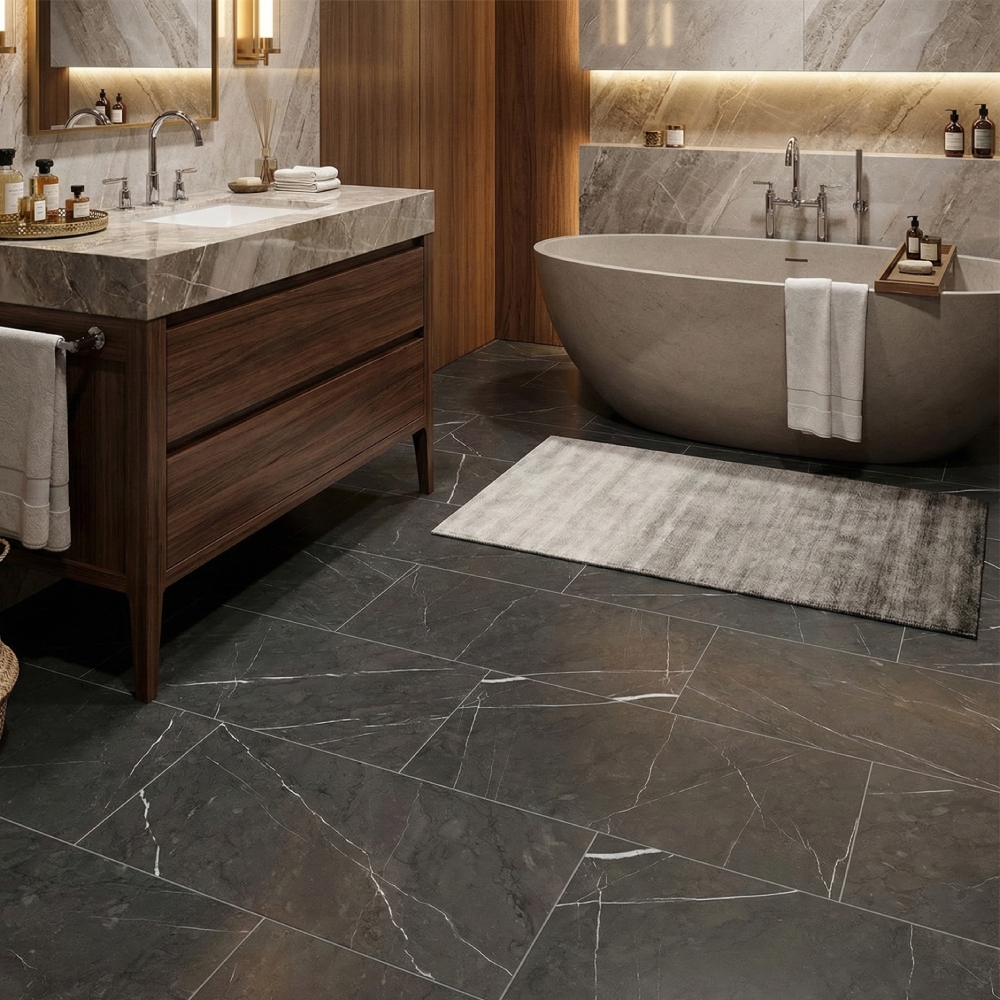
Marble is like a storytelling version made of stone, and it won’t look “old” in any situation. We have seen marble floors in homes across Virginia, Florida, and California that are thirty years old and look better now than they did on installation day.
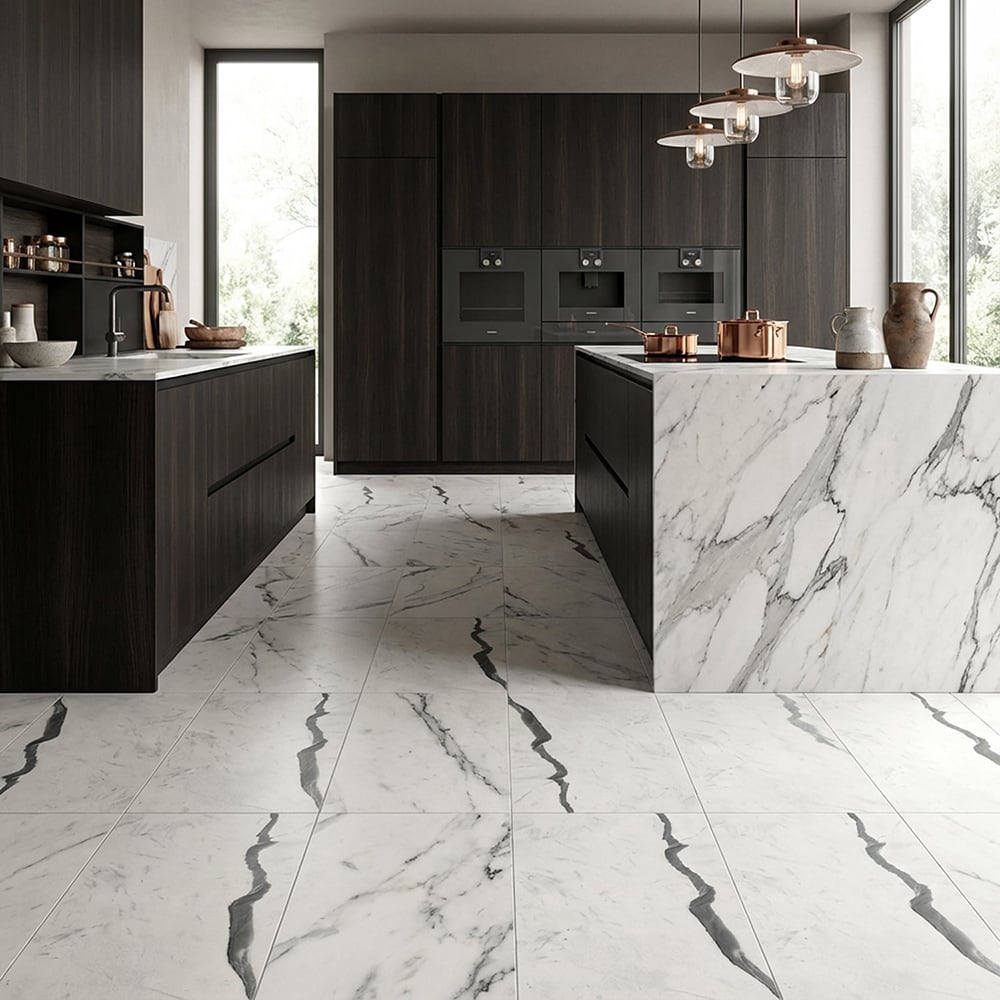
Porcelain floor tiles are harder, virtually non porous, and much easier to maintain. They resist stains, scratches, and moisture without any sealing requirements (if it’s a glazed porcelain, by the way). For outdoor porcelain tiles, the low porosity is especially important in climates where freeze thaw cycles are a real concern. Water cannot penetrate the surface, so there is no risk of cracking when temperatures drop. Take notes if you’ll do a paver tile renovation soon, you’ll need it.
Which of Them is Mostly Used in Which Room? Real Life Experiences
Living Room Floors
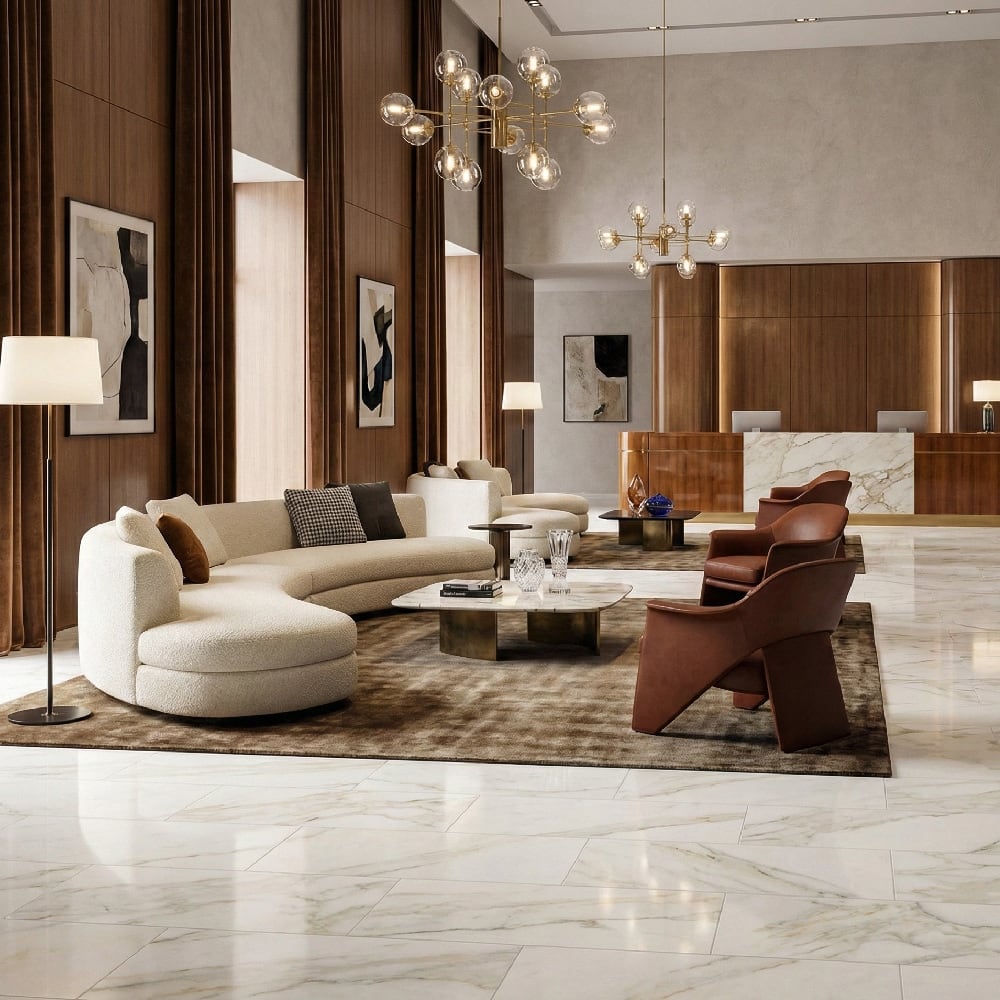
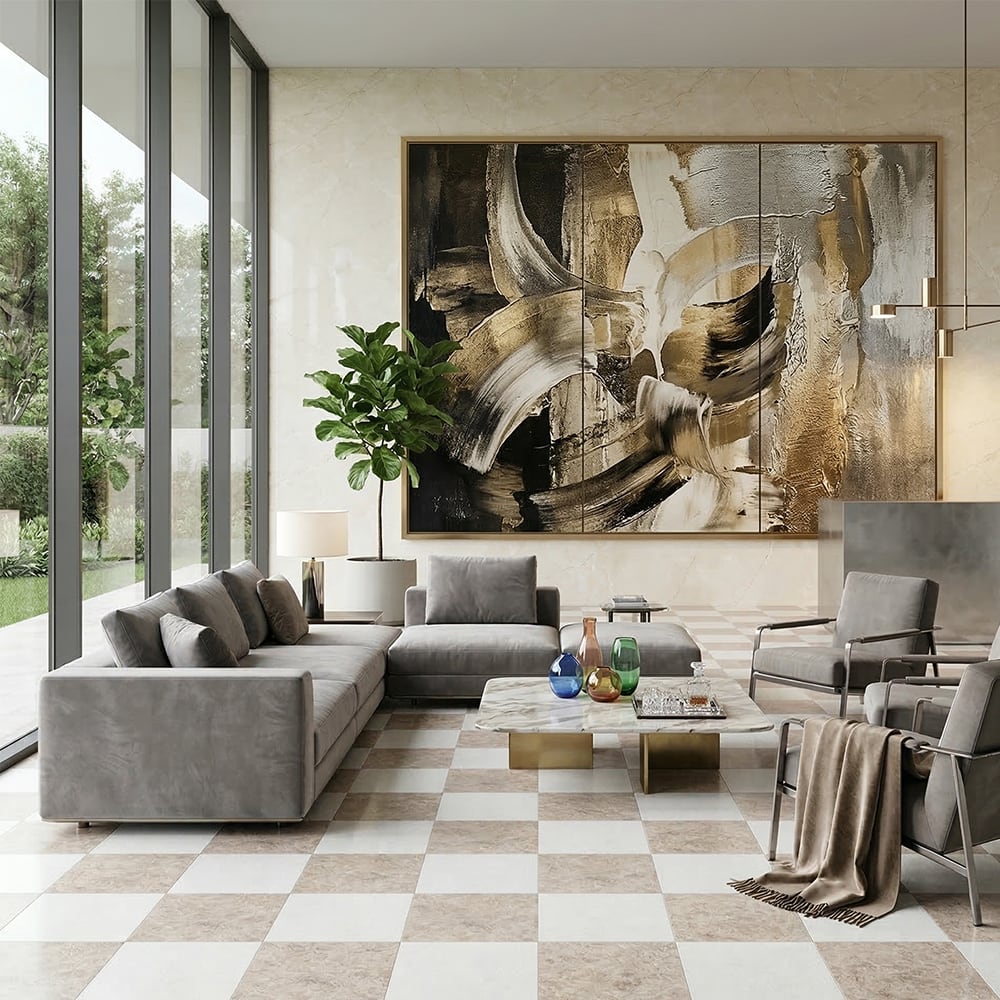
Living room floor tiles are a long term commitment, unless you’re bored with them. You are looking at this floor every single day; it sets the overall interior design mood and aesthetics. If your main focus is aesthetics, then marble starts the conversation way ahead. You can get your dream modern living room by using honed marble floors or a luxurious living room with polished flooring. For clients who want a living space that genuinely improves with age, natural stone tiles are almost always the answer we give. They’re the main character.
Floors For Kitchen
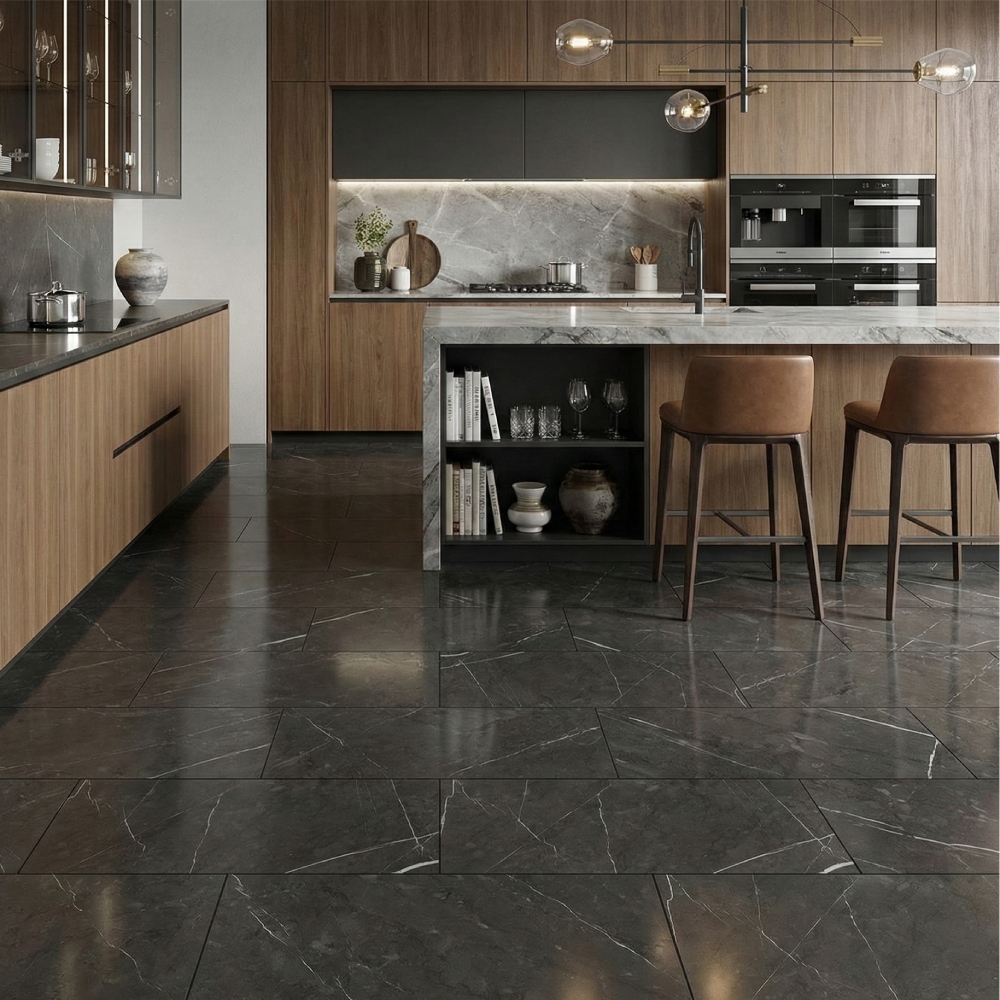
The kitchen is where most people hesitate on marble, especially in our residential projects, and that hesitation is totally understandable. A marble kitchen floor is a high maintenance option in a high activity space. Cooking oils, acidic foods, and heavy foot traffic all put real pressure on natural stone. Let me share the secret of having a marble in your kitchen: sealing the marble well. A porcelain kitchen floor is more forgiving and easier to maintain around spills. You can easily clean porcelain floor tiles, and if it’s a glazed porcelain, sealing is not the biggest issue. Win-win situation.
Bathroom Floors
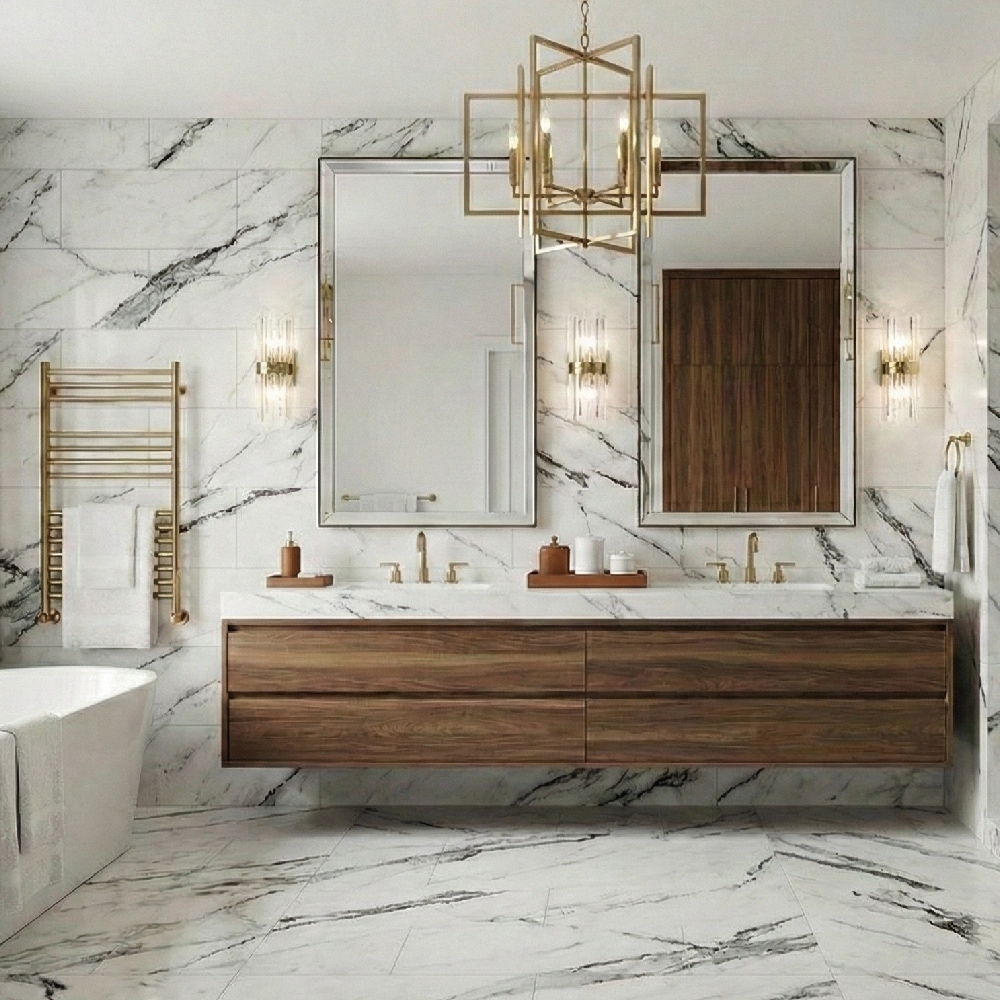
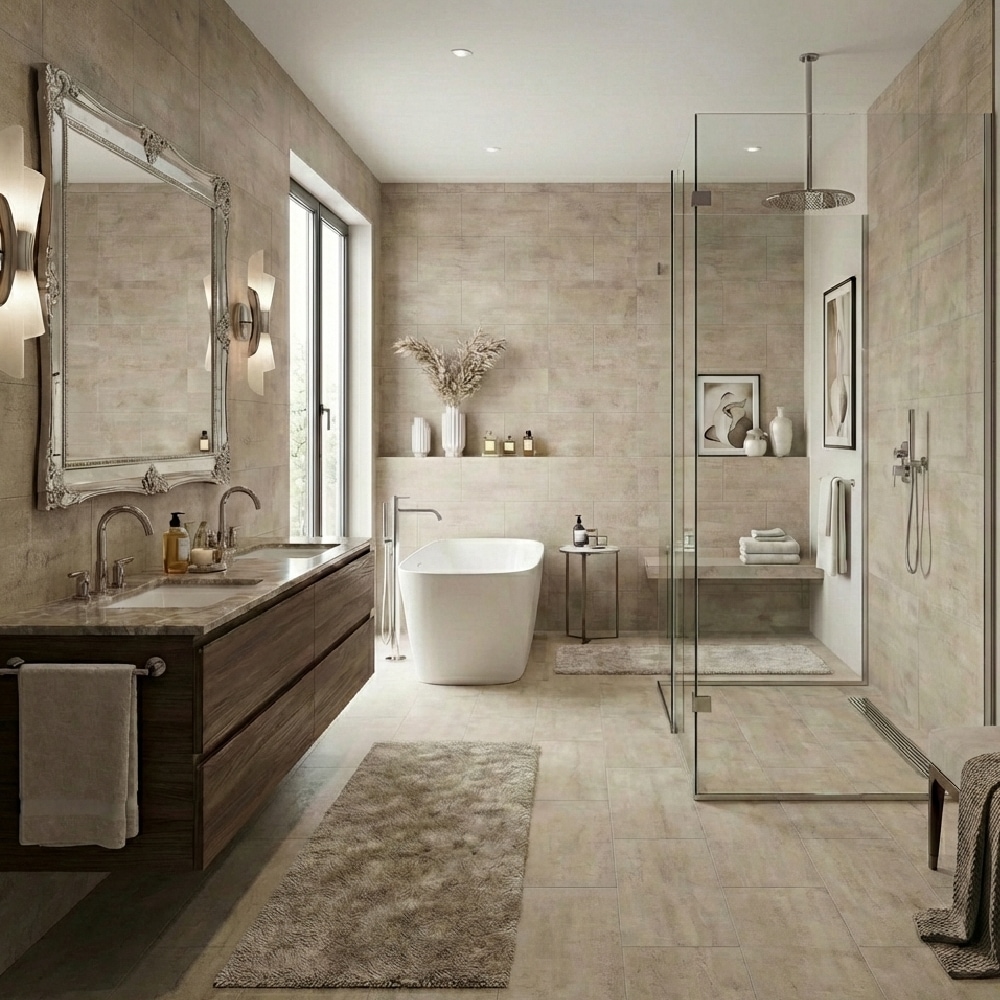
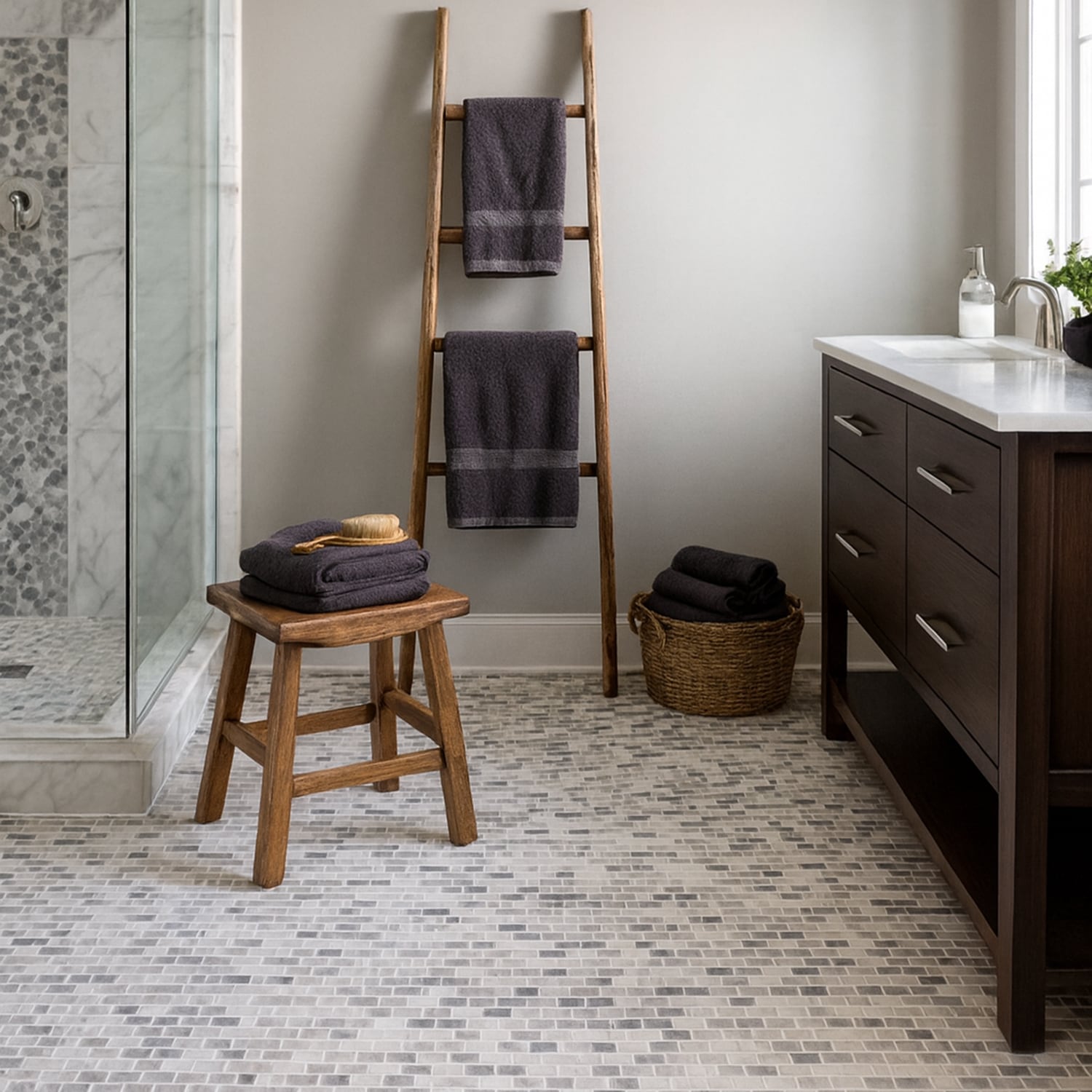
Now that’s a good comparison in the context of performance. A marble bathroom floor in a dry or semi-wet area is one of the most luxurious residential flooring choices available. For shower floors and wet room applications, finish selection is VITAL. Polished marble looks extremely luxurious and aesthetically pleasing, but it can be slippery when wet, so you must be careful. You should choose honed, brushed, or tumbled finishes to keep your bathroom floors safe. The same logic applies to porcelain tile bathroom floors. Textured or matte finished porcelain is always the right call in wet areas, regardless of material.
Entryway Floors
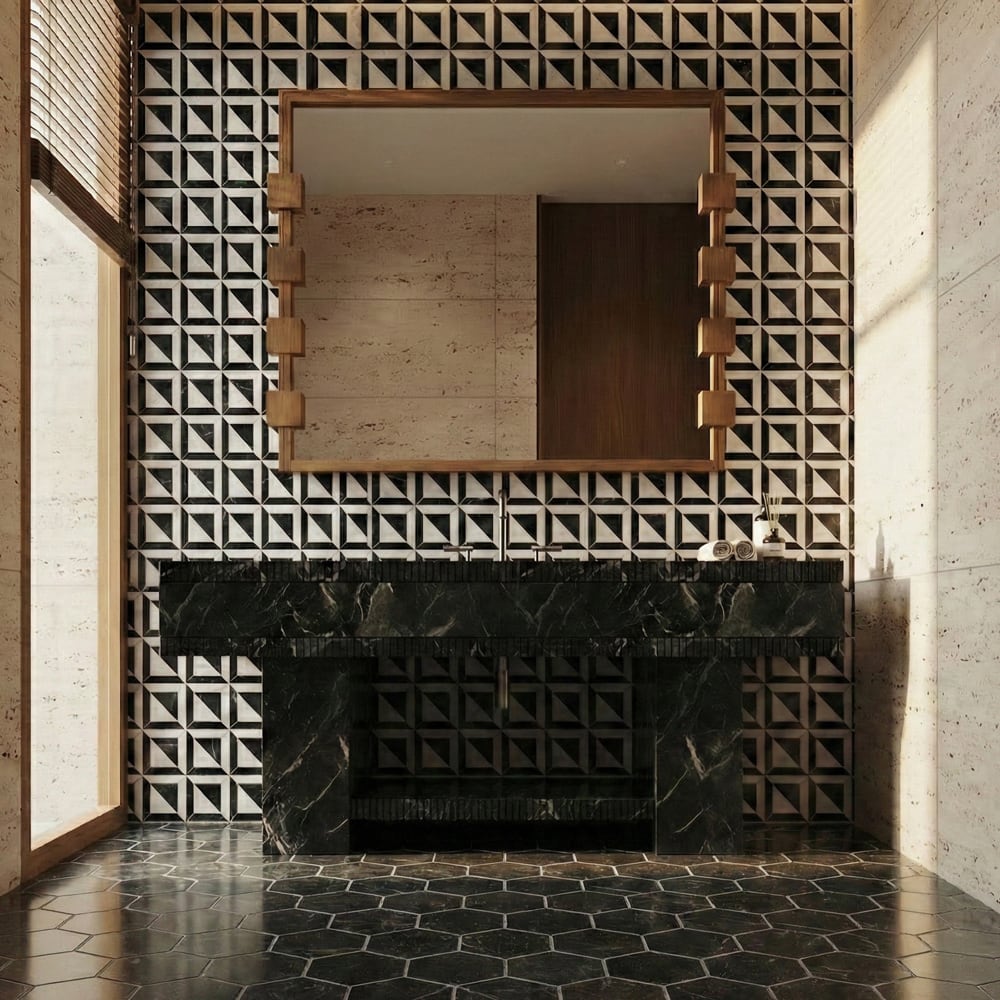
Entryway floor tiles absorb more abuse than almost any other surface in a home. Grit from shoes acts like sandpaper on softer materials over time. Porcelain holds up better here purely in terms of scratch resistance. But if you want to make your guests fall in love with the first impact, marble is the rockstar for that kind of entryway. If you go with marble here, choose a harder variety. Stones like Nero Marquina in our stone tile collections offer more resistance than softer white marbles.
Outdoor Flooring
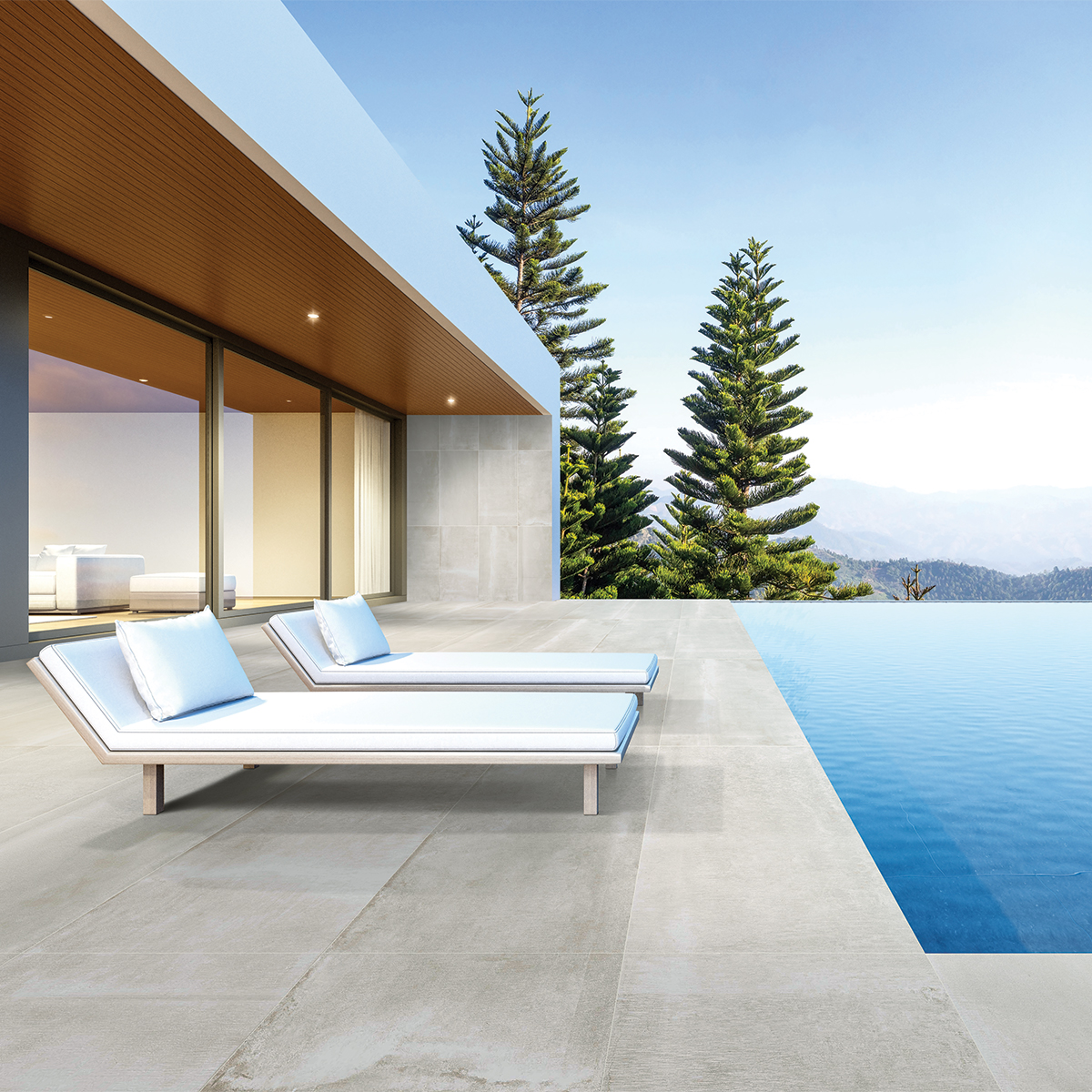
For outdoor applications, the conversation between natural stone vs porcelain tile flooring comes down to climate and usage. Outdoor porcelain tiles are used in our projects more than marble tiles in terms of resistance to frost, staining, and heavy use, and we got really good feedback! In milder climates, outdoor marble tiles and natural stone paver tiles are genuinely beautiful and perfectly durable choices. We have specified natural stone for outdoor projects across Florida and Southern California with excellent long term results.
Cost and Value: Let’s Talk Budget
A straightforward marble vs porcelain tile cost comparison will show you that marble floor tiles carry a higher upfront cost in most cases. Material costs, fabrication and installation for natural stone require more skill and therefore more investment. Porcelain floor tiles are generally less expensive to purchase and install. So, if you’re tight about the budget, then you’ll probably go for porcelain flooring. Durable tiles for floors increase the value of the house so it is really important for homeowners and designers.
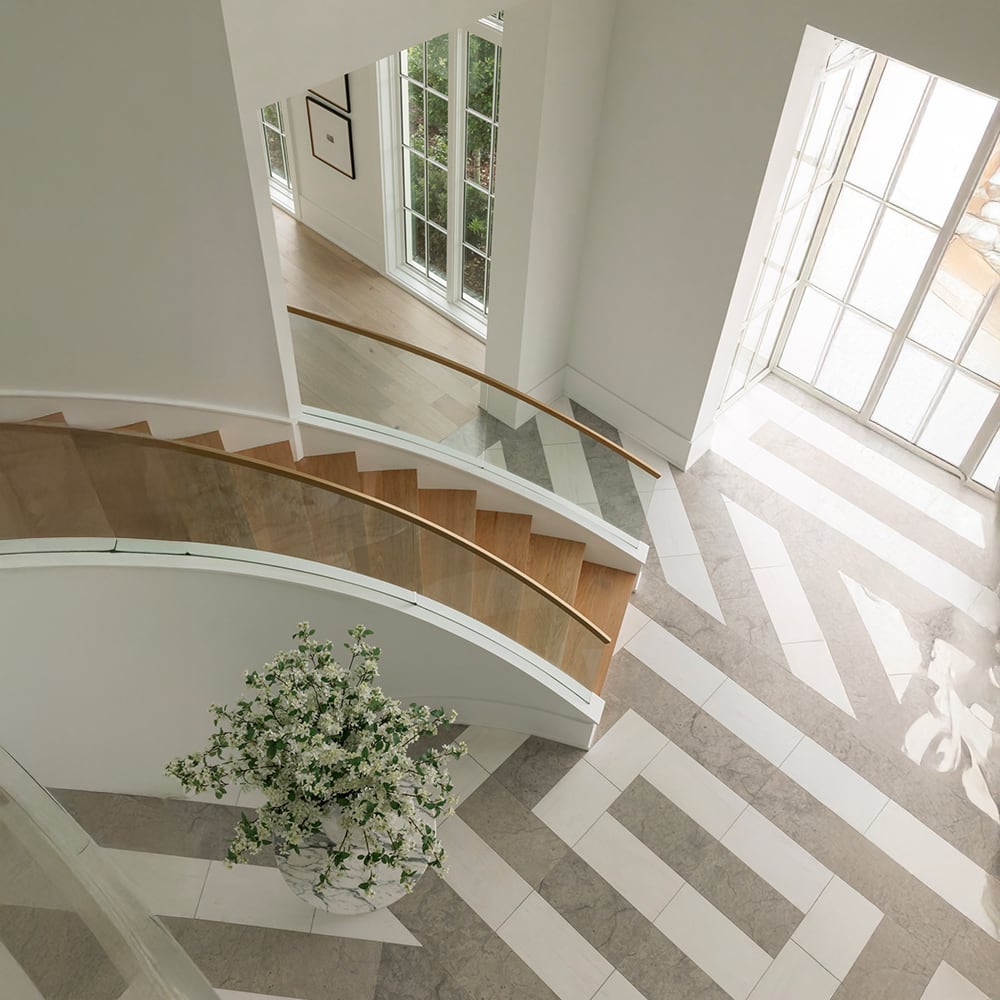
But the value conversation does not end at installation day. Natural stone floors are a good contribution to a home’s character, and they increase the resale value of the home. We have spoken to enough homeowners and real estate professionals over the years to say with confidence that a well maintained marble floor is rarely something a buyer asks to remove.
Can You Really Tell the Difference? Marble or Marble Look Porcelain
Trust me, you wouldn’t recognize whether it’s a marble or marble look porcelain if you see them two in our tile showroom. The printing technology behind the best porcelain products today is genuinely impressive, and we say that as people who have spent decades working with the real thing.
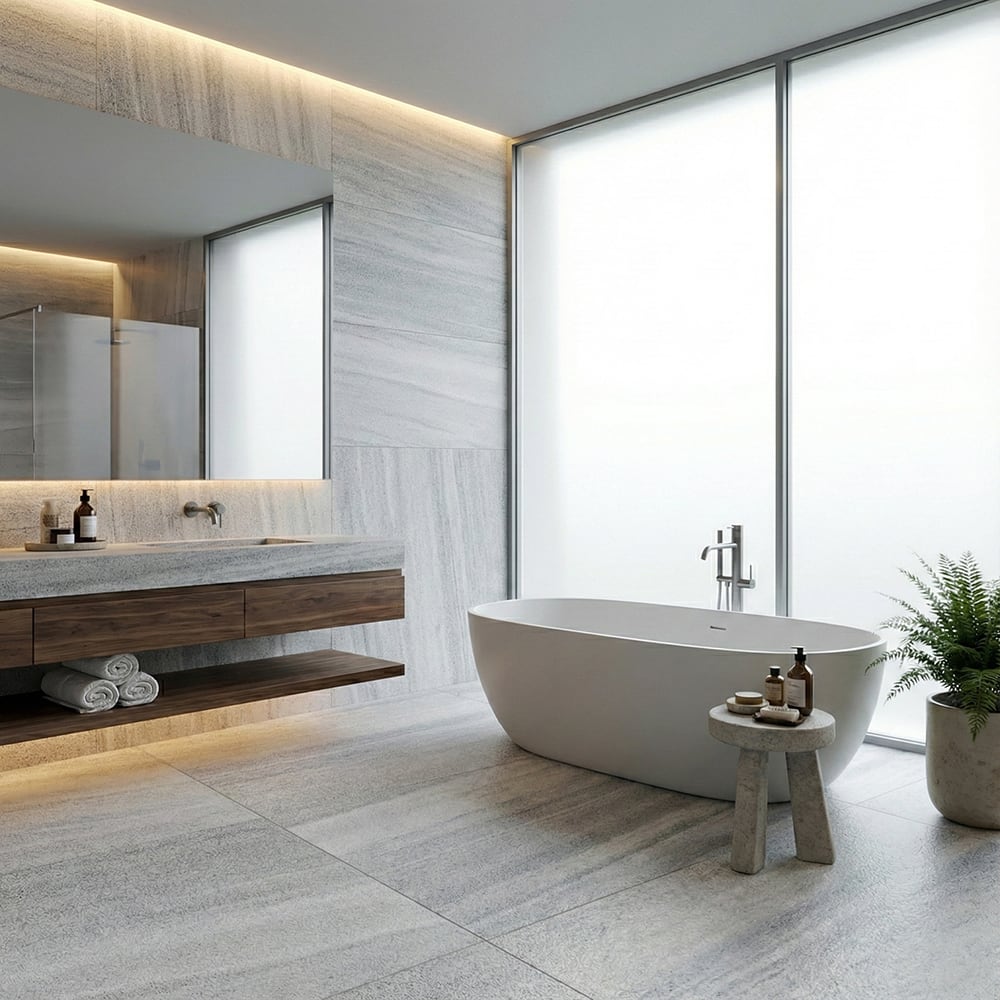
Where it falls short is in the details. The depth of a real vein, the veining never lies. The slight translucency that natural marble carries when light hits it at a low angle. The variation between one tile and the next makes a floor feel like a continuous material rather than a repeated pattern. These are not small things to someone who cares about them. And in our experience, the clients who end up in our showrooms care about them very much.
Order A Sample, Test It, Decide
If you couldn’t decide yet (and it’s perfectly normal), the best thing you can do is come into a Marble Systems showroom. We have been trying to create your dream spaces with our material knowledge since 1982, and our team works with residential clients every day. See the materials in your home at first, then visit us and experience more of them!