
Table of Contents
Probably you’ve also been fascinated by DIY epoxy countertops videos you’ve seen on social media, because they are one of the cheapest and shiniest ways to add a little sense of luxury to your kitchen. They look satisfying, accessible, and impossibly cheap; that’s the trap side of the situation. But while epoxy countertops might look good on TikTok, they face a brutal reality the moment you start actually cooking. Before you ruin your kitchen with a weekend experiment, let’s talk about the one enemy resin can’t defeat: heat. And you wouldn’t skip that part, because this side can cost you more than you think.

Can You DIY Epoxy Countertops?

Technically, yes, but “can” and “should” are two very different things. Epoxy countertops DIY kits are marketed as beginner friendly, but the application is kinda unforgiving. You are racing against a chemical clock, managing sticky bubbles, and dealing with toxic fumes that require serious ventilation. If you pour it too thick, it cracks; pour it too thin, it peels. Unlike natural stone vs epoxy, where the material arrives perfect, an epoxy resin countertops project requires you to be a chemist and an artist simultaneously, and if you mess up, there is no undo shake opportunity, just like you have on your iPhone.
Don’t Be Afraid to Ask: Can DIY Epoxy Countertops Handle Heat?
Let us introduce you to the 60 seconds in science, in a very basic way. The average melting point of epoxy, or rather, the point where it begins to soften and deform, is often as low as 140°F to 150°F. Some expensive high heat industrial resins claim to withstand up to 300°F, but even those have limits. Some of our customers are the ones who didn’t believe the heat limits of the epoxy, unfortunately.
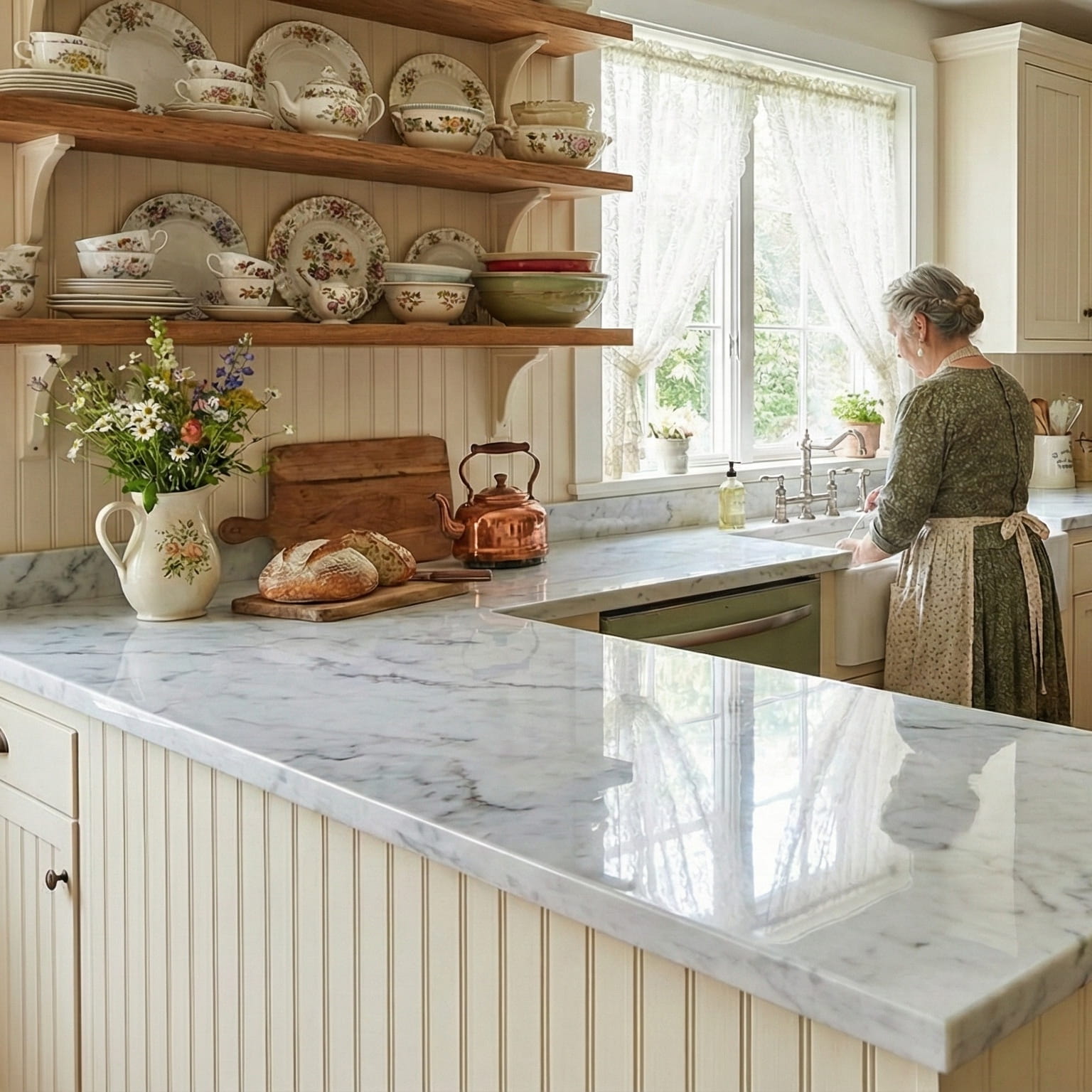
Now, close your eyes right now and think about your kitchen. A frying pan coming off the stove is easily 400°F. A baking sheet out of the oven can be 450°F. If you accidentally set a hot pot on an epoxy surface, you will probably melt it. Epoxy countertop heat resistance is chemically limited because it is, at its core, a plastic (also, microplastics?). We have seen horror stories of heavy pots sinking into softened resin, leaving permanent damage to kitchen countertops. Or an aesthetic disaster happens, such as that giant white ring on the countertop.
Can You Avoid Melting It?
Proponents will tell you, “Just use a trivet!” And while that is true, that’s where real life can hit you hard. You are rushing to drain pasta, the trivet slips, or a guest unknowingly sets down a hot coffee pot. With heat resistant natural stone, that mistake is forgiving (there is a warning by the way, not all natural stones are heat resistant). With epoxy, that mistake is permanent.

You also have to worry about indirect heat. Toasters, air fryers, and slow cookers radiate heat downward. Leaving a slow cooker on an epoxy counter for six hours can soften the resin underneath, causing the heavy appliance to bond to your countertop. If you are asking are marble countertops heat resistant, compared to epoxy, a marble slab is practically fireproof. However, let me underline it very well. When you compare marble to the other natural stones, it is not as resistant to heat as the others.
Alternatives: What Countertops Are Heat Resistant?
Granite Countertops
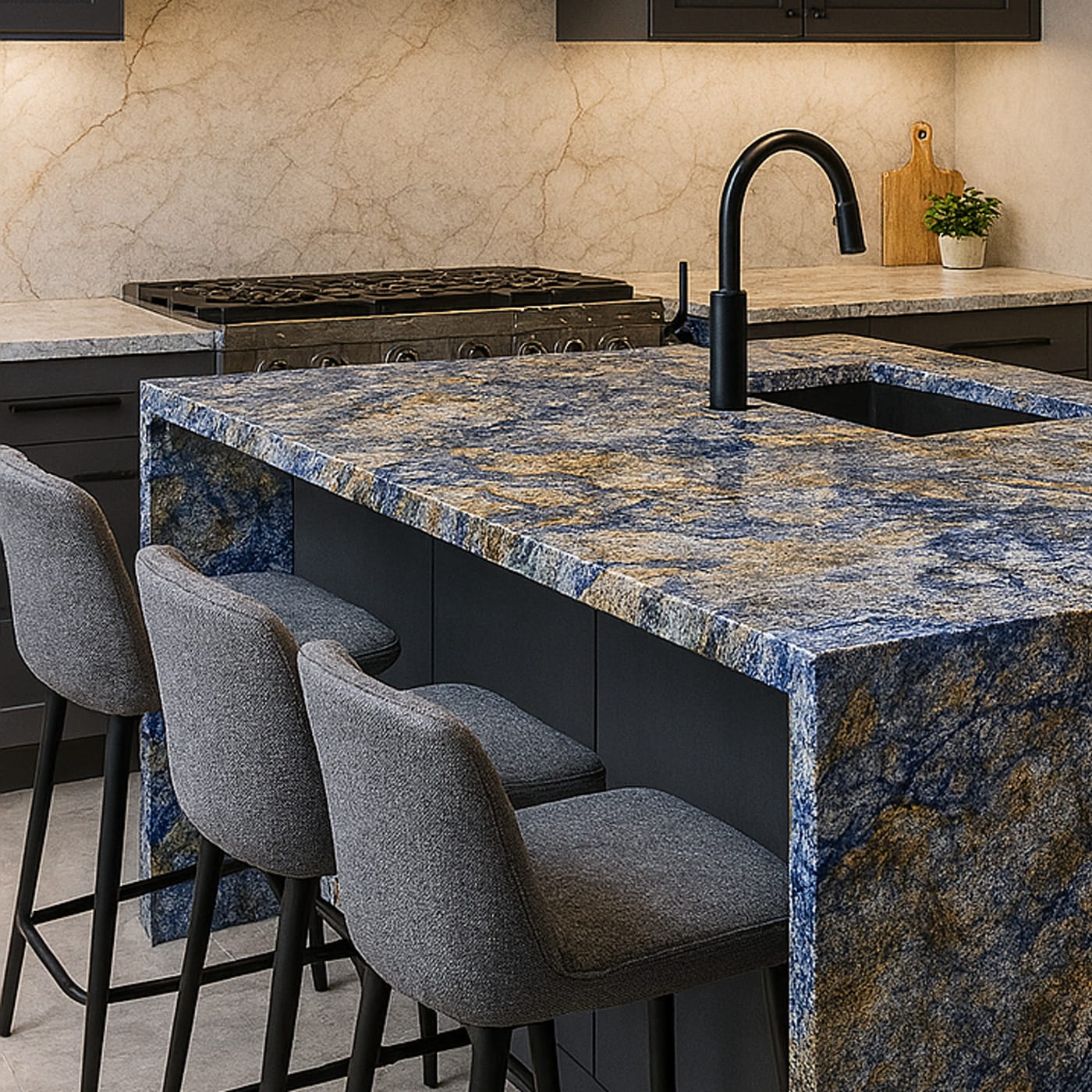
Granite kitchen countertops are formed deep underground from cooling magma, so a hot pan is literally nothing to them; they’ve seen worse. They are among the most heat resistant countertops available, easily handling temperatures that would turn epoxy into a puddle. Our customers mostly choose a granite slab with their eyes closed for heat resistance. However, granite vs quartzite countertops is another issue to think about in that context.
Quartzite Countertops
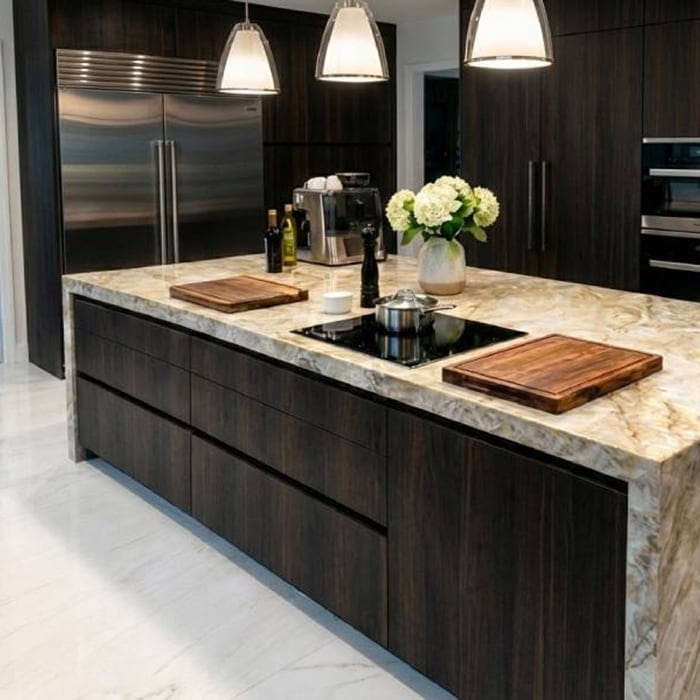
Quartzite countertops are harder than granite, and sometimes they look way better than a marble slab without being fragile and giving you a heart attack. They are naturally dense and incredibly stable, making them one of the best heat resistant countertops for serious chefs.
Porcelain Countertops
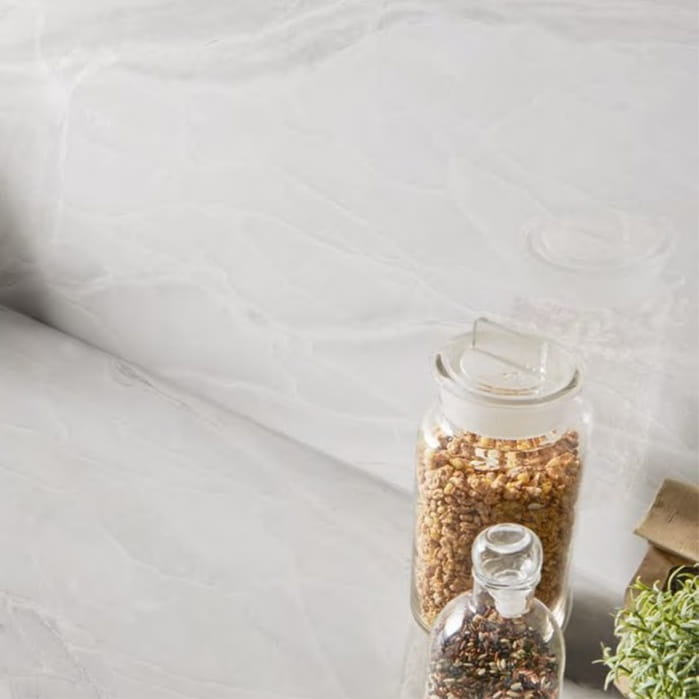
Since porcelain countertops are fired in a kiln at temperatures exceeding 2000°F during manufacturing, they are the Superman of your kitchen. You can place a hot baking sheet directly on the surface without fear of scorching or discoloration. Some of our customers think that porcelain countertops may not be good enough to try, but believe me, the ones who had chosen porcelain once always came back thank us!
Soapstone Countertops

Soapstone countertops are so chemically inert and heat tolerant that they are traditionally used in high school chemistry labs. They act as a thermal heatsink, meaning you can place a roaring hot cast iron skillet right on the stone without damage.
Sintered Stone Countertops
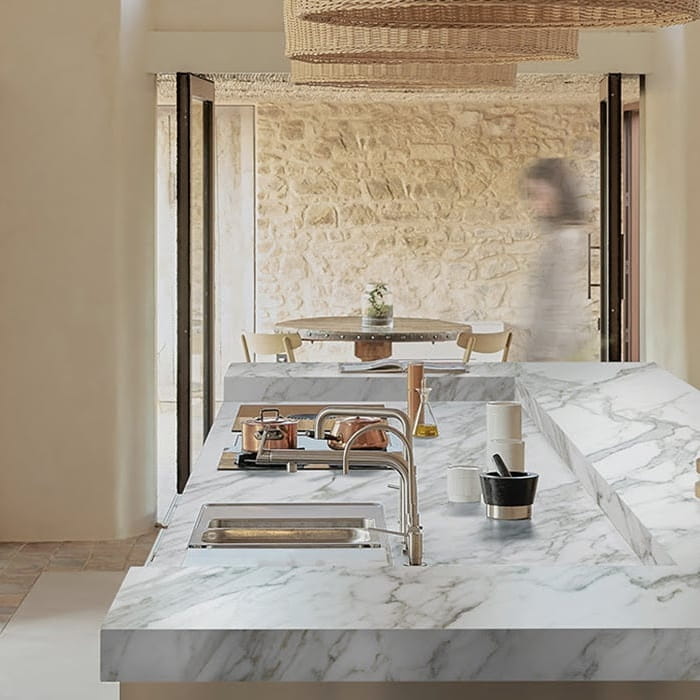
Sintered stone countertops are engineered under extreme heat and pressure to mimic the earth’s metamorphic process, so your interesting experimental food pan can’t hurt it in that way, as you’ve thought. This creates a surface that is not only UV stable but also completely immune to high temperatures and thermal shock.
Natural Stone vs Epoxy: Choose the Best in the Showroom
Do you want an honest review in manner of the heat problem? DIY epoxy countertops are a craft project, not a kitchen surface. Don't gamble your renovation budget on a material that can't handle a hot meal. Visit our kitchen countertop store and come into a Marble Systems showroom ASAP. Run your hand over the joinery. See the to choose a material that will last a lifetime, our experienced team will lead you to what you need, to the most heat resistant countertop options you’ve ever seen before!
Explore All Stone Slabs