

There is a sensation every Puerto Rican grew up with: bare feet on a cool tile floor in the middle of a hot afternoon. Long before words like “artisanal” and “sustainable” became design vocabulary, the island was already living them, one hand poured tile at a time. Today, that same instinct is resurfacing in a new material. Puerto Rican terrazzo tile is having a genuine moment right now, and if you’ve stepped into a renovated home in San Juan or Ponce recently, you’ve probably already felt why, or you can feel it yourself at our San Juan showroom.
Terrazzo tile is Puerto Rico’s modern take on its historic hand poured floors, the same character, with better resistance to humidity and salt air.
1. Puerto Rican Tile Floors: Where This Story Begins
Ask any homeowner in Old San Juan about their grandmother’s house, and the floor comes up before the furniture does. Between the 1900s and the 1950s, builders across the island relied on hand poured tiles to cover nearly every home worth remembering. Each tile was pressed one at a time in a mold and laid in patterns that rarely repeated from house to house. What made those floors last wasn’t luck. It was density, built to survive humidity and decades of foot traffic without fading.
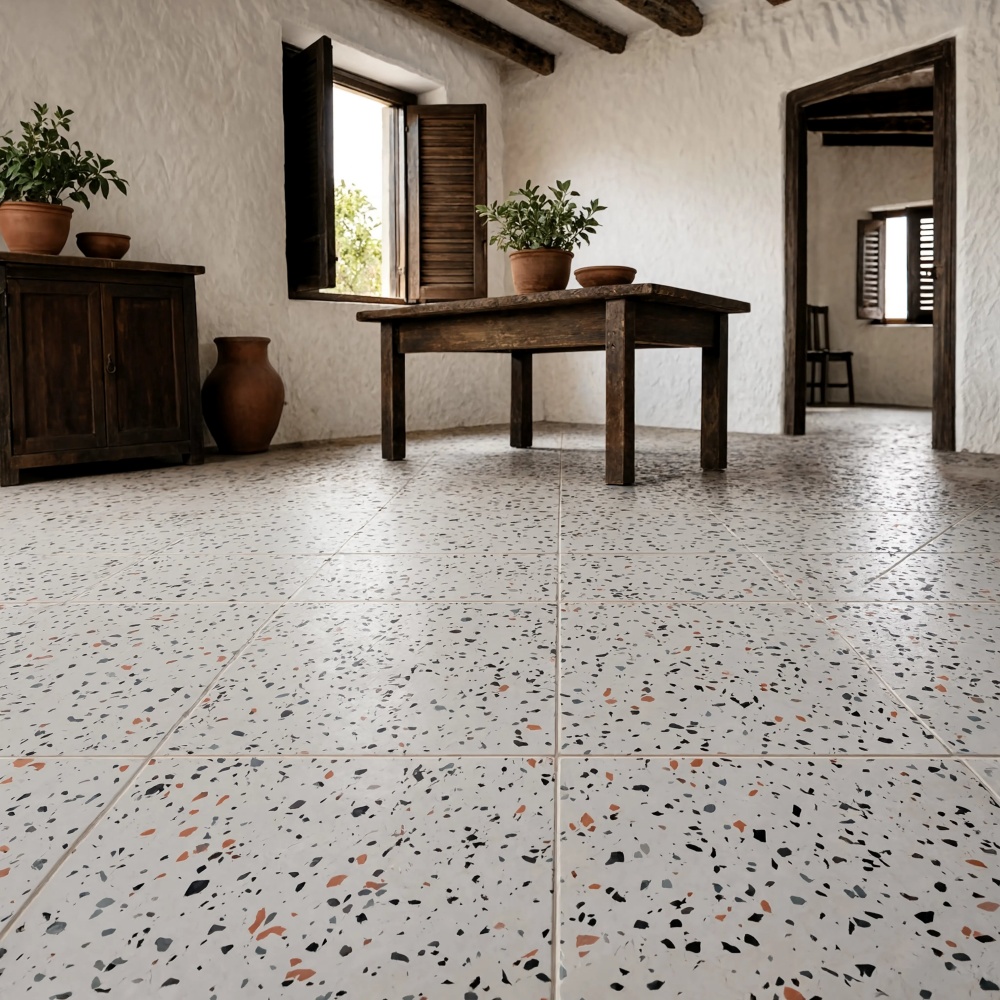
2. Historic Tile in Puerto Rico: A Pattern Language of Its Own
Historic tile in Puerto Rico was never purely decorative. The patterns, geometric borders, florals, checkerboards, functioned as a kind of visual signature, telling you something about the house and the family inside it before you’d even sat down. That’s part of what makes these floors so hard to replace with something generic. A house with real character asks for a floor that reads the same way.

3. Traditional Puerto Rico Floor Tile and Why It Still Matters
Traditional Puerto Rico floor tile earned its reputation the hard way, by simply outlasting everything else in the house. Many of these floors are still intact in homes built seventy or eighty years ago, largely untouched beneath a coat of wax and daily life. That kind of longevity isn’t nostalgia talking. It’s a genuinely high performing material that modern flooring is still trying to catch up to.
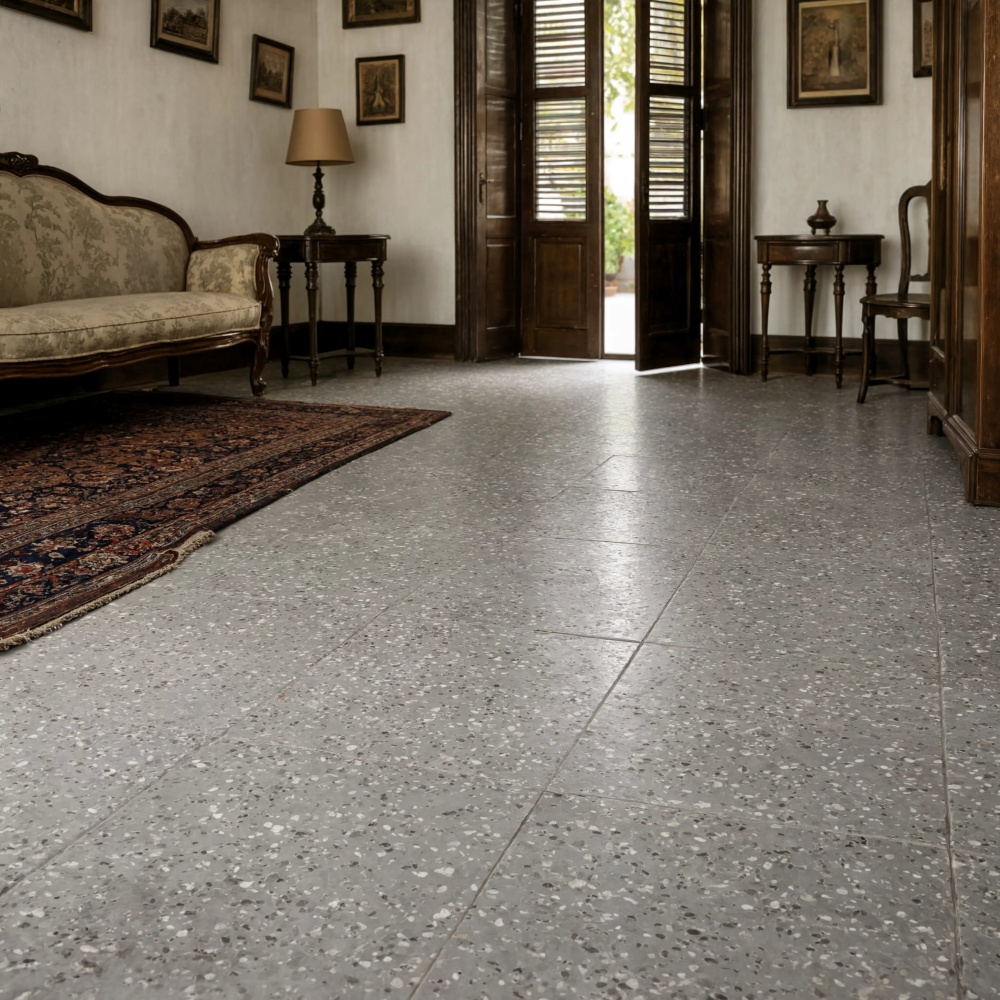
4. Terrazzo Tile Puerto Rico: The Modern Continuation
Terrazzo and tile share the same DNA: stone fragments bound into a dense, poured surface engineered to be walked on for generations. What terrazzo tile brings to Puerto Rico today is a century of refinement in mixing and finishing, so that consistency you get tile to tile is far more reliable than the original hand poured versions ever were. For architects working on historic renovations, that distinction matters. A floor should feel like it belongs to the house, not like it was borrowed from somewhere else.
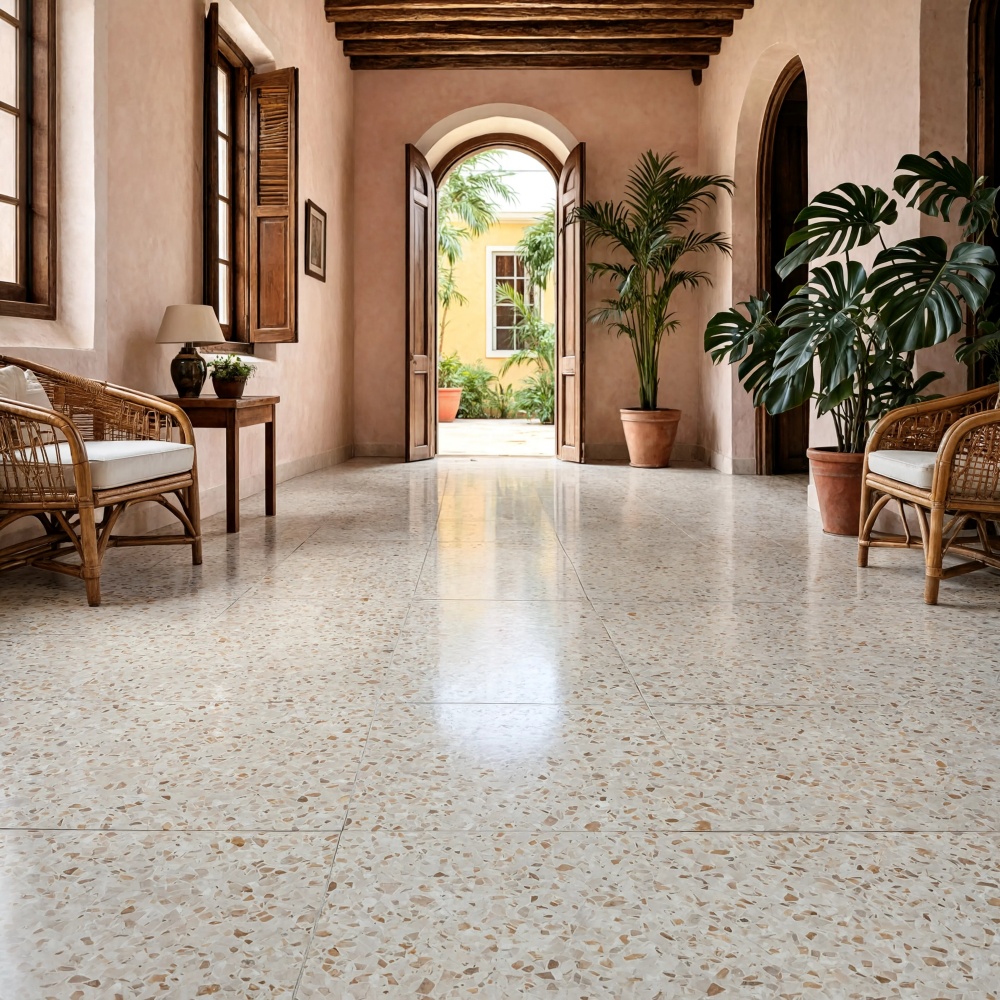
5. Terrazzo Flooring for Historic Homes: Restoring Character the Right Way
Terrazzo flooring tile for historic homes has become one of the more requested renovation choices across the island, and it’s rarely borrowed from a Miami or New York trend piece. It reads as familiar the moment it’s installed, because the visual rhythm, the speckled surface, the layered color, echoes what was already there. We’ve seen this most often in full home restorations where owners want to protect the bones of the house while modernizing everything underneath it.
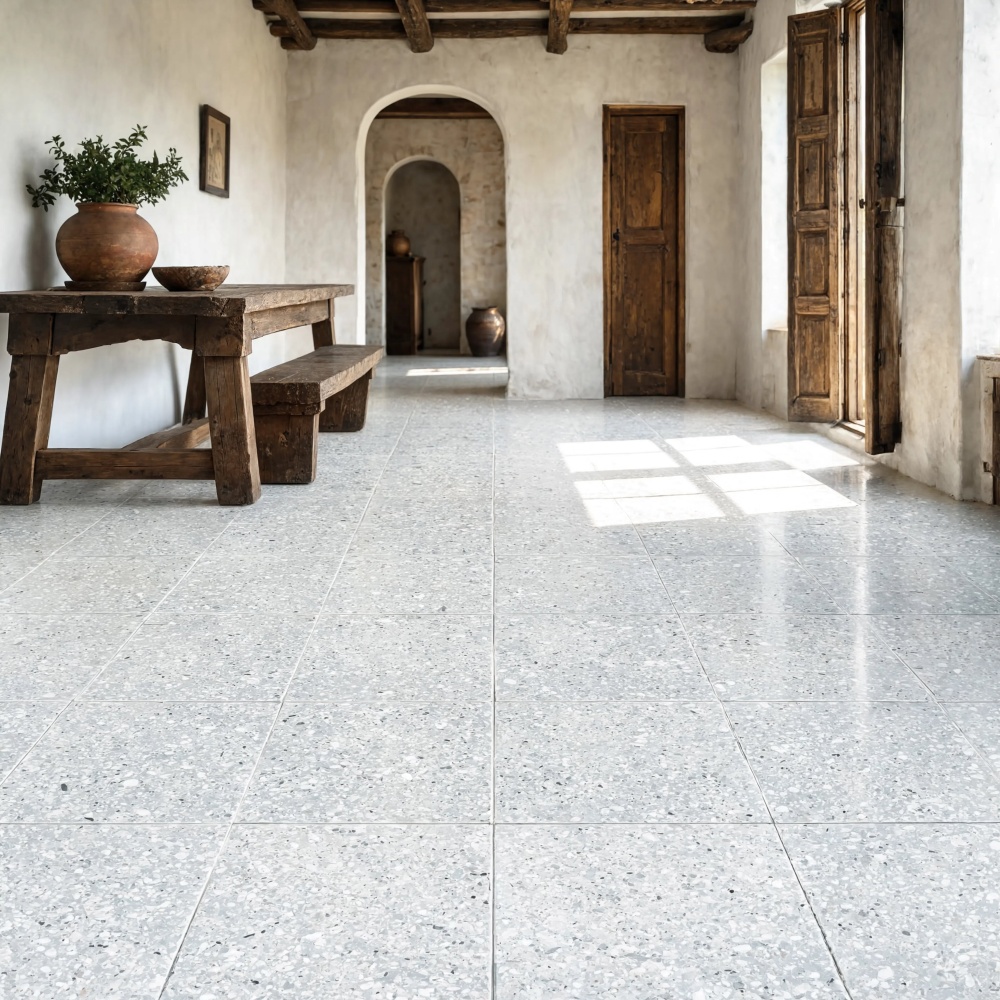
6. Best Terrazzo Tile for Humid Climates
Puerto Rico is not a forgiving climate for building materials. Near constant humidity and salt heavy coastal air test flooring in ways mainland products rarely face. A properly sealed terrazzo tile resists moisture penetration far better than many porous stones, which is exactly why it holds up in kitchens, bathrooms, and entryways without warping or staining. For contractors specifying materials on coastal properties, that resilience tends to matter more than color or pattern in the final decision.

See the Legacy in Person
What makes this comeback feel different from a passing trend is that it isn’t really new. Puerto Rico has always valued flooring that carries history in it, and terrazzo tile simply gives that instinct a modern, more durable form.
If you’re planning a renovation or just want to see these patterns and colors in natural island light before deciding, visit our Puerto Rico showroom in San Juan. Our team can walk you through the full range of tiles in Puerto Rico and help you find the one that fits your project’s story.