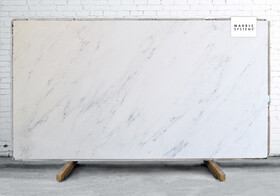
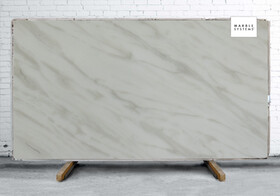
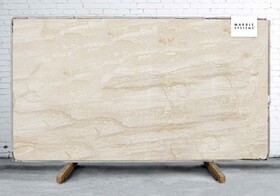
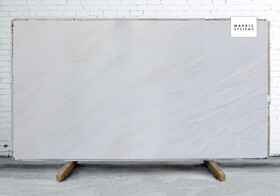
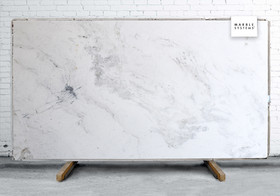
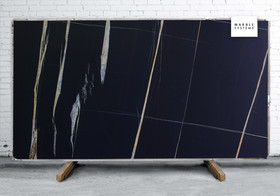
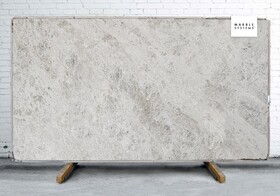
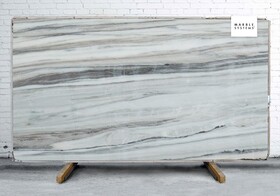
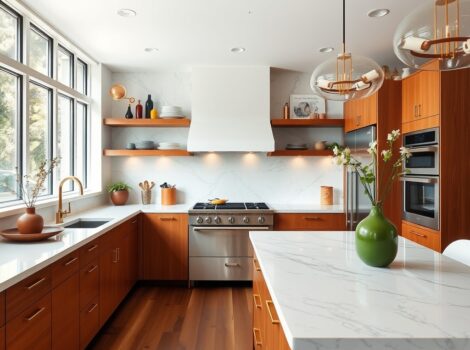
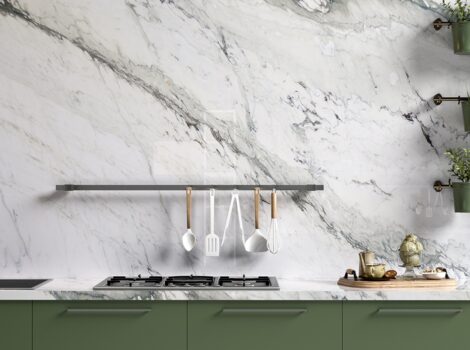
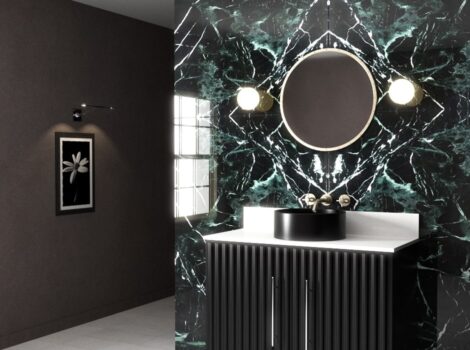
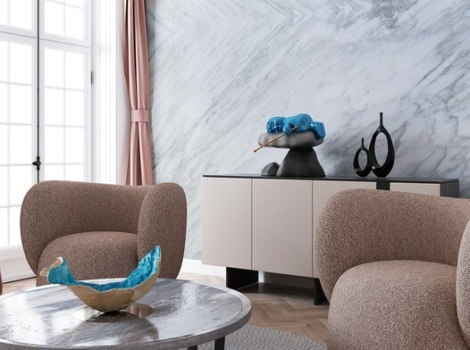
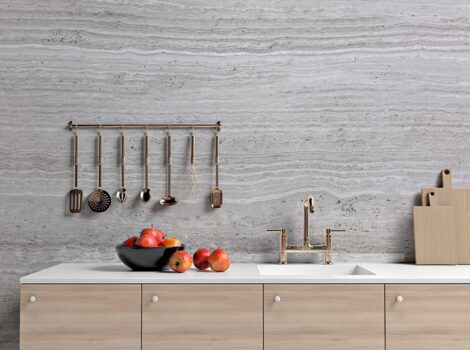
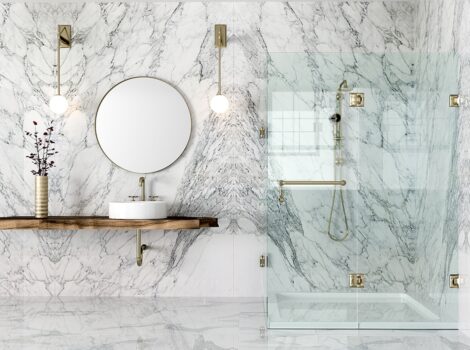
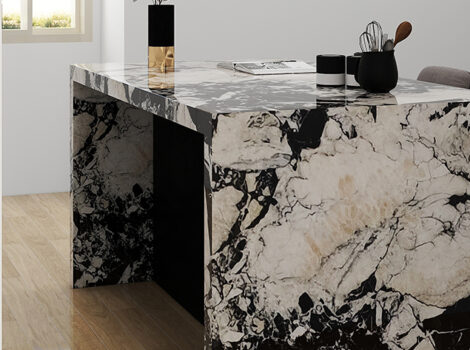
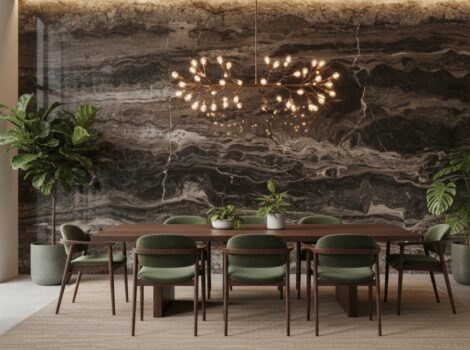
A marble slab is a solid, continuous stone piece cut directly from a quarry block. Unlike marble tiles, a slab displays the full flow of its veining because it's a bigger piece than a tile, and you have a chance to see the stone in a bigger way. No two marble slabs look the same, even though they are from the same quarry. If you're not a fan of repetitive fabric marble look on your slab designs, choosing a customized marble or your favorite color can make you happy!
Marble slabs are large, flat pieces of marble usually cut into ¾” thick or 1 ¼” thick pieces. These slabs are typically used in interior decoration pieces such as kitchen countertops, bathroom vanity tops, fireplace surrounds, and interior walls. They are cut from quarried blocks of marble and are known for their beauty, durability, and versatility. Marble slabs are commonly used for countertops, flooring, wall cladding, and decorative elements in homes, offices, and public spaces. They come in various colors, patterns, and finishes, making them a popular choice for adding elegance and sophistication to interior and exterior spaces. Some of the most popular varieties come from Italy, Greece, and Turkey.
Generally, marble is considered to be more expensive than granite. Here are a few reasons why:
The price of a slab of marble can vary significantly depending on several factors such as the type of marble, quality, size, thickness, and uniqueness. Due to the fact there is no uniform grading or standardization of quality, prices vary from piece to piece per square foot.
As of my last update in early 2022, here are some rough estimates of the price range for marble slabs:
You can buy marble slabs from various sources, including local stone suppliers, and specialty marble fabricators. Here are some options:
When buying marble slabs, consider factors such as the quality of the stone, the reputation of the supplier, shipping or delivery options, and any additional services like fabrication and installation that may be offered. It's also a good idea to request samples or visit a showroom to see the marble in person before making a final decision.
Marble can be a good choice for countertops, but it's important to consider both the advantages and disadvantages before making a decision.
Advantages of Marble Countertops:
Disadvantages of Marble Countertops:
Ultimately, whether marble is a good choice for your countertops depends on your lifestyle, preferences, and willingness to maintain and care for the stone. If you love the look of marble and are willing to take precautions and provide ongoing maintenance, it can be a beautiful and functional option. However, if you prefer a countertop material that is more resistant to staining and scratching, you may want to consider alternatives like granite, quartz, or engineered stone. Please keep in mind that these more functional materials are common and will not increase your home value.
The choice between marble and quartz for countertops depends on your specific needs, preferences, and priorities. Both materials have distinct characteristics and advantages, so it's important to consider several factors before making a decision.
Advantages of Marble:
Advantages of Quartz:
Factors to Consider:
Polishing marble countertops can help restore their shine and luster, giving them a beautiful and renewed appearance. Please note that polishing dull spots is different than polishing marble slabs. Which will require mechanical grinders and polishing pads. Here's a step-by-step guide on how to polish marble countertops:
By following these steps and maintaining regular cleaning and care, you can keep your marble countertops looking polished and beautiful for years to come.
While marble is heat resistant to some extent, it's generally not recommended to place hot pans directly on marble countertops for a long time.. Here's why:
To protect your marble countertops from heat damage, it's best to use trivets, hot pads, or heat-resistant mats to place hot pans and dishes on. These protective measures create a buffer between the hot item and the marble surface, reducing the risk of thermal shock and potential damage. Additionally, wiping up spills or splatters promptly can help prevent staining or discoloration over time.
The frequency of sealing marble countertops depends on various factors such as the type of marble, the level of use, and the specific sealer used. However, as a general guideline:
A marble slab is a solid, continuous stone piece cut directly from a quarry block. Unlike marble tiles, a slab displays the full flow of its veining because it's a bigger piece than a tile, and you have a chance to see the stone in a bigger way. No two marble slabs look the same, even though they are from the same quarry. If you're not a fan of repetitive fabric marble look on your slab designs, choosing a customized marble or your favorite color can make you happy!
Understanding the characteristics of marble is key when designing a kitchen or bathroom with marble countertops. The most important thing while choosing a marble countertop is the type of marble, whether it is Calacatta, Carrara, Bianco marble slab, or the other options. Here are a few types of marble countertops we offer on our website:
This stone is the Italian classic, the one always chosen first. The one marble countertop that is always saved on Pinterest vision boards. Calacatta Gold marble countertops come with a delightful white background with thick veins of grey and gold. It makes a bold centerpiece for a marble kitchen island where the wide veining allows for a full visual display.
The other marble countertop option is as popular as Calacatta marble countertops. Carrara marble kitchen countertops bring a soft white or blue grey background with fine feathery veining, unlike the bolder marble countertop options that have darker veining. It remains one of the best choices for a traditional kitchen and acts as a favorite surface for bakers because it naturally stays cool.
The other marble countertop option is as popular as Calacatta marble countertops. Carrara marble kitchen countertops bring a soft white or blue grey background with fine feathery veining, unlike the bolder marble countertop options that have darker veining. It remains one of the best choices for a traditional kitchen and acts as a favorite surface for bakers because it naturally stays cool.
This choice suits the maximalist interior designer lovers who adore burgundy and purple shades. A Calacatta Viola marble slab is instantly recognizable like a painting by its striking burgundy and violet veining on a creamy white background. It's like a geological scene with brush strokes. Our interior designer clients are using it for a high contrast waterfall island or a powder room vanity that demands attention in most of the projects.
These marble countertops are for the ones who want to take a step out of the box with drama, bold design, and an energetic look at the same time. A Rosso Levanto marble slab features a rich dark cherry red base with striking white spiderweb veining. Our customers suggest matching it with neutral cabinets, amber toned lights, and big plants around the kitchen. Or a mid century modern living room will work for it, as well.
These offer sleek sophistication. Black marble countertops like Nero Marquina create power in light colored kitchens. The deep black background and all the monochromatic aesthetic of a black countertop will work at its best with white, with the thousands year of contrast.
The color of your marble countertops dictates the mood of the room. While white is the classic choice and goes well in modern and contemporary designs, our collection spans the full spectrum of any kind of aesthetic.
This is the most popular choice for creating airiness, the clean and organized look in a room. White marble countertops reflect light and make small kitchens feel larger, even though it is a hard project to work with in terms of room size. From the purity of Thassos to the warm, creamy tones of Calacatta, white stone defines clean luxury even in a farmhouse kitchen or a modern colonial.
If you need a shadow for grounding a room, that's a good choice. A black marble countertop absorbs light rather than reflecting it. This creates a cozy and intimate atmosphere for tile bar front areas or modern minimalist bathrooms.
Gray countertops are the perfect transitional neutral, and not in a boring way. Gray marble countertops like Tundra Grey offer a softer alternative to the eye catching contrast of black and white. They hide dust and fingerprints well, which makes them a practical choice for family homes, homes with our little friends with paws.
From the deep greens of Amazon rainforests to calm, Zen like sage green, green marble countertops fit perfectly in nature inspired and biophilic interior designs. They look stunning when paired with natural wood cabinetry and indoor plants for a spa retreat vibe. They are most likely to be used with wood look floor tiles or white flooring solutions.
Rare blue marble countertops look like art. Exotic marble colors like Azul Macaubas will make you feel like you are riding a wave like a mermaid. These unique shades are ideal for a backlit bar, a feature vanity, or a custom kitchen island.
The countertop edge detail acts as the signature of your installation. High end designs often utilize complex profiles to increase the visual weight of the stone. A massive trend in luxury homes involves the choice between waterfall vs mitered edge countertops. A mitered edge makes a thin slab look thicker, while a waterfall countertop edge extends the marble countertop vertically down the side of the cabinet to the floor. This wraps the island in continuous stone for a sculptural effect.
The heart of the home relies on marble kitchen countertops. They are heat resistant and durable, as they should be. It provides a cool, smooth surface perfect for rolling dough. Marble slabs are natural stars to take place in a kitchen as a countertop, and our interior designer clients are absolutely recommending it!
Using full slabs for a marble slab shower removes grout lines entirely. It creates a sleek, waterproof enclosure that looks like a carved block of stone, like you're having your moment in nature. This makes cleaning easier and the visual impact undeniable while having a unique experience.
A marble slab fireplace is a safe and stunning option for those who love to look classy every time. Because marble resists heat, it is a practical choice for a surround. When you have a marble fireplace in your living space, you don't need an art piece on your wall.
A marble slab wall creates vertical drama in the language of natural stone. Installing stone cladding in an entry foyer or behind a soaking tub creates a hotel aesthetic. We suggest bookmatched slabs here to create symmetrical patterns.
A marble vanity countertop will level up the bathroom routine, no matter what, if it is a commercial project or residential. Bathroom vanities see less acid exposure than kitchens, so you can safely use polished finishes here to maximize the stone's natural sparkle.
Marble is a natural calcium based stone, so it reacts to acids. You must wipe up spills from citrus or wine immediately to prevent etching on marble countertops. We recommend sealing stone countertops upon installation and resealing them annually to prevent staining. Use a pH neutral soap and warm water for daily cleaning to keep your marble slab looking like day one every time.
Since 1982, Marble Systems has been committed to delivering sublime collections of natural stone. We have emerged as the top choice among distinguished architects, renowned interior designers, and discriminating homeowners. Explore the largest selection of marble slabs from Marble Systems, a leader in importing and distributing marble slabs in the United States. You'll find the best answers to your questions, like marble slab prices, a slab of marble cost, and the variety of slabs, such as Carrara marble slabs or Calacatta marble slabs.