
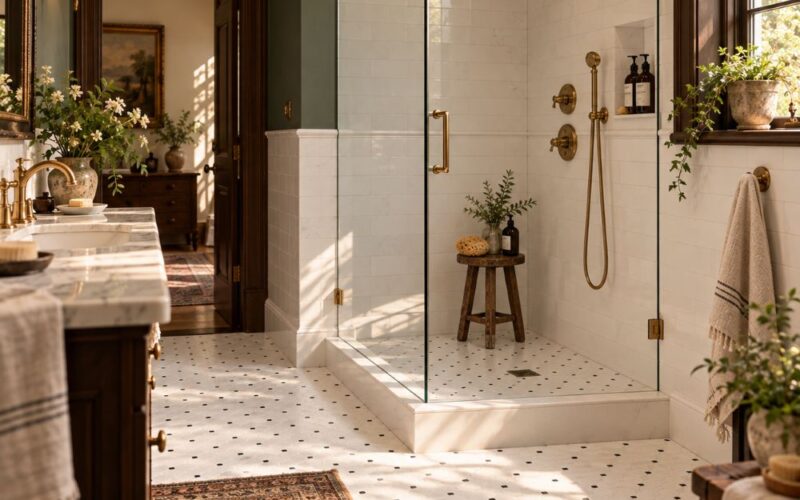
An older home bathroom renovation in Bergen County rarely starts with a blank room. It starts with a worn hexagon floor, a run of pastel wall tile, or a split level bath no one has touched since the eighties. After more than three decades of supplying natural stone to contractors, designers and architects across North Jersey, our team at Marble Systems New Jersey has learned one thing above all: the right tile respects the year your house was built. Here are the six we trust most, and where each one belongs.
1. Planning an Older Home Bathroom Renovation: Keep, Replace or Reinterpret
Homeowners often assume an old bathroom has to be gutted, but in reality the original layout, window placement and tile proportions are the best design clues you will ever get. Keep what is intact, replace original ceramic that has cracked or lost its glaze, and reinterpret the rest in natural stone or in classic bathroom tile designs drawn from the house’s own era. Before a single tile is ordered, photograph everything that exists; those photos become the brief for your new bathroom.
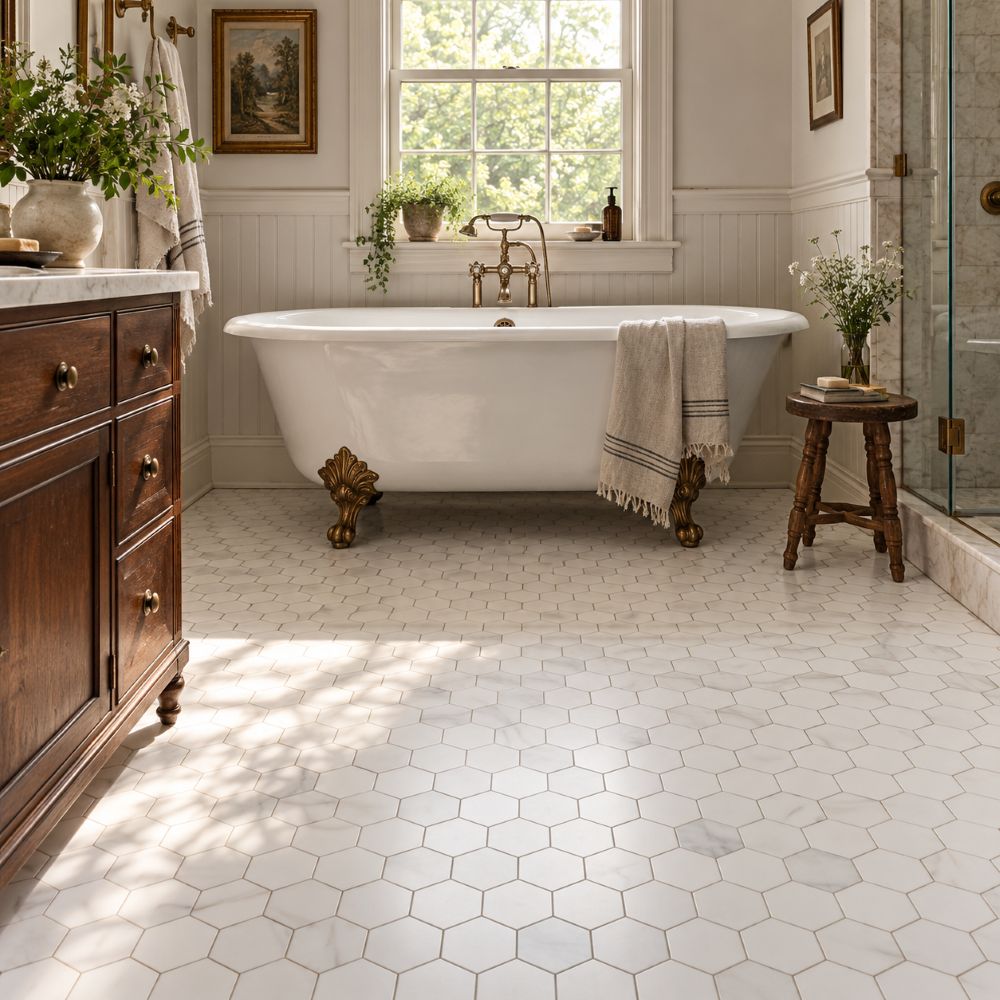
2. Marble Hexagon Tile for a 1920s Bathroom Floor
In Colonial Revival and Tudor homes built between the wars, the small white hexagon floor is part of the house’s original vocabulary. Most suppliers steer clients toward porcelain copies because they are easier to stock; we recommend honed marble because its faint veining and soft matte surface read as genuinely period, and a honed finish grips far better underfoot when wet. Keep the hexagons small, since oversized ones look contemporary the moment you walk in.
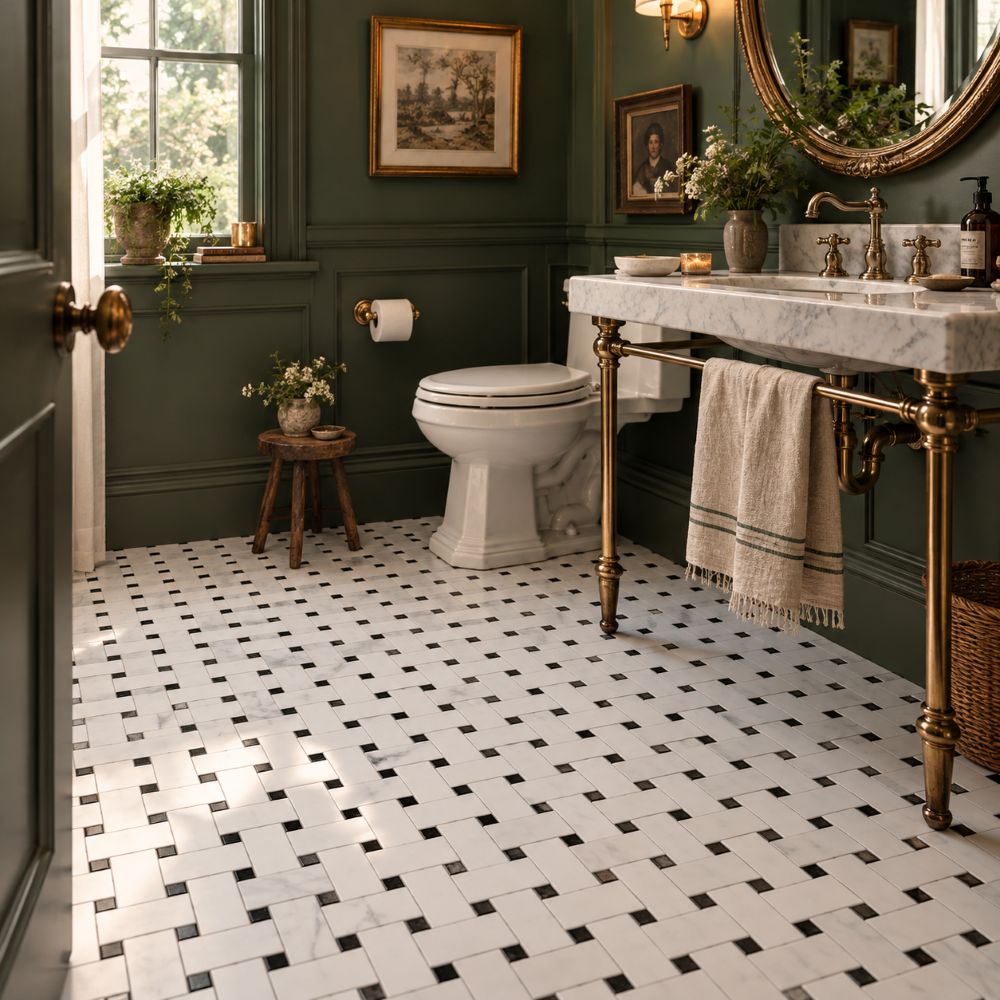
3. Basketweave Marble Mosaic Floor for Period Powder Rooms
Basketweave, rectangles woven around a small square dot, was the dressier cousin of the hexagon and suits powder rooms and hall baths beautifully. In natural stone mosaics, every rectangle carries its own veining, so the pattern looks laid by hand rather than printed. The classic version uses a black dot; a green marble dot feels quieter and more personal.
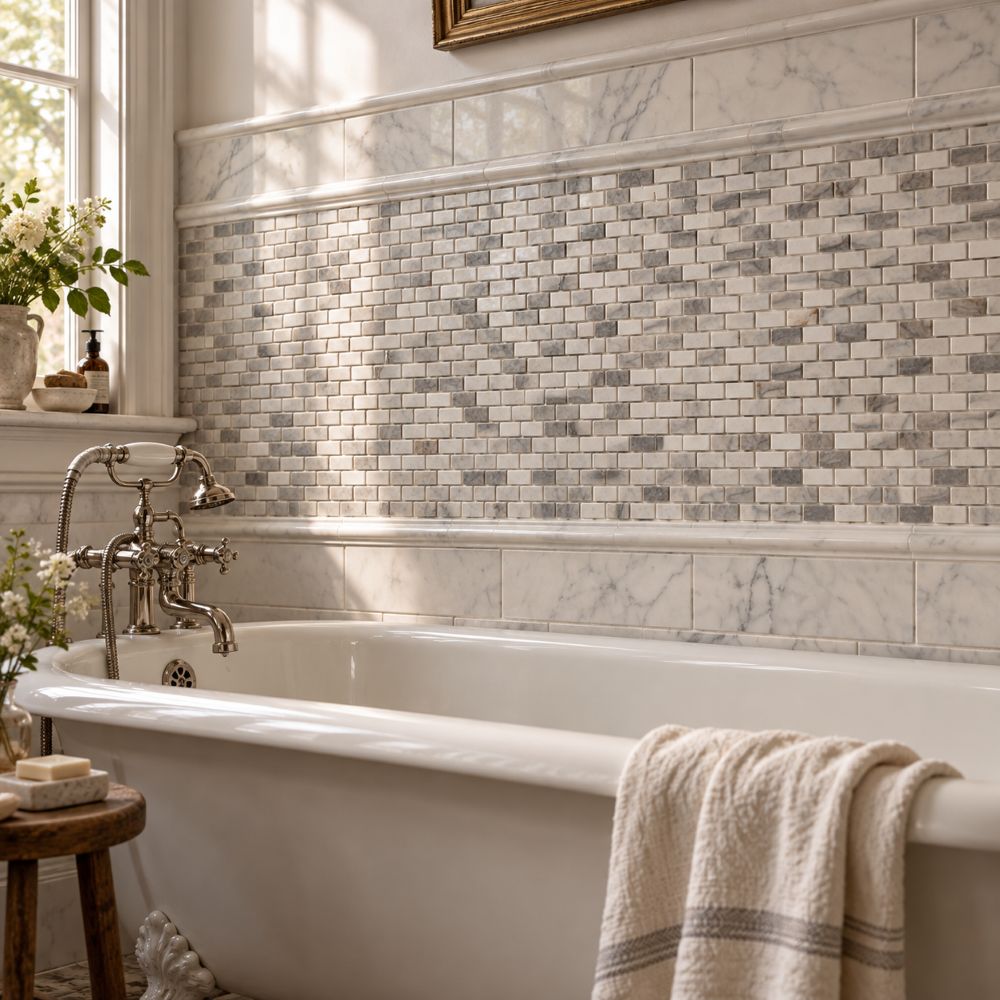
4. Historic Bathroom Wall Tile: Marble Subway and Stone Rails
Many prewar bathrooms were finished in 3×6 subway tiles to wainscot height, capped with a narrow rail. Marble subway keeps that proportion while adding movement no glazed tile can match.
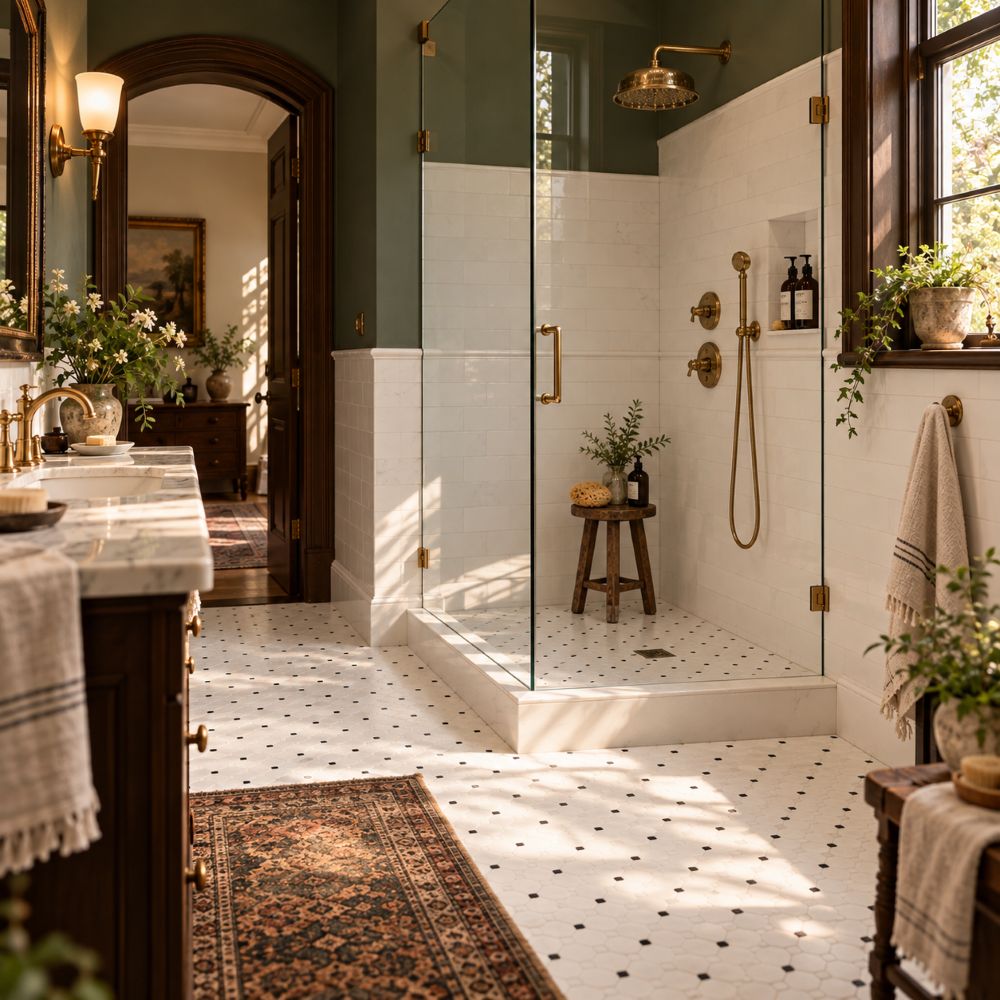
What convinces the eye is the cap: finish at the original wainscot line with a marble pencil rail from our moldings, and where an old wall can’t take a recessed niche, set a stone corner shelf in the shower instead.
5. Terrazzo Tile for a Mid Century Bathroom Remodel
By the 1950s, bathrooms had turned to color, and some homes had terrazzo underfoot. If you love the era but not the chipped pink tile, terrazzo is a graceful middle path.
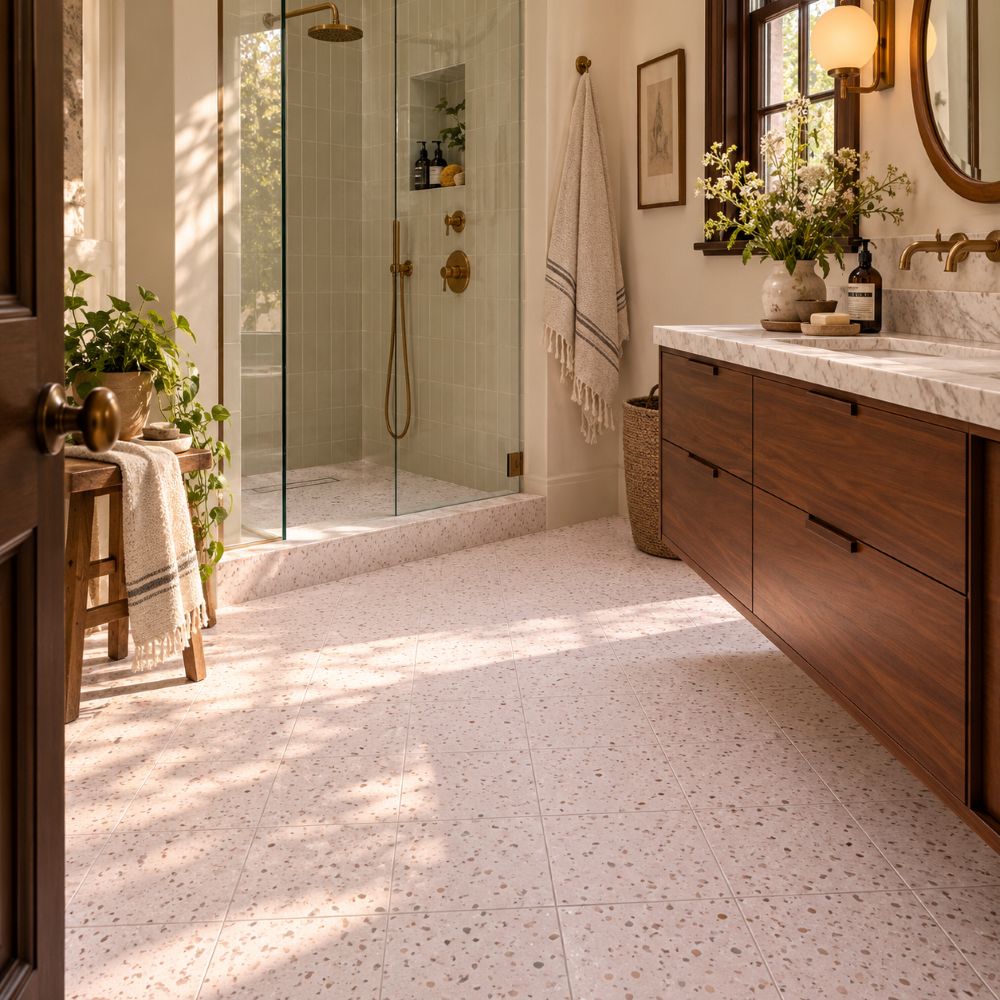
It is made from real stone chips set in a binder, so it carries the playfulness of the period while remaining a natural material. Pair it with plain walls and seal it as you would any stone.
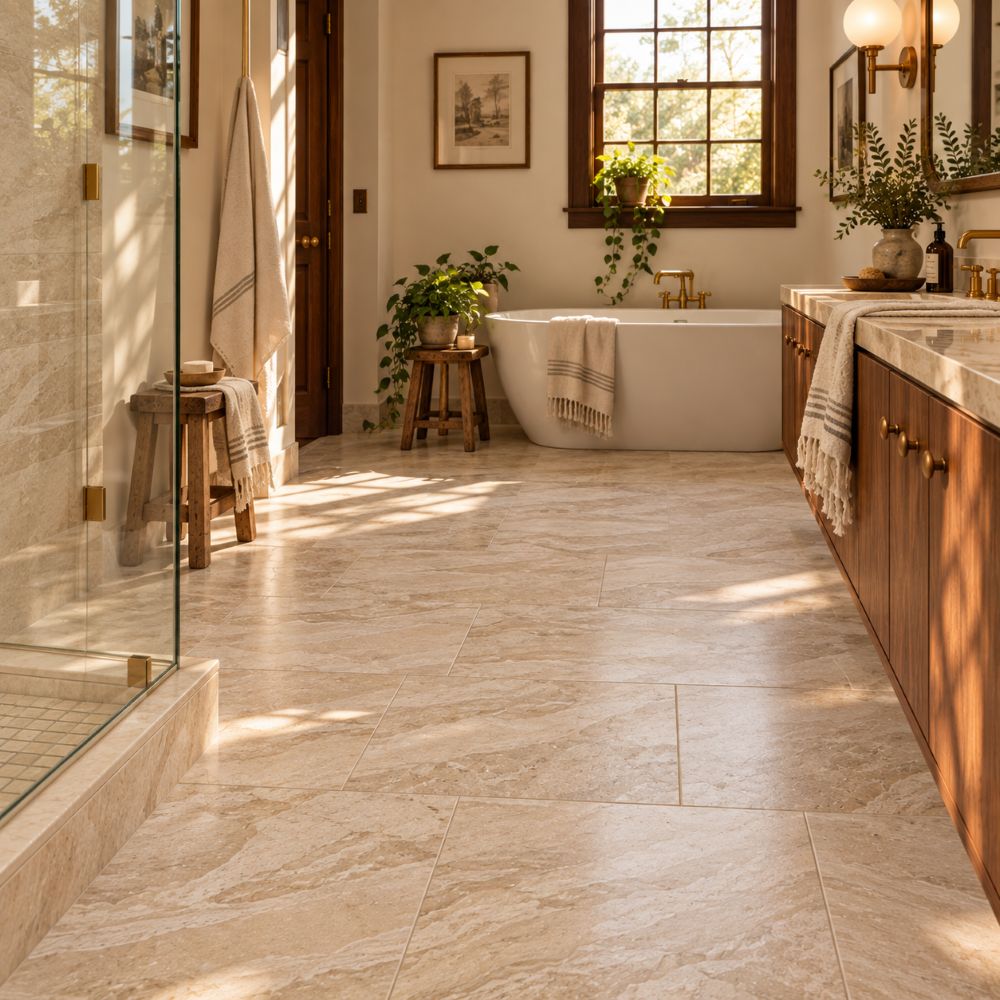
6. Large Format Marble for a Split Level Bathroom Renovation
Split levels and 1960s Colonials usually have compact baths with little period detail to preserve, which frees you to simplify. Honed 12×24 marble in warm beige or soft gray means fewer grout lines and a calmer, larger feeling room. Designers often carry the same stone onto the vanity top from a matching slab, so floor and counter tell one material story.
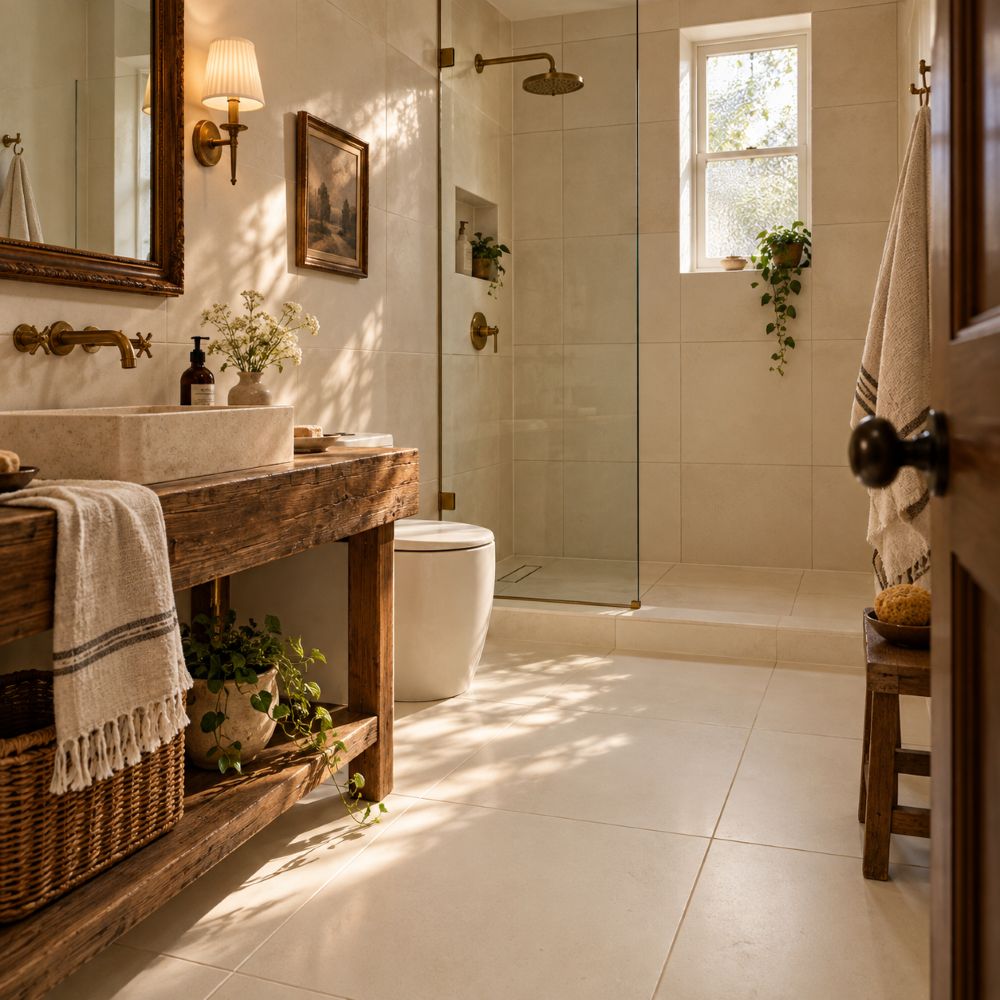
7. Honed Limestone for a Small, Dark Bathroom in an Old House
Many older bathrooms have one small, often frosted window, and in that light a cool white marble can drift toward gray. Cream limestone holds warmth and gives back whatever light the room has; honed travertine does the same with more texture. Crown it with a carved stone sink, and seal both surfaces, since they are softer and more porous than marble.
8. Old House Bathroom Subfloor: What Contractors Should Check First
Clients often think tile cracks because the stone was weak, but in reality it is almost always the floor beneath it. Natural stone needs a subfloor about twice as stiff as ceramic, L/720 deflection versus L/360, and joists in older homes don’t always meet that standard.
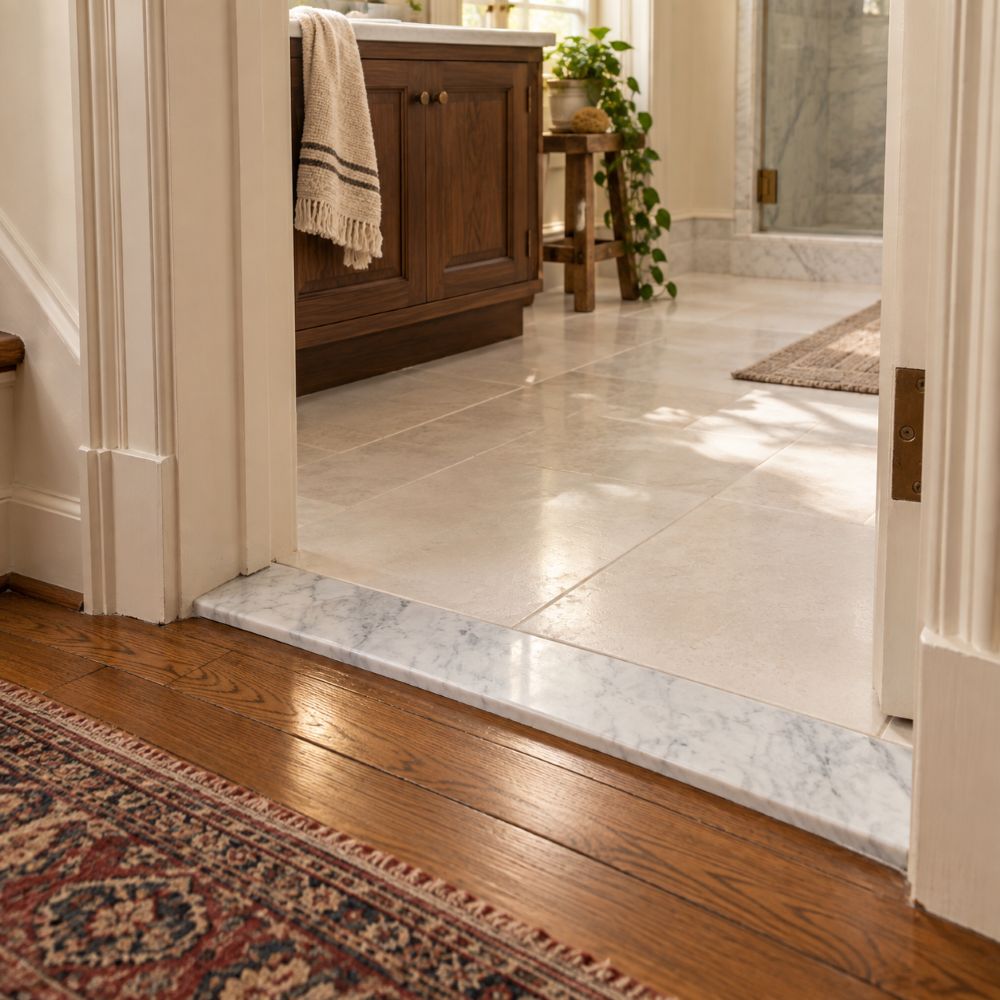
We ask every contractor to verify before ordering, and to plan marble thresholds wherever the new floor meets original hardwood at a different height.
Start Your Older Home Bathroom Renovation With Real Samples
Stone is chosen with your hands and eyes, not from a screen. Bring photos of your original tile, trim and window, and a broken piece of the old floor if one survives.
At our New Jersey tile showroom in Carlstadt, we will lay honed samples right beside it, so you see the new stone next to the house it is about to join. For more ways to bring natural stone into every room, read our guide to marble tile in New Jersey.