

When planning a luxury kitchen design, we spend months obsessing over the exact shade of the cabinetry and hunting for the perfect natural stone slabs. Yet, one of the most critical design decisions is often left until the very last minute: the edge profile for our kitchen island slab.
Yes, I know it may look like a little detail that won’t matter too much. But believe me, you wouldn’t believe how a countertop edge can change all the aesthetics of the kitchen overall. The aesthetics is always hidden in the details. While standard countertop edge profiles like easing or bullnosing are practical, they rarely offer the architectural impact required for a true centerpiece. For a kitchen island slab that commands attention, the conversation almost always lands on two sophisticated options: the dramatic waterfall countertop or the seamless mitered edge profile. So, let’s start to compare these two and see which one will work for you the best.
Waterfall Edge Profile
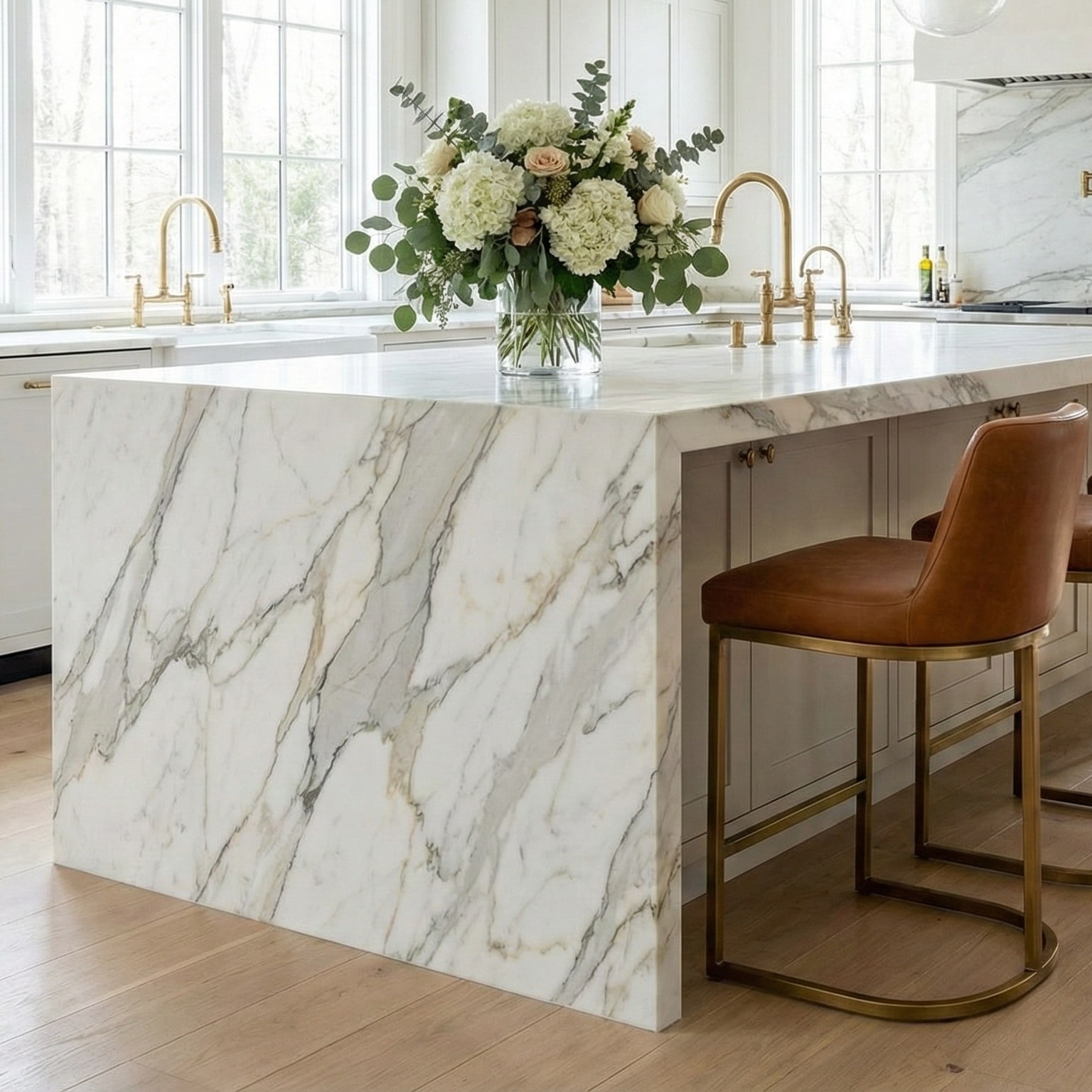
A waterfall countertop is exactly what it sounds like: the stone flows horizontally across the surface and then spills vertically down the side of the cabinetry to the kitchen floor tile. It is a design choice that prioritizes continuity.

Waterfall is one of the favorites of modern kitchen design, because it creates a clean, uninterrupted line. It turns the kitchen island into a luxurious design element, effectively wrapping the functional cabinetry. This is particularly stunning when using marble slabs with significant movement.

When you use a bookmatched slab for a waterfall leg, the veins are painstakingly aligned by the fabricator to flow over the edge without breaking the pattern. If you have chosen a spectacular marble kitchen island, a waterfall edge ensures that the beauty of the material is visible from every angle, not just when you are standing over it.
Mitered Edge Profile
While the waterfall is all about flow, the mitered edge profile is about substance. Most natural stone slabs are quarried at specific thicknesses, usually 2cm or 3cm. While this is sufficient for durability, it doesn’t always convey the visual weight desired in a grand kitchen.

A mitered countertop edge changes the geometry. By cutting the edge of the slab at a precise 45-degree angle and joining it with a matching apron piece, fabricators create a seamless 90-degree corner. This gives the illusion that the slab is much thicker, two, three, or even four inches, without the immense weight of a solid block.

This technique is essential when working with thinner materials like porcelain countertops. By mitering the edge, a thin porcelain slab is instantly transformed into a hefty, substantial surface. It creates a monolithic look that is perfect for minimalist white countertops or moody black countertops, where the goal is an architectural magazine worthy block.
Mitered Edge vs Waterfall: Which One to Choose?
If we explain what a waterfall edge is, it’s a cover. It hides the side of the cabinet bank and extends the stone to the floor. It is the choice that makes a space special, ideal for large open spaces where the side of the island is highly visible from the living area. It protects the kitchen cabinetry and maximizes the impact of quartzite slabs or marble veining.
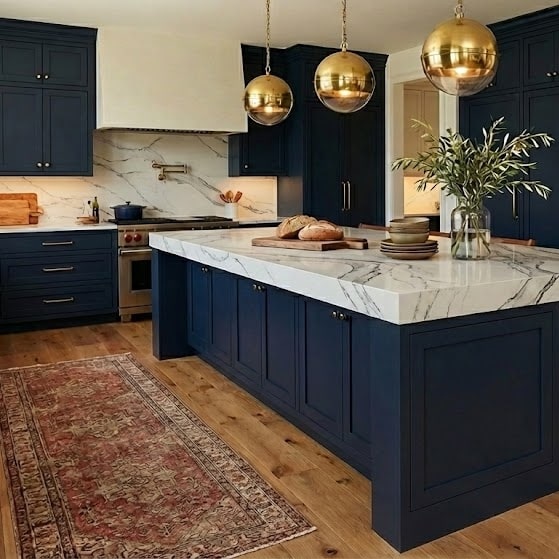
The mitered edge is kind of a frame. It keeps the natural stone on the horizontal plane but gives it gravity. It is a quieter, more contemporary approach. If you love the look of a floating island or want to emphasize the horizontal lines of a mid century modern kitchen, a thick mitered edge provides that luxury feel without the floor to ceiling commitment of a waterfall.
Quick Comparison: Waterfall vs. Mitered Edge
| Feature | Waterfall Edge Profile | Mitered Edge Profile |
|---|---|---|
| Definition | Stone flows horizontally across the top and spills vertically down the side to the floor. | Edge is cut at a 45° angle and joined to create a seamless 90° corner, mimicking a thicker slab. |
| Visual Effect | Prioritizes continuity and flow. Wraps the cabinetry for a luxurious, uninterrupted look. | Prioritizes substance and weight. Creates a "monolithic" block look without the heavy weight. |
| Key Benefit | Maximizes the visibility of stone veining (especially bookmatched marble) from every angle. | Makes thin materials (like 2cm stone or porcelain) appear 2-4 inches thick. |
| Best For | Large open spaces where the side of the island is visible from the living area. | Minimalist or Mid-Century Modern designs; "Floating" island aesthetics. |
| Vibe | Dramatic, Artistic, Centerpiece. | Architectural, Clean, Quiet Luxury. |
Decide on the Right Edge Profile for Kitchen Island Slab
Don't just look at pictures. You need to feel the edge and experience the visual magic of a countertop edge profile. Skip the generic search for a stone slab showroom and come into a Marble Systems showroom ASAP. Run your hand over the joinery. See the vein matching up close. That is the only way to know which finish is right for your kitchen.
Visit Our Showrooms