We know that kind of confusion, believe us. The confusion that everything looks beautiful, and everything looks like an option. But falling in love with a stone slab based purely on a swatch is, it’s a “Why not?” position, but we believe that we can do better together, with you. You need to know how it behaves once it leaves the showroom and suits into your home. This brings us to the two heavyweights of the luxury market: the onyx vs quartzite slab.

At first glance, they both offer that organic, high-end movement that homeowners and interior designers are looking for in a project that has a different energy. But geologically and functionally? They couldn’t be more different. One is a work of art meant to be admired; the other is a high-performance surface built to survive life, the real life I mean. If you are torn between the drama of onyx and the resilience of quartzite, here is the honest truth about what you are actually purchasing.
Let’s start with the immediate appeal. An onyx stone slab is essentially a calcified watercolor painting. Because it forms in caves as stalactites and stalagmites drip mineral-rich water, it develops distinct bands and swirls that look almost fluid. A green onyx slab, for instance, doesn’t just sit there to “be as a countertop”; it holds the depth of a green countertop and movement that feels alive.
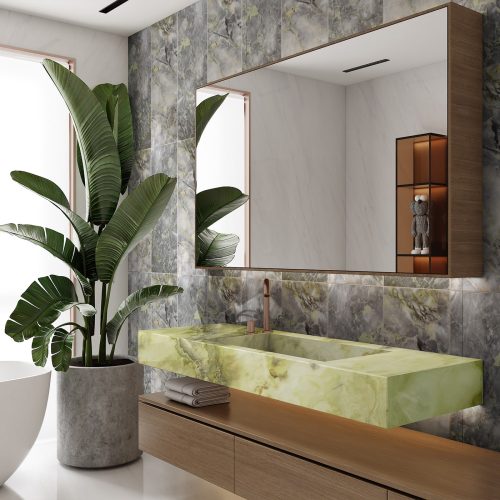
The real party trick of onyx, however, is the light. Because of its crystalline structure, light passes through it, like a sheer curtain with geological patterns on it. This leads to the common question: Can you backlight quartzite like onyx slabs? Rarely. While some thinner, crystalline quartzites might let a dull glow through, they cannot compete with the theatrical translucency of onyx. If you want a glowing vanity or a statement home bar that doubles as a light source, onyx stone is the only real contender.
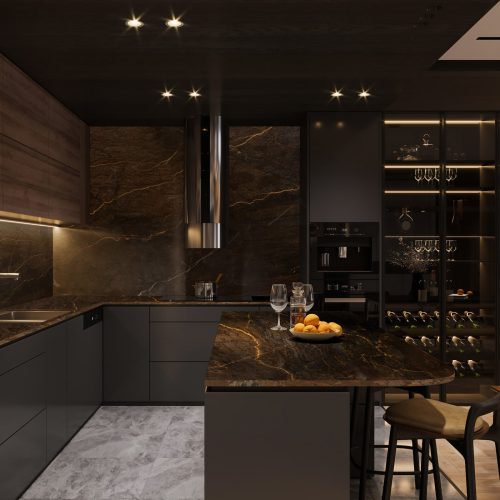
A quartzite slab, on the other hand, offers a different kind of beauty; onyx can’t reach a position. It is metamorphic rock, sandstone that has been cooked by the earth into an incredibly hard material. It tends to look glassy and sugary. It mimics the grey and white veining of a marble kitchen countertop effortlessly, but typically lacks that chaotic, banded wildness of onyx.
Here is where the “Couture vs. Cashmere” distinction matters most. When clients ask, “Is quartzite durability better than onyx for high-traffic kitchens?”, the answer is a hard yes.
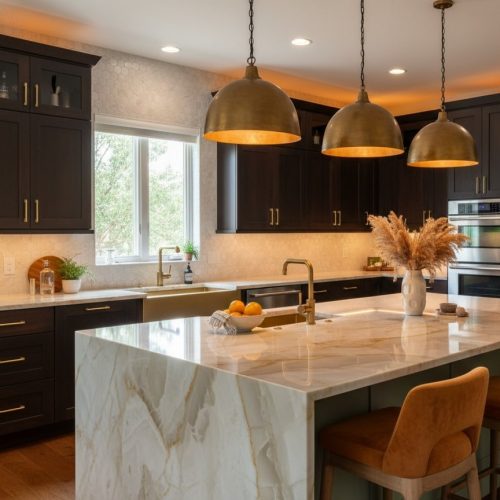
Quartzite countertops are practically bulletproof (yes, we’ve exaggerated it a little). On the Mohs scale of mineral hardness, quartzite clocks in around a 7 or 8 (harder than glass and granite countertops). It resists scratching, heat, and UV fading. It is the material you choose when you want the look of fine marble but the functionality of a workhorse.
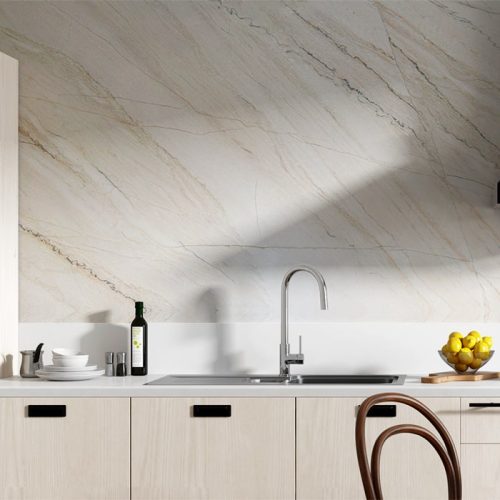
Contrast that with an onyx countertop. Onyx is calcium-based, similar to marble and travertine countertops, making it soft and chemically sensitive. It will etch if you look at it wrong with a lemon in your hand. It scratches easily. It is not designed for the heavy clatter of pots and pans. It is designed for powder rooms, fireplace surrounds, and a living room wall design with a bookshelf, created only for aesthetic purposes.
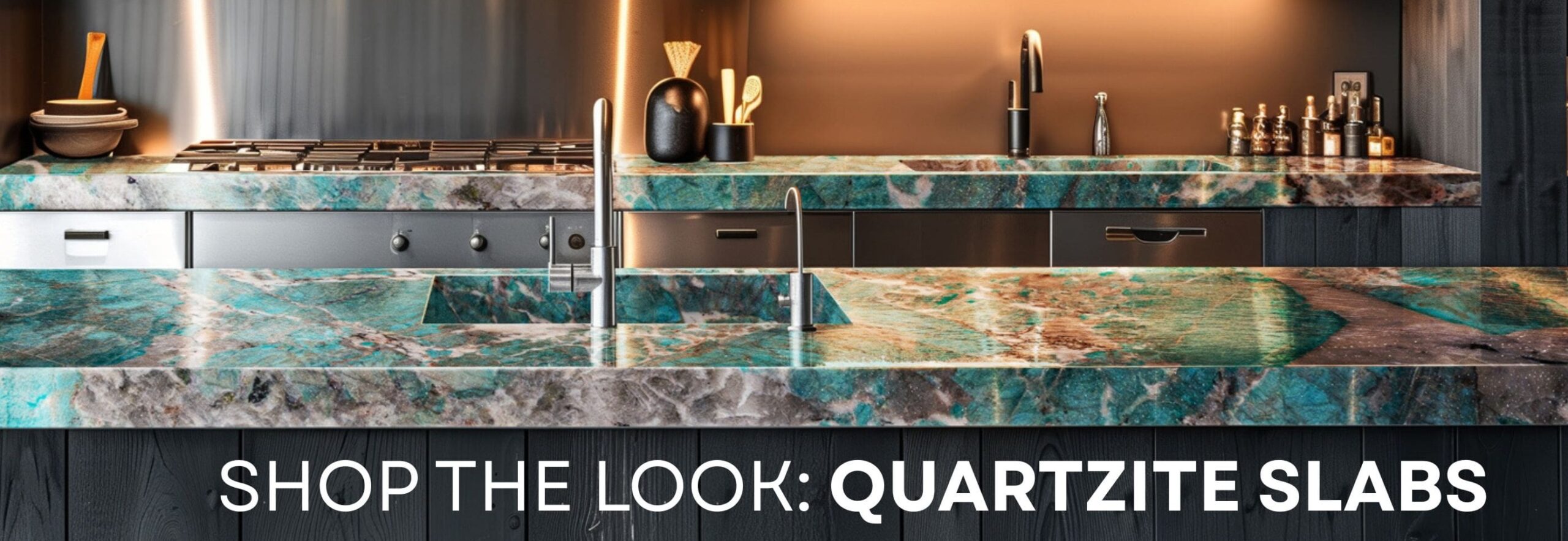
The onyx vs quartzite maintenance and sealing requirements are the biggest differentiator for day-to-day life. How to clean quartzite countertop surfaces? The good news is, you don’t need a degree in chemistry. Warm water, mild soap, and a non-abrasive cloth are all you need, and you’re done. You should seal it annually to protect the porous stone from oil stains, but otherwise, it is remarkably forgiving.
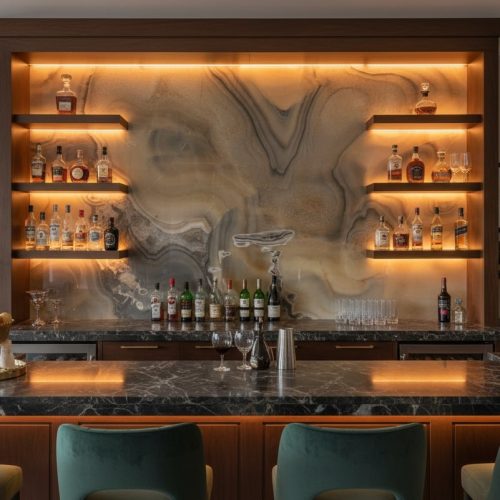
Onyx is a different position when we’re talking about real stone countertop maintenance. It requires frequent sealing and careful usage. If you spill red wine on an unsealed onyx vs quartzite slab, the quartzite might forgive you if you wipe it up quickly. The onyx will likely hold onto that memory forever.
Budget discussions usually start with: Why is onyx more expensive than quartzite slabs? It comes down to rarity and fragility. Quarries that produce high-quality onyx are fewer, and the extraction process is delicate. Getting a good-looking block out of the earth without it cracking is an expensive logistical feat. As a result, the onyx slab price reflects that exclusivity.
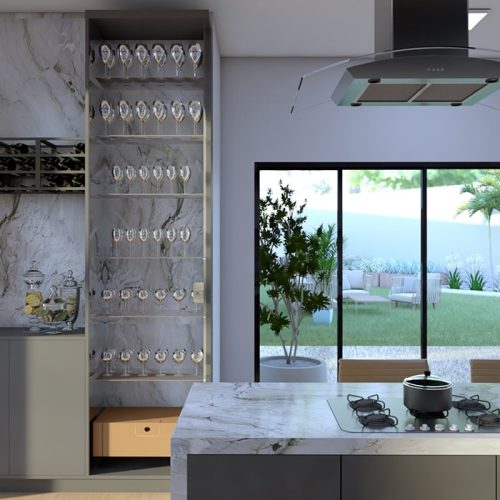
Quartzite slab cost varies wildly. “Soft” quartzites can be affordable, while exotic, “hard” quartzites (like Taj Mahal Quartzite or Cristallo) can rival onyx in price due to their density and fabrication difficulty.
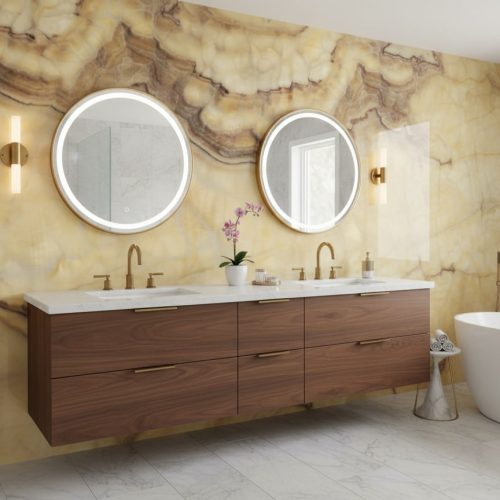
However, regarding the quartzite vs onyx resale value for luxury homes, quartzite often edges out the win for kitchens. Buyers know it lasts, that’s why it’s an option homeowners and contractors choose more. Onyx wins in specialized, purely decorative applications where the “wow” factor justifies the cost.
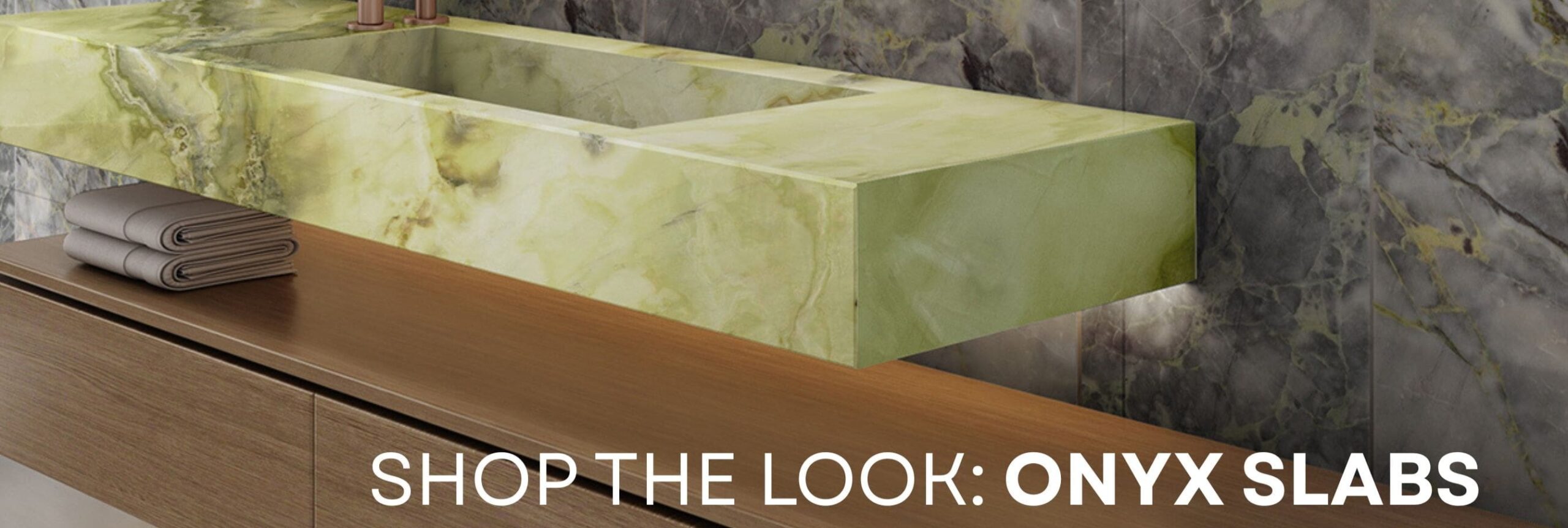
If you are looking for kitchen countertop ideas for a family home where the kitchen is the main meeting point of activity, stick with quartzite slab options. You get the luxury aesthetic without the anxiety. But if you are designing a space meant to only look good, a backlit lobby wall, a powder room vanity, or a private home bar, then you know the answer is a perfect onyx slab. It is high maintenance, yes. But like any piece of high art, it isn't there to be useful. It is there to be beautiful.
Ready to see the difference for yourself? Browse our full collection of stone slab options or call our
stone slab shop near you
so that we can chat about the questions you have and try making your dreams come true!
