

Table of Contents
You have found it. The perfect bookmatched slab. It’s everything you’ve been looking for at least a month or something. But if you don’t have enough technical information on slabs, there must be something you shouldn’t ignore. How do you know it’s the suitable one for your space? You got it, it’s the slab thickness.
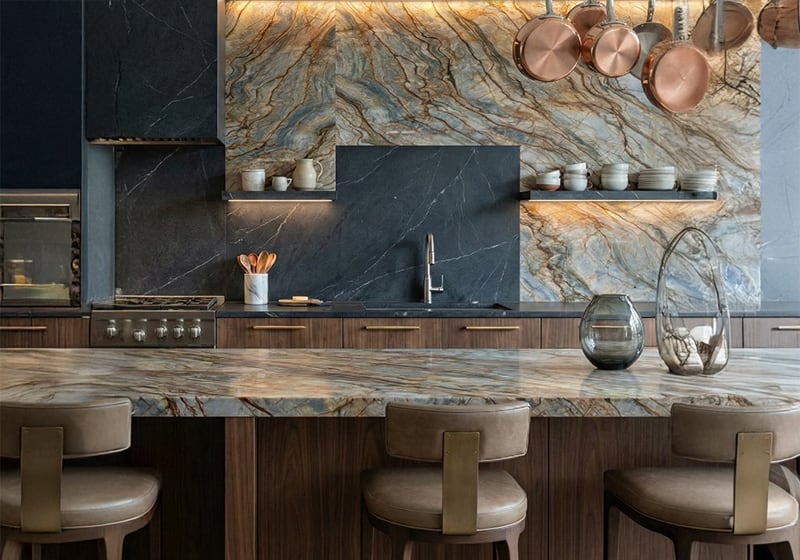
Most homeowners mostly think about the finish (polished vs. honed slab) or the specific batch, but they completely overlook thickness until the fabricator asks, “What edge do you want?” and realizes it can’t be done. And do you know what, at Marble Systems, we’re always happy to inform you about the slab thickness. This is a critical mistake, and the decision can be made only once after you buy it. The thickness of your natural stone slabs dictates where you can install them, how much the fabrication will cost, and even the structural integrity of your home.
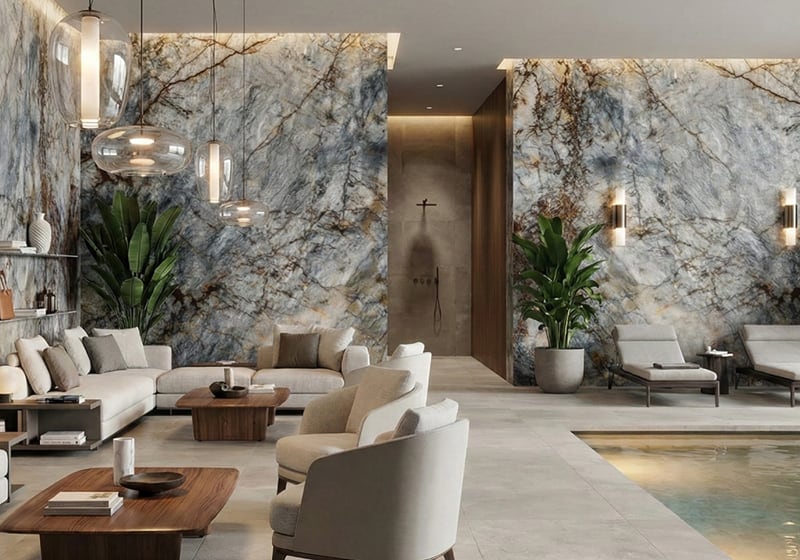
You are probably debating between a standard 3/4 inches slab or an 15/32 inches slab. And in this guide, you’ll get some details you’ll need while purchasing a stone slab for yourself.
Slab Thickness Guide with the Details You’ll Need
1. The Industry Standard: 3/4 Inch Slab (approx. 2cm)

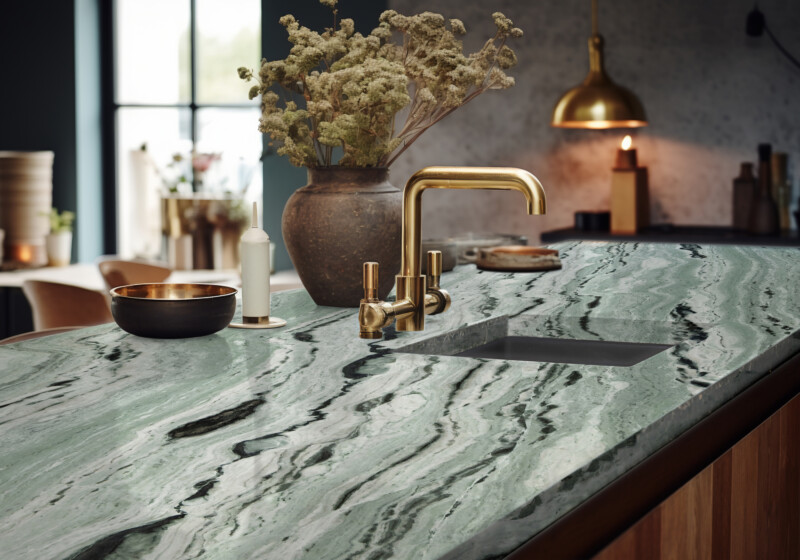
In the U.S. market, especially for high end marble and limestone countertops, the 3/4 inches slab (you’ll be seeing a 2cm countertop on different resources) is the most chosen player. While you might hear debates about the difference between 2cm and 3cm granite, when it comes to natural stone, 3/4 inch is often your starting point. We offer mostly that option because it’s more versatile than you think, and you can play it however you want in most of the cases.
Pros and Cons
Pro: Weight & Handling: It is significantly lighter than the heavy 3cm blocks used in some granite yards. This makes it easier to transport and install, especially for large kitchen islands or second story renovations. That is one of the options that won’t give you a headache about how you’ll use it in the right way.
Pro: Edge Flexibility: Because the slab itself is thinner, fabricators can use a “Laminated Edge” technique. They glue a matching strip of stone to the front to create the illusion of a massive 2 inch or 3 inch thick block, giving you a custom luxury look without the weight. That’s the place you’ll get the desired aesthetic without thinking about it too much.
Con: Support Needed: Is 3/4 inch thick enough for kitchen island use? Yes, but it typically requires a plywood subtop, a wooden support layer installed on top of your cabinets before the stone is laid. This adds a step to the installation process. But if I were you, I wouldn’t mind it that much.
Where to Use It Best?
Kitchen Countertops: Probably most of the kitchen countertops you’ll see around are in this thickness, because it is the standard size. With proper plywood support, it handles the weight of heavy pots and appliances perfectly.
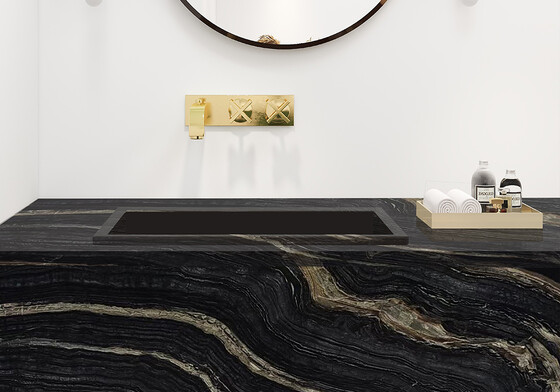
Bathroom Vanities: Ideal for creating elegant, streamlined vanity tops. So, if you’re thinking about creating a strong structure and strong look at the same time, especially in a commercial bathroom, it may be good to choose this one.
Heavy Duty Surfaces: Any horizontal surface that will see daily traffic and weight. It won’t give you a heart attack with the doubt that it can be damaged.
2. The Architectural Choice: 1/2 Inch & 15/32 Inch Slabs
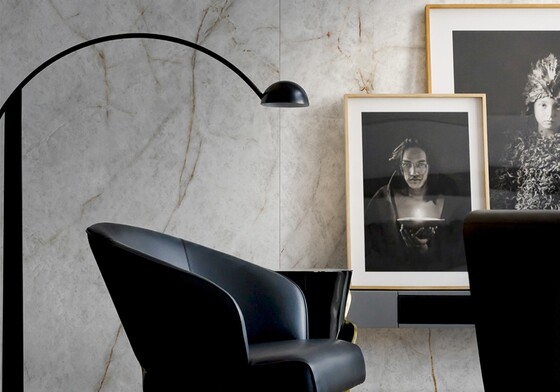
When you move down to a 1/2 inches slab or the precise 15/32 inches slab, you are entering the realm of architectural stone. Because things are getting more aesthetic this time, beyond being only useful. These aren’t just thinner; they are lighter, which opens up vertical design possibilities that heavy slabs just can’t. In this case, the general look is the first goal to get here.
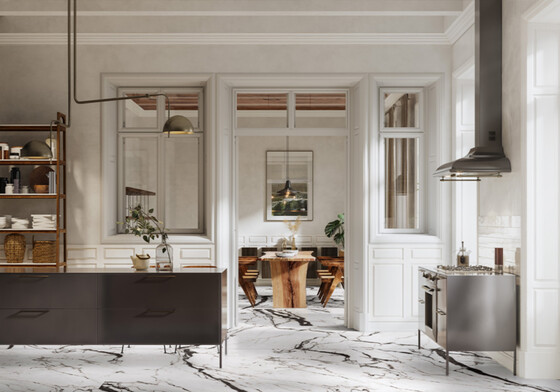
Pros and Cons
Pro: Vertical Freedom: A 15/32 inches slab puts way less stress on your wall studs than a full thickness slab. This means you can often clad a wall without reinforcing the framing behind it. Remember the designs you’ve saved on your boards with luxury slab walls? These are made with this slab type.
Pro: Backlighting: Thinner slabs of translucent stones (like onyx or some quartzite slabs) allow for better light transmission if you are planning a backlit feature.
Con: Fragility: These slabs are more brittle during handling. They are generally not recommended for countertops without a very specific, specialized support system, as they can crack under impact. If I were you, I’d choose the industry standard for a kitchen countertop and choose this one for backsplash or maybe an attractive dining room wall. But it totally depends on you!
Where to Use It Best?
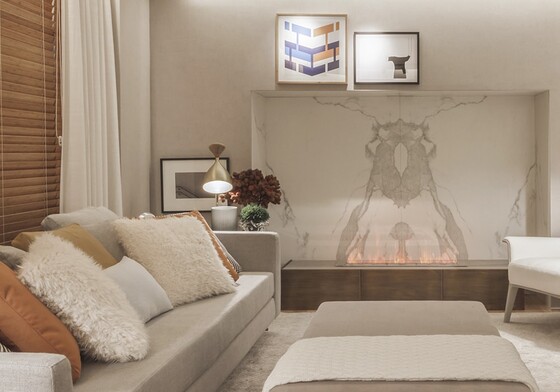
Wall Cladding: This is the best stone thickness for wall cladding. Think floor to ceiling shower walls or feature walls in a living room. If you want to show your collections with an impressive background, you know what you’ll choose as the background.
Fireplace Surrounds: A heavy slab might require expensive steel anchors to hold it on a fireplace face. A slab thickness for fireplace surround of 1/2 inch is much easier to install safely. You’ll be safe, warm, and chic. Who doesn’t want that, right?
Shower Walls: Easier to waterproof and hang than heavy 3/4 inch slabs.
3. The Modernist Approach Everyone is Looking For: 25/64 Inch Slabs
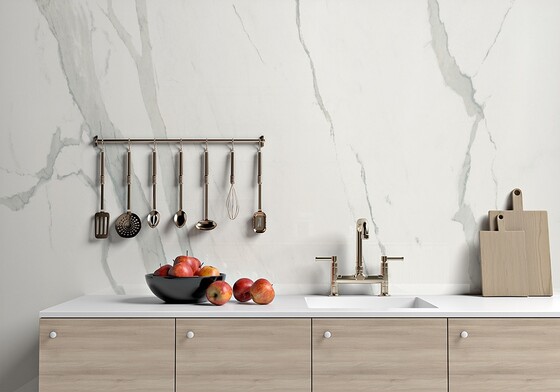
A 25/64 inches slab is incredibly thin, like really thin. This measurement is most common in modern porcelain slab thickness options or specialized ultra compact surfaces. It is a technical marvel that solves very specific renovation problems.
Pros and Cons
Pro: Overlay Capability: One of the secret weapons of the 25/64 inches slab is that it can sometimes be installed over existing materials. It’s like tiling over tile, by the way, you can put it over your tiles. Because it adds minimal height to the floor slab thickness, you can theoretically lay it over old tile without ripping everything out (always consult a pro first!). And here is the real thing, please don’t do it as a DIY project, because it can disappoint you without an expert.
Pro: Weight: It is feather-light compared to natural stone. You can use it on furniture, cabinet doors, or even ceilings. So, if you’d like to look up and see an art piece like Pantheon’s eye, that’s the option you’ll get.
Con: Installation Difficulty: It’s not too hard to understand why it is hard to install, because you know, it’s fragile. It requires a very experienced installer. The substrate (the surface underneath) must be perfectly flat. Any bump or debris underneath can cause a thin slab to crack when stepped on. And trust me, you wouldn’t want that at all.
Where to Use It Best?
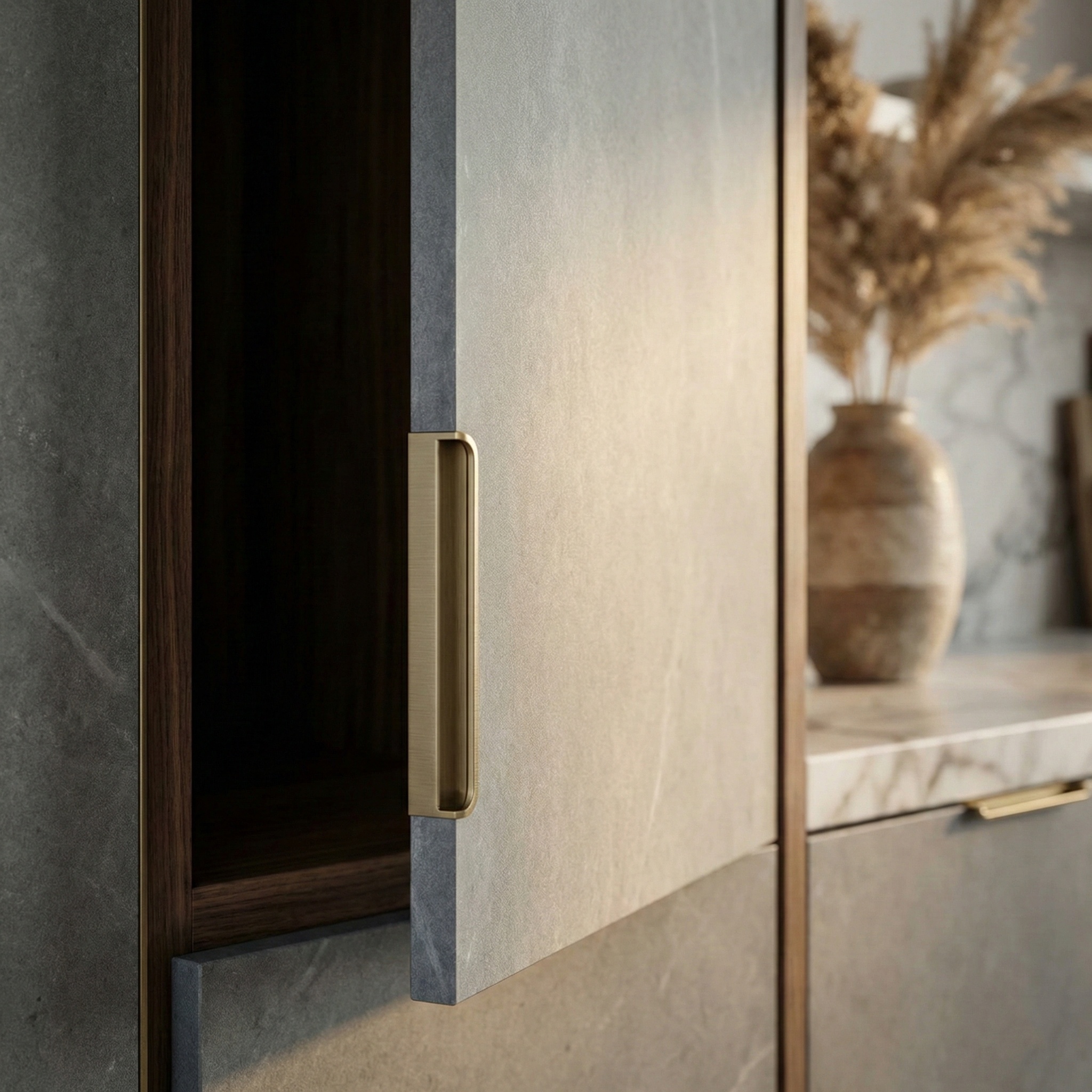
Cabinet Facing: Have you ever wanted a stone faced cabinet or a floating shelf that looks like solid marble slab? This is the thickness you use. It won’t make your cabinet hinges sag.
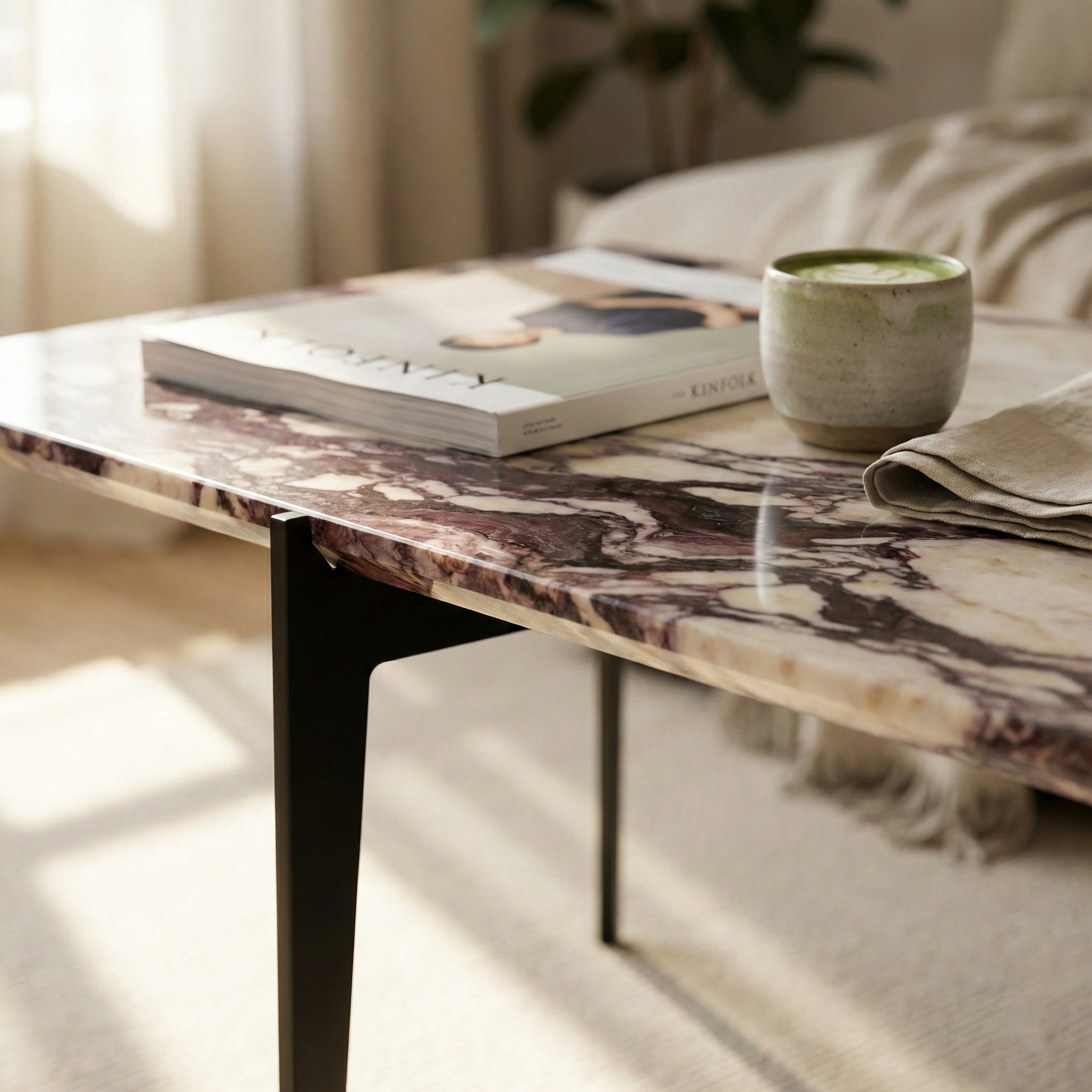
Furniture Tops: Custom coffee tables or side tables where weight is a concern. See the marble coffee table trend on Pinterest? These are made of this thickness, probably.
Low Traffic Flooring: Perfect for creating a seamless, grout free look in a bathroom or dressing room.
Quick Guide: Which Slab Thickness Do You Need?
| Thickness | Pros | Cons | Best Used For |
|---|---|---|---|
|
Industry Standard 3/4 Inch (2cm) |
|
|
|
|
Architectural 1/2 Inch |
|
|
|
|
Modernist 25/64 Inch |
|
|
|
Have Any Confusion? Call Us and Let’s Talk About It More!
Don't let the standard slab thickness for countertops limit your imagination. If you fall in love with a delicate 1/2 inch onyx slab, use it to create a glowing wall feature, not a chopping block. The pros and cons of thin stone slabs versus thick ones aren't about better or worse; they are about the right application. Visit our slab showroom or call us, so that we can talk about more options!